


Microbial rRNA sequencing analysis of evaporative cooler indoor environments located in the Great Basin Desert region of the United States†
Supporting Files

-
2 22 2017
-
File Language:
English
Details
-
Alternative Title:Environ Sci Process Impacts
-
Personal Author:
-
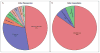
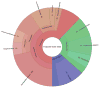
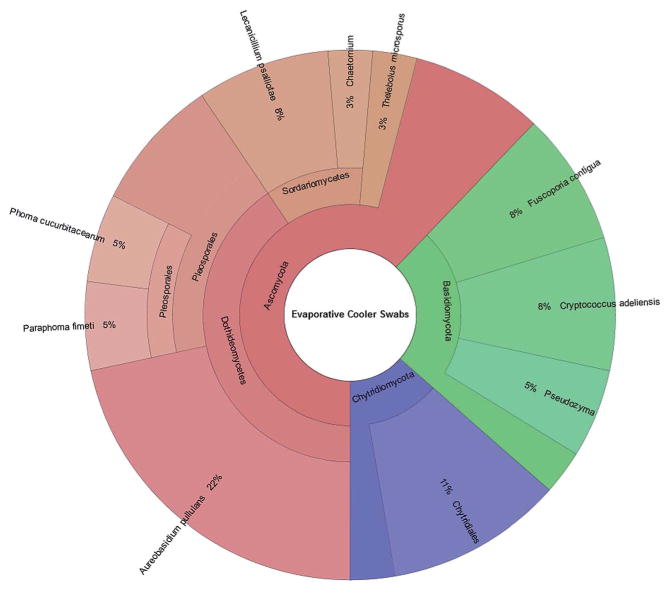
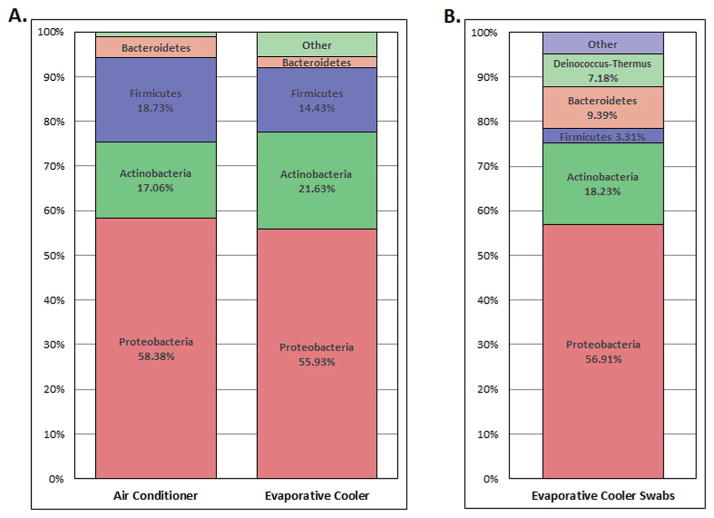
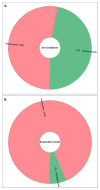
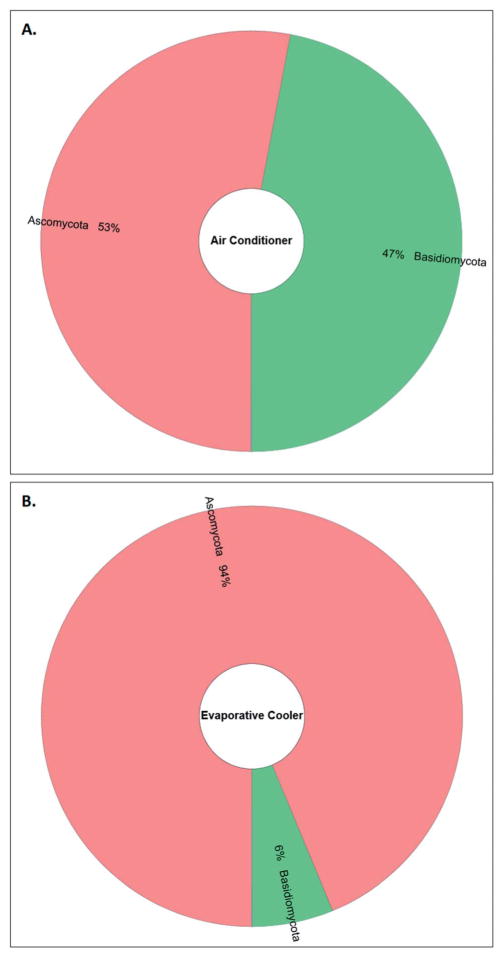
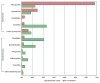
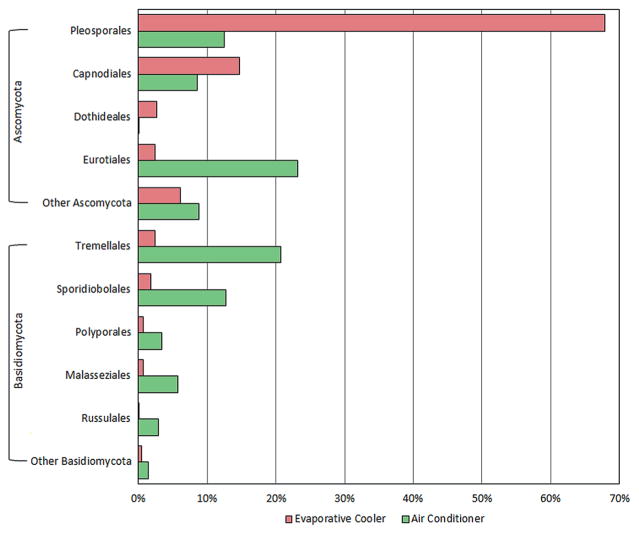
Description:Recent studies conducted in the Great Basin Desert region of the United States have shown that skin test reactivity to fungal and dust mite allergens are increased in children with asthma or allergy living in homes with evaporative coolers (EC). The objective of this study was to determine if the increased humidity previously reported in EC homes leads to varying microbial populations compared to homes with air conditioners (AC). Children with physician-diagnosed allergic rhinitis living in EC or AC environments were recruited into the study. Air samples were collected from the child's bedroom for genomic DNA extraction and metagenomic analysis of bacteria and fungi using the Illumina MiSeq sequencing platform. The analysis of bacterial populations revealed no major differences between EC and AC sampling environments. The fungal populations observed in EC homes differed from AC homes. The most prevalent species discovered in AC environments belonged to the genera Cryptococcus (20%) and Aspergillus (20%). In contrast, the most common fungi identified in EC homes belonged to the order Pleosporales and included Alternaria alternata (32%) and Phoma spp. (22%). The variations in fungal populations provide preliminary evidence of the microbial burden children may be exposed to within EC environments in this region.
-
Subjects:
-
Source:Environ Sci Process Impacts. 19(2):101-110
-
Pubmed ID:28091681
-
Pubmed Central ID:PMC5450635
-
Document Type:
-
Funding:
-
Volume:19
-
Issue:2
-
Collection(s):
-
Main Document Checksum:urn:sha256:ff36a1516a952920e9682a5a6d6124ab5375c846e6cb12361ef0d92de1dbd7d0
-
Download URL:
-
File Type:
 [PDF
- 713.39 KB
]
[PDF
- 713.39 KB
]
Supporting Files


File Language:
English
ON THIS PAGE



CDC STACKS serves as an archival repository of CDC-published products including
scientific findings,
journal articles, guidelines, recommendations, or other public health information authored or
co-authored by CDC or funded partners.
As a repository, CDC STACKS retains documents in their original published format to ensure public access to scientific information.
As a repository, CDC STACKS retains documents in their original published format to ensure public access to scientific information.
You May Also Like
COLLECTION
CDC Public Access