



Social power, conflict policing, and the role of subordination signals in rhesus macaque society
Supporting Files

-
5 2016 ; 5-2016
-
Available in CDC Stacks on May 01, 2017, 12:00 AM
File Language:
English
Details
-
Alternative Title:Am J Phys Anthropol
-
Personal Author:
-
Description:Objectives
Policing is a conflict-limiting mechanism observed in many primate species. It is thought to require a skewed distribution of social power for some individuals to have sufficiently high social power to stop others’ fights, yet social power has not been examined in most species with policing behavior. We examined networks of subordination signals as a source of social power that permits policing behavior in rhesus macaques.
Materials and Methods
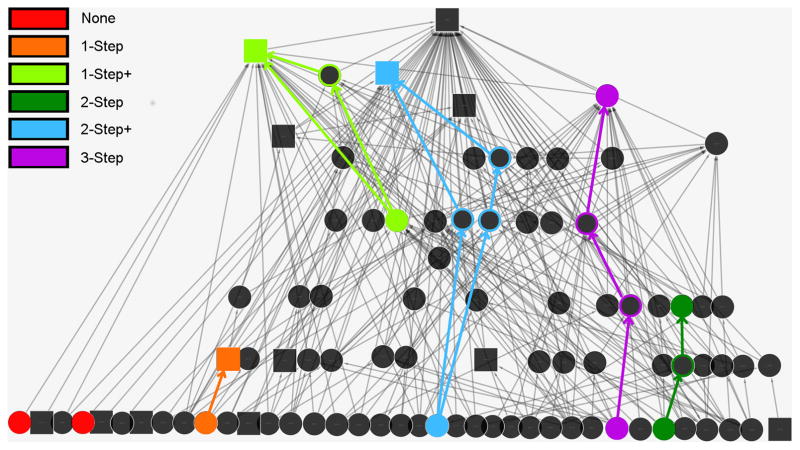
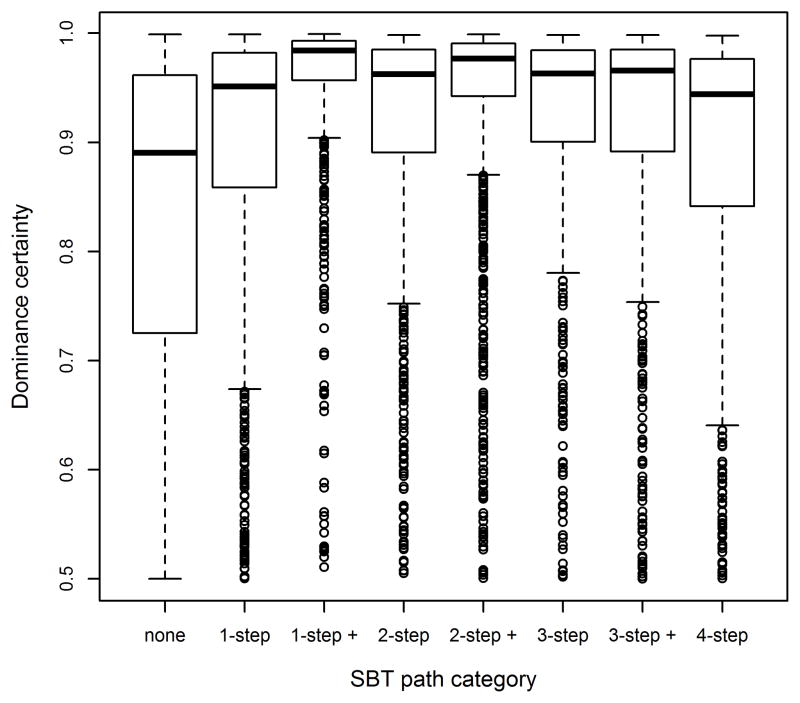
For each of seven captive groups of rhesus macaques, we (a) examined the structure of subordination signal networks and used GLMs to examine the relationship between (b) pairwise dominance certainty and subordination network pathways and (c) policing frequency and social power (group-level convergence in subordination signaling pathways).
Results
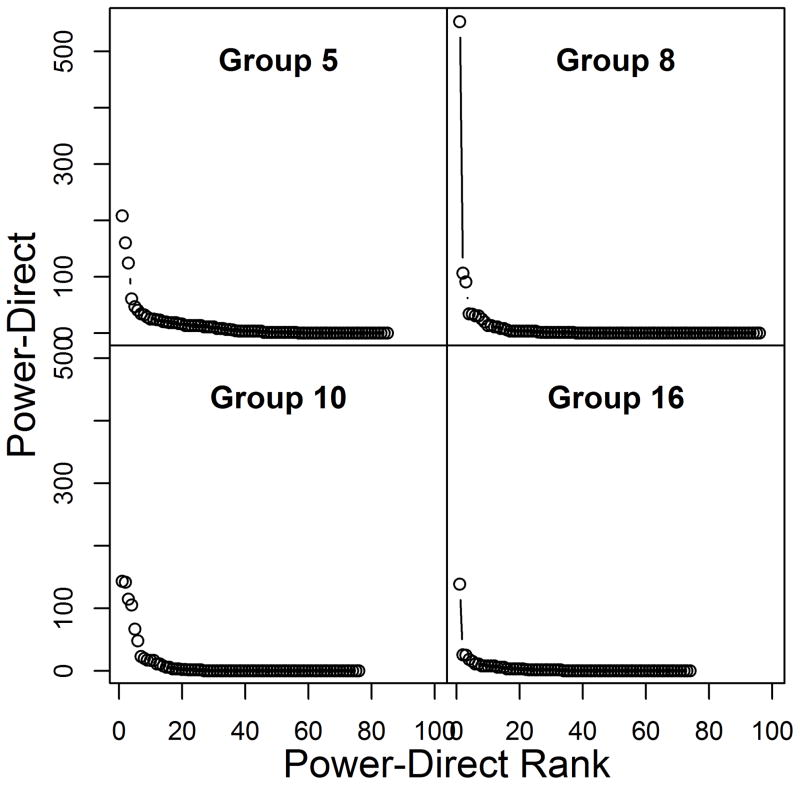
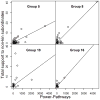
Networks of subordination signals had perfect linear transitivity, and pairs connected by both direct and indirect pathways of signals had more certain dominance relationships than pairs with no such network connection. Social power calculated using both direct and indirect network pathways showed a heavy-tailed distribution and positively predicted conflict policing.
Conclusions
Our results empirically substantiate that subordination signaling is associated with greater dominance relationship certainty and further show that pairs who signal rarely (or not at all) may use information from others’ signaling interactions to infer or reaffirm the relative certainty of their own relationships. We argue that the network of formal dominance relationships is central to societal stability because it is important for relationship stability and also supports the additional stabilizing mechanism of policing. -
Subjects:
-
Keywords:
-
Source:Am J Phys Anthropol. 160(1):102-112
-
Pubmed ID:26801956
-
Pubmed Central ID:PMC5380402
-
Document Type:
-
Funding:
-
Volume:160
-
Issue:1
-
Download URL:
-
File Type:
 [PDF - 1.42 MB]
 -
Collection(s):
-
Main Document Checksum:urn:sha256:16eacf2be657d8d8fbab8d57b084a324af5bca9aae665737732b2e113bc0b24a
Supporting Files


File Language:
English
 Was this page helpful?
 Found an issue?






CDC STACKS serves as an archival repository of CDC-published products including
scientific findings, journal articles, guidelines, recommendations, or other public health information authored or
co-authored by CDC or funded partners.
As a repository, CDC STACKS retains documents in their original published format to ensure public access to scientific information.
As a repository, CDC STACKS retains documents in their original published format to ensure public access to scientific information.
You May Also Like
COLLECTION
CDC Public Access