


Influenza and respiratory syncytial virus in infants study (IRIS) of hospitalized and non-ill infants aged <1 year in four countries: study design and methods
Supporting Files
Public Domain

-
Mar 22 2017
-
Details
-
Alternative Title:BMC Infect Dis
-
Personal Author:Thompson, Mark G. ; Hunt, Danielle R. ; Arbaji, Ali K. ; Simaku, Artan ; Tallo, Veronica L. ; Biggs, Holly M. ; Kulb, Carolyn ; Gordon, Aubree ; Khader, Ilham Abu ; Bino, Silvia ; Lucero, Marilla G. ; Azziz-Baumgartner, Eduardo ; Shifflett, Pat ; Sanchez, Felix ; Marar, Basima I. ; Bakalli, Ilirjana ; Simões, Eric A. F. ; Levine, Min Z. ; Meece, Jennifer K. ; Balmaseda, Angel ; Al-Sanouri, Tareq M. ; Dhimolea, Majlinda ; de Jesus, Joanne N. ; Thornburg, Natalie J. ; Gerber, Susan I. ; Gresh, Lionel ; Thompson, Mark G. ; Hunt, Danielle R. ; Arbaji, Ali K. ; Simaku, Artan ; Tallo, Veronica L. ; Biggs, Holly M. ; Kulb, Carolyn ; Gordon, Aubree ; Khader, Ilham Abu ; Bino, Silvia ; Lucero, Marilla G. ; Azziz-Baumgartner, Eduardo ; Shifflett, Pat ; Sanchez, Felix ; Marar, Basima I. ; Bakalli, Ilirjana ; Simões, Eric A. F. ; Levine, Min Z. ; Meece, Jennifer K. ; Balmaseda, Angel ; Al-Sanouri, Tareq M. ; Dhimolea, Majlinda ; de Jesus, Joanne N. ; Thornburg, Natalie J. ; Gerber, Susan I. ; Gresh, Lionel
-
Corporate Authors:on behalf of IRIS NetworkWhitakerBrettTaminAzaibiPeretTeresa C. T.McMorrowMeredithFinkRebeccaEdwardsLauraKuanGuillerminaSanchezNeryOjedaSergioMembreñoKarla PatriciaHaddadinAkthamAl-GazoMahmoudSanvictoresDiozeleMercadoEdelwisa SJimenezMaribethRedillasMa AzucenaSuaffieldAnalynDagupanMarilieLungatJenilynPenarandaAmaliaMendoza-DancelLei LannaCruzKaren Lana ; on behalf of IRIS NetworkWhitakerBrettTaminAzaibiPeretTeresa C. T.McMorrowMeredithFinkRebeccaEdwardsLauraKuanGuillerminaSanchezNeryOjedaSergioMembreñoKarla PatriciaHaddadinAkthamAl-GazoMahmoudSanvictoresDiozeleMercadoEdelwisa SJimenezMaribethRedillasMa AzucenaSuaffieldAnalynDagupanMarilieLungatJenilynPenarandaAmaliaMendoza-DancelLei LannaCruzKaren Lana
-
Description:Background
This multi-country prospective study of infants aged <1 year aims to assess the frequency of influenza virus and respiratory syncytial virus (RSV) infections associated with hospitalizations, to describe clinical features and antibody response to infection, and to examine predictors of very severe disease requiring intensive care.
Methods/Design
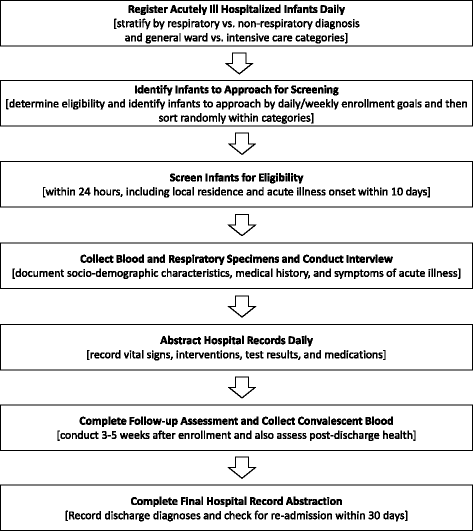
We are enrolling a hospital-based cohort and a sample of non-ill infants in four countries (Albania, Jordan, Nicaragua, and the Philippines) using a common protocol. We are currently starting year 2 of a 2- to 3-year study and will enroll approximately 3,000 infants hospitalized for any acute illness (respiratory or non-respiratory) during periods of local influenza and/or RSV circulation. After informed consent and within 24 h of admission, we collect blood and respiratory specimens and conduct an interview to assess socio-demographic characteristics, medical history, and symptoms of acute illness (onset ≤10 days). Vital signs, interventions, and medications are documented daily through medical record abstraction. A follow-up health assessment and collection of convalescent blood occurs 3-5 weeks after enrollment. Influenza and RSV infection is confirmed by singleplex real time reverse transcriptase polymerase chain reaction (rRT-PCR) assays. Serologic conversion will be assessed comparing acute and convalescent sera using hemagglutination inhibition assay for influenza antibodies and enzyme-linked immunosorbent assay (ELISA) for RSV. Concurrent with hospital-based enrollment, respiratory specimens are also being collected (and tested by rRT-PCR) from approximately 1,400 non-ill infants aged <1 year during routine medical or preventive care.
Discussion
The Influenza and RSV in Infants Study (IRIS) promises to expand our knowledge of the frequency, clinical features, and antibody profiles of serious influenza and RSV disease among infants aged <1 year, quantify the proportion of infections that may be missed by traditional surveillance, and inform decisions about the potential value of existing and new vaccines and other prevention and treatment strategies.
-
Subjects:
-
Source:BMC Infect Dis. 17. ; BMC Infect Dis. 17.
-
Pubmed ID:28330443
-
Pubmed Central ID:PMC5361805
-
Document Type:
-
Volume:17
-
Collection(s):
-
Main Document Checksum:urn:sha256:d2ee7a4e951db7bd36fa1e47dc9105054f2615f1cde0cc96d54051a4b21ec203
-
Download URL:
-
File Type:
 [PDF
- 859.20 KB
]
[PDF
- 859.20 KB
]
Supporting Files


ON THIS PAGE


CDC STACKS serves as an archival repository of CDC-published products including
scientific findings,
journal articles, guidelines, recommendations, or other public health information authored or
co-authored by CDC or funded partners.
As a repository, CDC STACKS retains documents in their original published format to ensure public access to scientific information.
As a repository, CDC STACKS retains documents in their original published format to ensure public access to scientific information.
You May Also Like
COLLECTION
CDC Public Access