


Community-Based Interventions to Improve and Sustain Antiretroviral Therapy Adherence, Retention in HIV Care and Clinical Outcomes in Low- and Middle-Income Countries for Achieving the UNAIDS 90-90-90 Targets
Supporting Files

-
10 2016
-
File Language:
English
Details
-
Alternative Title:Curr HIV/AIDS Rep
-
Personal Author:Nachega, Jean B. ; Adetokunboh, Olatunji ; Uthman, Olalekan A. ; Knowlton, Amy W. ; Altice, Frederick L. ; Schechter, Mauro ; Galárraga, Omar ; Geng, Elvin ; Peltzer, Karl ; Chang, Larry W. ; Van Cutsem, Gilles ; Jaffar, Shabbar S. ; Ford, Nathan ; Mellins, Claude A. ; Remien, Robert H. ; Mills, Edward J.
-
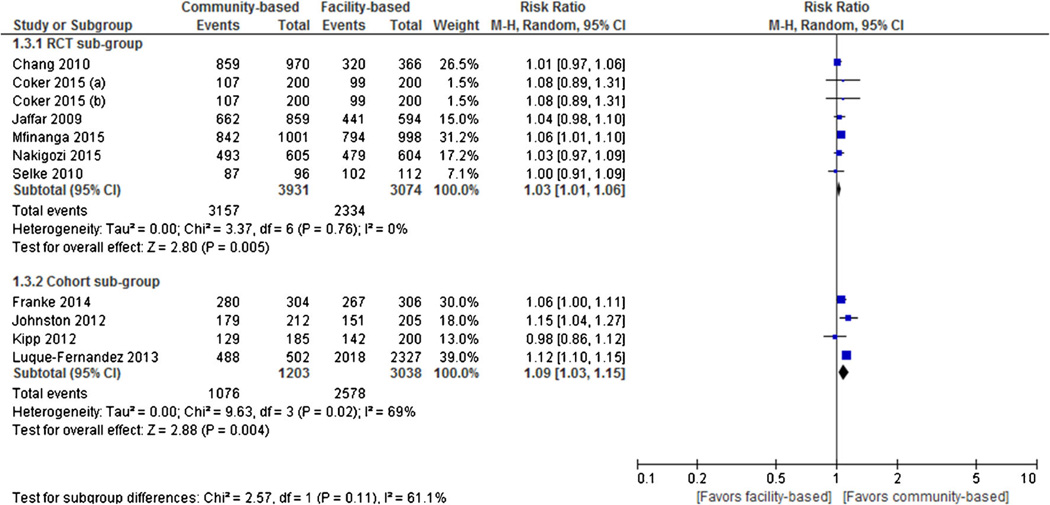
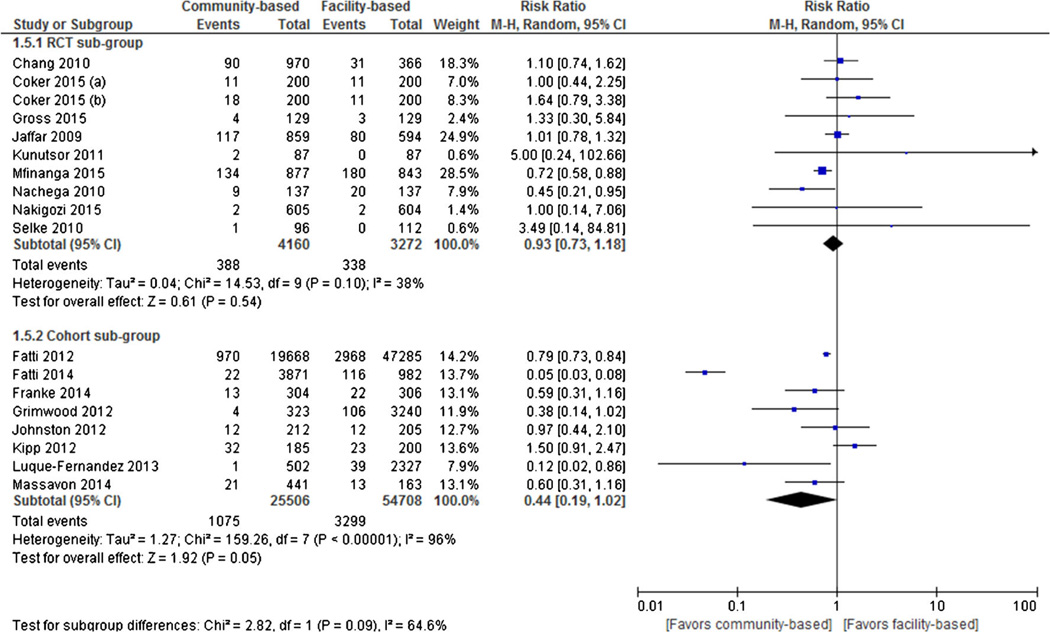
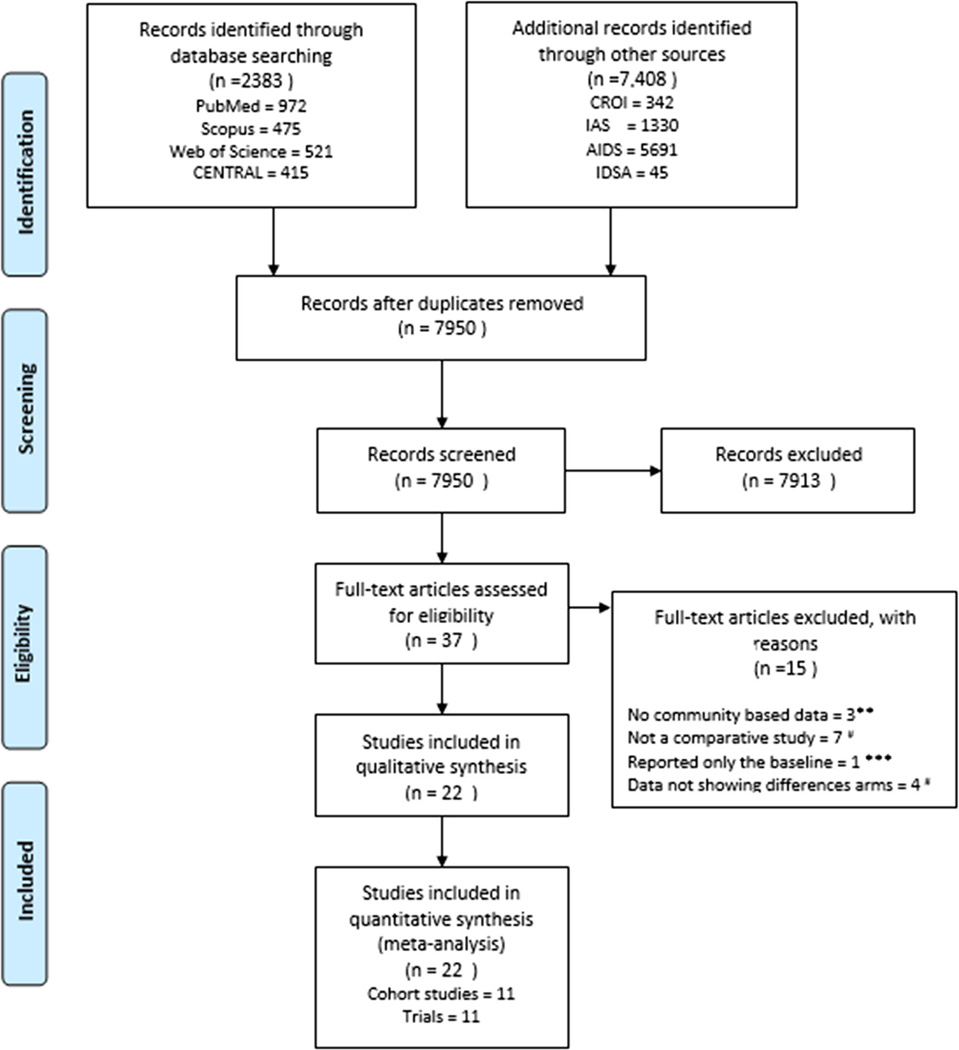
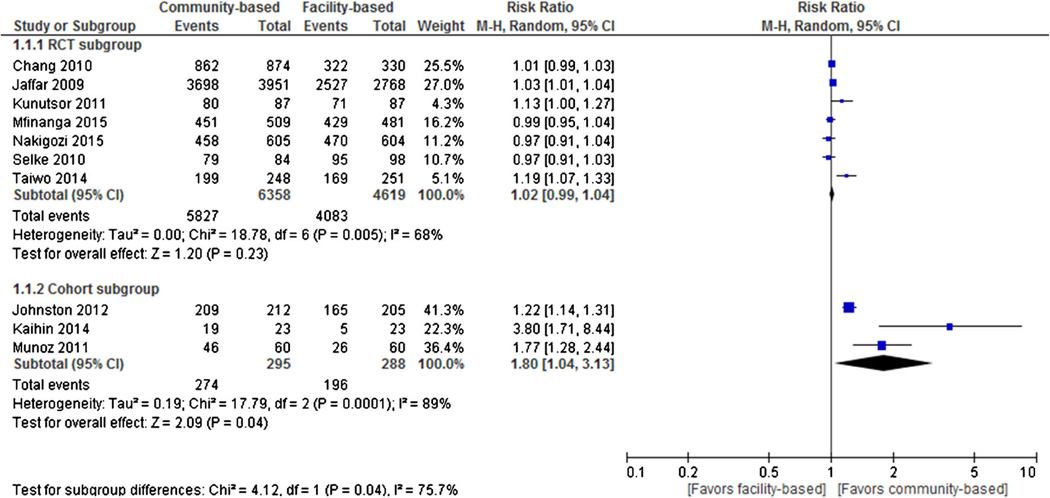
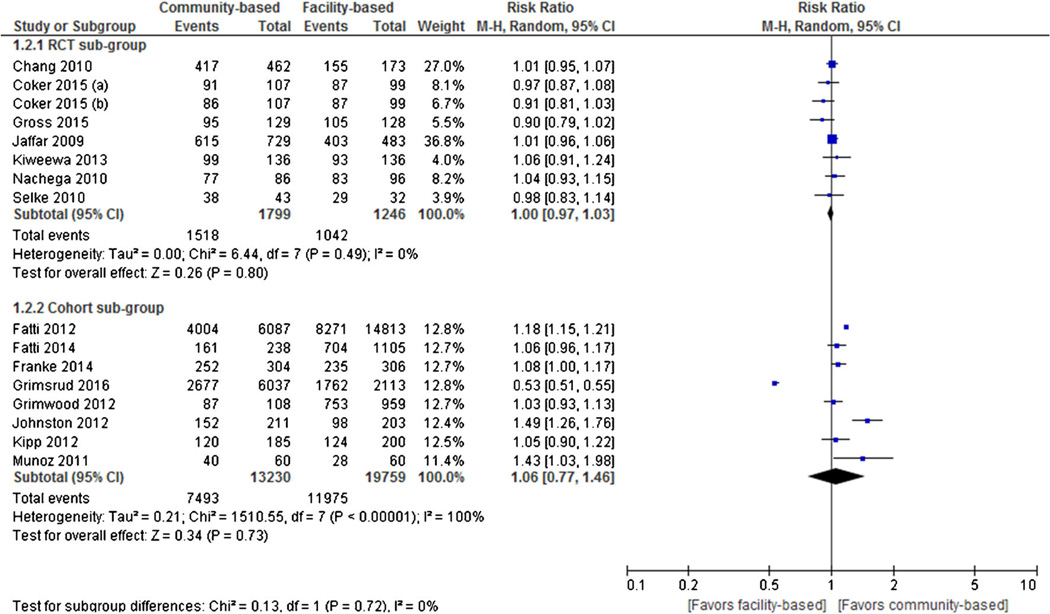
Description:Little is known about the effect of community versus health facility-based interventions to improve and sustain antiretroviral therapy (ART) adherence, virologic suppression, and retention in care among HIV-infected individuals in low- and middle-income countries (LMICs). We systematically searched four electronic databases for all available randomized controlled trials (RCTs) and comparative cohort studies in LMICs comparing community versus health facility-based interventions. Relative risks (RRs) for pre-defined adherence, treatment engagement (linkage and retention in care), and relevant clinical outcomes were pooled using random effect models. Eleven cohort studies and eleven RCTs (N = 97,657) were included. Meta-analysis of the included RCTs comparing community- versus health facility-based interventions found comparable outcomes in terms of ART adherence (RR = 1.02, 95 % CI 0.99 to 1.04), virologic suppression (RR = 1.00, 95 % CI 0.98 to 1.03), and all-cause mortality (RR = 0.93, 95 % CI 0.73 to 1.18). The result of pooled analysis from the RCTs (RR = 1.03, 95 % CI 1.01 to 1.06) and cohort studies (RR = 1.09, 95 % CI 1.03 to 1.15) found that participants assigned to community-based interventions had statistically significantly higher rates of treatment engagement. Two studies found community-based ART delivery model either cost-saving or cost-effective. Community- versus facility-based models of ART delivery resulted in at least comparable outcomes for clinically stable HIV-infected patients on treatment in LMICs and are likely to be cost-effective.
-
Subjects:
-
Keywords:
-
Source:Curr HIV/AIDS Rep. 13(5):241-255
-
Pubmed ID:27475643
-
Pubmed Central ID:PMC5357578
-
Document Type:
-
Funding:P30 MH062246/MH/NIMH NIH HHSUnited States/ ; UL1 TR001863/TR/NCATS NIH HHSUnited States/ ; U2G GH001536/GH/CGH CDC HHSUnited States/ ; R01 DA013805/DA/NIDA NIH HHSUnited States/ ; PEPFAR/PEPFARUnited States/ ; K24 DA017072/DA/NIDA NIH HHSUnited States/ ; 001/WHO_/World Health OrganizationInternational/ ; UM1 AI069521/AI/NIAID NIH HHSUnited States/ ; WT_/Wellcome TrustUnited Kingdom/
-
Volume:13
-
Issue:5
-
Collection(s):
-
Main Document Checksum:urn:sha256:2ded1b9522c9471ee26c89e143cf75a5ac3bb5bf22e03748f754b8b21af07d05
-
Download URL:
-
File Type:
 [PDF
- 1.39 MB
]
[PDF
- 1.39 MB
]
Supporting Files


File Language:
English
ON THIS PAGE



CDC STACKS serves as an archival repository of CDC-published products including
scientific findings,
journal articles, guidelines, recommendations, or other public health information authored or
co-authored by CDC or funded partners.
As a repository, CDC STACKS retains documents in their original published format to ensure public access to scientific information.
As a repository, CDC STACKS retains documents in their original published format to ensure public access to scientific information.
You May Also Like
COLLECTION
CDC Public Access