



Modeling indoor particulate exposures in inner city school classrooms
Supporting Files

-
9 2017 ; 9-2017
-
Available in CDC Stacks on 2017-09-01T00:00:00Z
File Language:
English
Details
-
Alternative Title:J Expo Sci Environ Epidemiol
-
Personal Author:Gaffin, Jonathan M. ; Petty, Carter R. ; Hauptman, Marissa ; Kang, Choong-Min ; Wolfson, Jack M. ; Awad, Yara Abu ; Di, Qian ; Lai, Peggy S. ; Sheehan, William J. ; Baxi, Sachin ; Coull, Brent A. ; Schwartz, Joel D. ; Gold, Diane R. ; Koutrakis, Petros ; Phipatanakul, Wanda
-
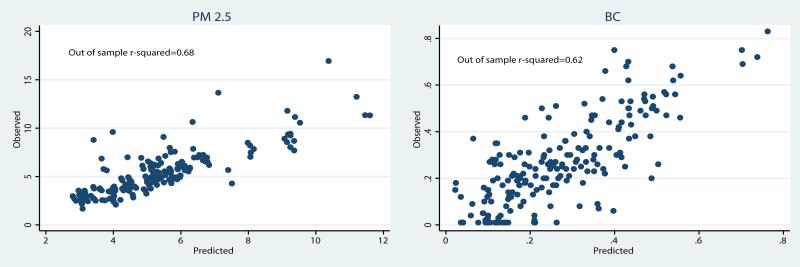
Description:Outdoor air pollution penetrates buildings and contributes to total indoor exposures. We investigated the relationship of indoor to outdoor particulate matter in inner-city school classrooms. The School Inner City Asthma Study investigates the effect of classroom-based environmental exposures on students with asthma in the northeast United States. Mixed effects linear models were used to determine the relationships between indoor PM| (particulate matter) and black carbon (BC), and their corresponding outdoor concentrations, and to develop a model for predicting exposures to these pollutants. The indoor-outdoor sulfur ratio was used as an infiltration factor of outdoor fine particles. Weeklong concentrations of PM| and BC in 199 samples from 136 classrooms (30 school buildings) were compared with those measured at a central monitoring site averaged over the same timeframe. Mixed effects regression models found significant random intercept and slope effects, which indicate that: (1) there are important PM| sources in classrooms; (2) the penetration of outdoor PM| particles varies by school and (3) the site-specific outside PM| levels (inferred by the models) differ from those observed at the central monitor site. Similar results were found for BC except for lack of indoor sources. The fitted predictions from the sulfur-adjusted models were moderately predictive of observed indoor pollutant levels (out of sample correlations: PM|: r|=0.68, BC; r|=0.61). Our results suggest that PM| has important classroom sources, which vary by school. Furthermore, using these mixed effects models, classroom exposures can be accurately predicted for dates when central site measures are available but indoor measures are not available.
-
Subjects:
-
Keywords:
-
Source:J Expo Sci Environ Epidemiol. 27(5):451-457
-
Pubmed ID:27599884
-
Pubmed Central ID:PMC5340641
-
Document Type:
-
Funding:U01 AI110397/AI/NIAID NIH HHSUnited States/ ; R01 AI073964/AI/NIAID NIH HHSUnited States/ ; K23 AI104780/AI/NIAID NIH HHSUnited States/ ; U61 TS000237/TS/ATSDR CDC HHSUnited States/ ; U10 HL098102/HL/NHLBI NIH HHSUnited States/ ; U01 AI126614/AI/NIAID NIH HHSUnited States/ ; UL1 TR001102/TR/NCATS NIH HHSUnited States/ ; K23 ES023700/ES/NIEHS NIH HHSUnited States/ ; K24 AI106822/AI/NIAID NIH HHSUnited States/ ; K23 AI106945/AI/NIAID NIH HHSUnited States/ ; L40 AI107923/AI/NIAID NIH HHSUnited States/
-
Volume:27
-
Issue:5
-
Download URL:
-
File Type:
 [PDF - 1.37 MB]
 -
Collection(s):
-
Main Document Checksum:urn:sha256:e5cfe3df7697d0c7e17cc056fd984df309bd0e7062bd3c4bc9fdc4ca70c56377
Supporting Files


File Language:
English
 Was this page helpful?
 Found an issue?



CDC STACKS serves as an archival repository of CDC-published products including
scientific findings, journal articles, guidelines, recommendations, or other public health information authored or
co-authored by CDC or funded partners.
As a repository, CDC STACKS retains documents in their original published format to ensure public access to scientific information.
As a repository, CDC STACKS retains documents in their original published format to ensure public access to scientific information.
You May Also Like
COLLECTION
CDC Public Access