


Using Linked Federal and State Data to Study the Adequacy of Workers’ Compensation Benefits
Supporting Files

-
Oct 2014
-
File Language:
English
Details
-
Alternative Title:Am J Ind Med
-
Personal Author:
-
Description:Background
We combined federal and state administrative data to study the long-term earnings losses associated with occupational injuries and assess the adequacy of workers’ compensation benefits.
Methods
We linked state data on workers’ compensation claims from New Mexico for claimants injured from 1994-2000 to federal earnings records from 1987-2007. We estimated earnings losses up to 10 years after injury and computed the fraction of losses replaced by benefits.
Results
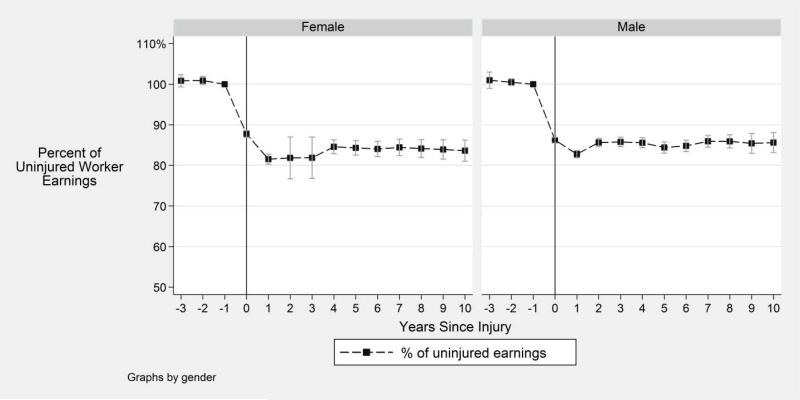
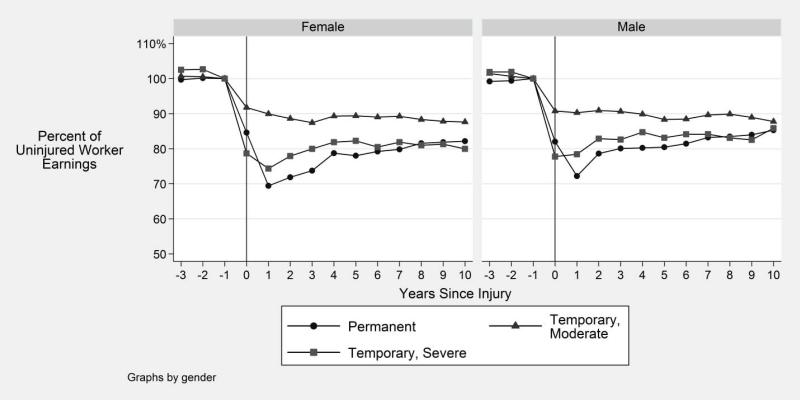
Workers with lost-time injuries lost an average of 15% of their earnings over the 10 years after injury. On average, workers’ compensation income benefits replaced 16% of these losses. Men and women had similar losses and replacement rates. Workers with minor injuries had lower losses but also had lower replacement rates.
Conclusion
Earnings losses after an injury are highly persistent, even for comparatively minor injuries. Income benefits replace a smaller fraction of those losses than previously believed.
-
Subjects:
-
Source:Am J Ind Med. 57(10):1165-1173.
-
Pubmed ID:25223516
-
Pubmed Central ID:PMC5223776
-
Document Type:
-
Funding:
-
Place as Subject:
-
Volume:57
-
Issue:10
-
Collection(s):
-
Main Document Checksum:urn:sha256:65a1725583ed10d7a1548db6877fc03155f01b3463eba4a969a55003e840d82d
-
Download URL:
-
File Type:
 [PDF
- 730.40 KB
]
[PDF
- 730.40 KB
]
Supporting Files


File Language:
English
ON THIS PAGE



CDC STACKS serves as an archival repository of CDC-published products including
scientific findings,
journal articles, guidelines, recommendations, or other public health information authored or
co-authored by CDC or funded partners.
As a repository, CDC STACKS retains documents in their original published format to ensure public access to scientific information.
As a repository, CDC STACKS retains documents in their original published format to ensure public access to scientific information.
You May Also Like
COLLECTION
CDC Public Access