



Evidence of non-Plasmodium falciparum malaria infection in Kédougou, Sénégal
Supporting Files
Public Domain

-
Jan 03 2017
-
Available in CDC Stacks on 2017-01-03T00:00:00Z
File Language:
English
Details
-
Alternative Title:Malar J
-
Personal Author:Daniels, Rachel F. ; Deme, Awa Bineta ; Gomis, Jules F. ; Dieye, Baba ; Durfee, Katelyn ; Thwing, Julie I. ; Fall, Fatou B. ; Ba, Mady ; Ndiop, Medoune ; Badiane, Aida S. ; Ndiaye, Yaye Die ; Wirth, Dyann F. ; Volkman, Sarah K. ; Ndiaye, Daouda
-
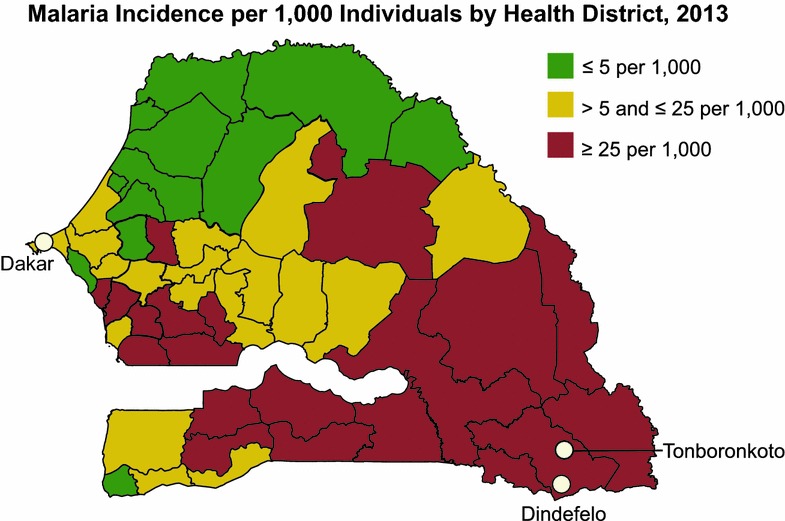
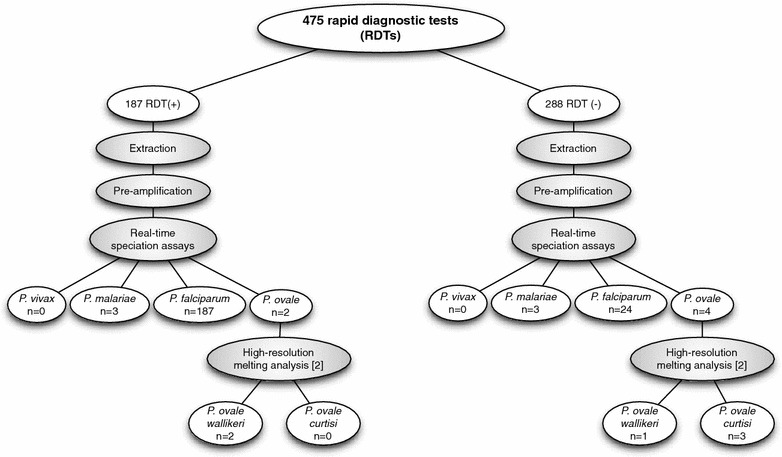
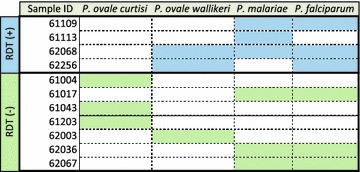
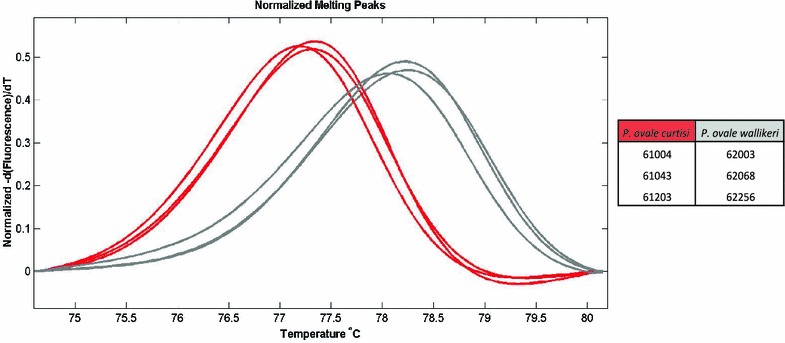
Description:Background ; Expanded malaria control efforts in Sénégal have resulted in increased use of rapid diagnostic tests (RDT) to identify the primary disease-causing Plasmodium species, Plasmodium falciparum. However, the type of RDT utilized in Sénégal does not detect other malaria-causing species such as Plasmodium ovale spp., Plasmodium malariae, or Plasmodium vivax. Consequently, there is a lack of information about the frequency and types of malaria infections occurring in Sénégal. This study set out to better determine whether species other than P. falciparum were evident among patients evaluated for possible malaria infection in Kédougou, Sénégal. ; Methods ; Real-time polymerase chain reaction speciation assays for P. vivax, P. ovale spp., and P. malariae were developed and validated by sequencing and DNA extracted from 475 Plasmodium falciparum-specific HRP2-based RDT collected between 2013 and 2014 from a facility-based sample of symptomatic patients from two health clinics in Kédougou, a hyper-endemic region in southeastern Sénégal, were analysed. ; Results ; Plasmodium malariae (n = 3) and P. ovale wallikeri (n = 2) were observed as co-infections with P. falciparum among patients with positive RDT results (n = 187), including one patient positive for all three species. Among 288 negative RDT samples, samples positive for P. falciparum (n = 24), P. ovale curtisi (n = 3), P. ovale wallikeri (n = 1), and P. malariae (n = 3) were identified, corresponding to a non-falciparum positivity rate of 2.5%. ; Conclusions ; These findings emphasize the limitations of the RDT used for malaria diagnosis and demonstrate that non-P. falciparum malaria infections occur in Sénégal. Current RDT used for routine clinical diagnosis do not necessarily provide an accurate reflection of malaria transmission in Kédougou, Sénégal, and more sensitive and specific methods are required for diagnosis and patient care, as well as surveillance and elimination activities. These findings have implications for other malaria endemic settings where species besides P. falciparum may be transmitted and overlooked by control or elimination activities. ; Electronic supplementary material ; The online version of this article (doi:10.1186/s12936-016-1661-3) contains supplementary material, which is available to authorized users.
-
Subjects:
- Research
- Plasmodium falciparum
- Plasmodium ovale curtisi
- Plasmodium ovale wallikeri
- Plasmodium malariae
- Rapid diagnostic test
- Adolescent
- Adult
- Aged
- Aged, 80 and over
- Child
- Child, Preschool
- Diagnostic Tests, Routine
- Female
- Humans
- Infant
- Malaria
- Male
- Middle Aged
- Plasmodium ovale
- Plasmodium vivax
- Prevalence
- Real-Time Polymerase Chain Reaction
- Sensitivity and Specificity
- Young Adult
-
Source:Malar J. 16.
-
Pubmed ID:28049489
-
Pubmed Central ID:PMC5209815
-
Document Type:
-
Place as Subject:
-
Volume:16
-
Download URL:
-
File Type:
 [PDF - 2.39 MB]
 -
Collection(s):
-
Main Document Checksum:urn:sha256:6b8f8fab497ed05da760e0892fd87a0b738eb629fa7ba801be74c3045d3310b4
Supporting Files


File Language:
English
 Was this page helpful?
 Found an issue?





CDC STACKS serves as an archival repository of CDC-published products including
scientific findings, journal articles, guidelines, recommendations, or other public health information authored or
co-authored by CDC or funded partners.
As a repository, CDC STACKS retains documents in their original published format to ensure public access to scientific information.
As a repository, CDC STACKS retains documents in their original published format to ensure public access to scientific information.
You May Also Like
COLLECTION
CDC Public Access