


Feasibility Study of HIV Sentinel Surveillance using PMTCT data in Cameroon: from Scientific Success to Programmatic Failure
Supporting Files

-
1 3 2017
-
File Language:
English
Details
-
Alternative Title:BMC Infect Dis
-
Personal Author:
-
Description:Background
In low-income countries (LICs), HIV sentinel surveillance surveys (HIV-SSS) are recommended in between two demographic and health surveys, due to low-cost than the latter. Using the classical unlinked anonymous testing (UAT), HIV-SSS among pregnant women raised certain ethical and financial challenges. We therefore aimed at evaluating how to use prevention of mother-to-child transmission of HIV (PMTCT) routine data as an alternative approach for HIV-SSS in LICs.
Methods
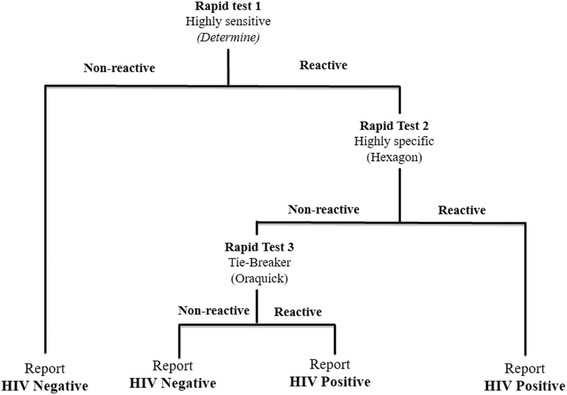
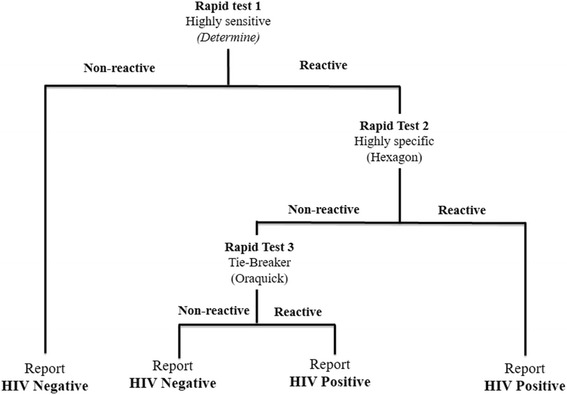
A survey conducted through 2012 among first antenatal-care attendees (ANC1) in the ten regions of Cameroon. HIV testing was performed at PMTCT clinics as-per the national serial algorithm (rapid test), and PMTCT site laboratory (PMTCT-SL) performances were evaluated by comparison with results of the national reference laboratory (NRL), determined as the reference standard.
Results
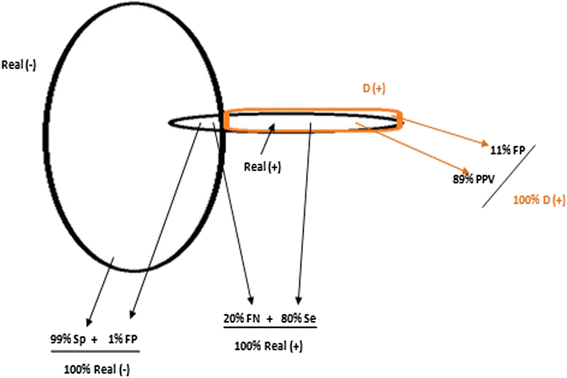
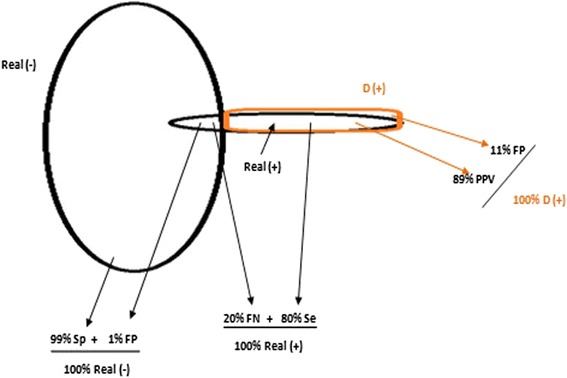
Acceptance rate for HIV testing was 99%, for a total of 6521 ANC1 (49 · 3% aged 15–24) enrolled nationwide. Among 6103 eligible ANC1, sensitivity (using NRL testing as the reference standard) was 81 · 2%, ranging from 58 · 8% (South region) to 100% (West region); thus implying that 18 · 8% HIV-infected ANC1 declared HIV-negative at the PMTCT-SL were positive from NRL-results. Specificity was 99 · 3%, without significant disparity across sites. At population-level, this implies that every year in Cameroon, ~2,500 HIV-infected women are wrongly declared seronegative, while ~1,000 are wrongly declared seropositive. Only 44 · 4% (16/36) of evaluated laboratories reached the quality target of 80%.
Conclusions
The study identified weaknesses in routine PMTCT HIV testing. As Cameroon transitions to using routine PMTCT data for HIV-SSS among pregnant women, there is need in optimizing quality system to ensure robust routine HIV testing for programmatic and surveillance purposes.
Electronic supplementary material
The online version of this article (doi:10.1186/s12879-016-2119-5) contains supplementary material, which is available to authorized users.
-
Subjects:
-
Source:BMC Infect Dis. 17
-
Pubmed ID:28049451
-
Pubmed Central ID:PMC5209823
-
Document Type:
-
Funding:
-
Place as Subject:
-
Volume:17
-
Collection(s):
-
Main Document Checksum:urn:sha256:db4c5528b2b44a65366cbabea07d067532788445a53d97ae9e8c5276f283fb67
-
Download URL:
-
File Type:
 [PDF
- 500.40 KB
]
[PDF
- 500.40 KB
]
Supporting Files


File Language:
English
ON THIS PAGE







CDC STACKS serves as an archival repository of CDC-published products including
scientific findings,
journal articles, guidelines, recommendations, or other public health information authored or
co-authored by CDC or funded partners.
As a repository, CDC STACKS retains documents in their original published format to ensure public access to scientific information.
As a repository, CDC STACKS retains documents in their original published format to ensure public access to scientific information.
You May Also Like
COLLECTION
CDC Public Access