


Routine Vaccination Coverage in Northern Nigeria: Results from 40 District-Level Cluster Surveys, 2014-2015
Supporting Files
Public Domain

-
Dec 09 2016
-
File Language:
English
Details
-
Alternative Title:PLoS One
-
Personal Author:
-
Description:Background
Despite recent success towards controlling poliovirus transmission, Nigeria has struggled to achieve uniformly high routine vaccination coverage. A lack of reliable vaccination coverage data at the operational level makes it challenging to target program improvement. To reliably estimate vaccination coverage, we conducted district-level vaccine coverage surveys using a pre-existing infrastructure of polio technical staff in northern Nigeria.
Methods
Household-level cluster surveys were conducted in 40 polio high risk districts of Nigeria during 2014–2015. Global positioning system technology and intensive supervision by a pool of qualified technical staff were used to ensure high survey quality. Vaccination status of children aged 12–23 months was documented based on vaccination card or caretaker’s recall. District-level coverage estimates were calculated using survey methods.
Results
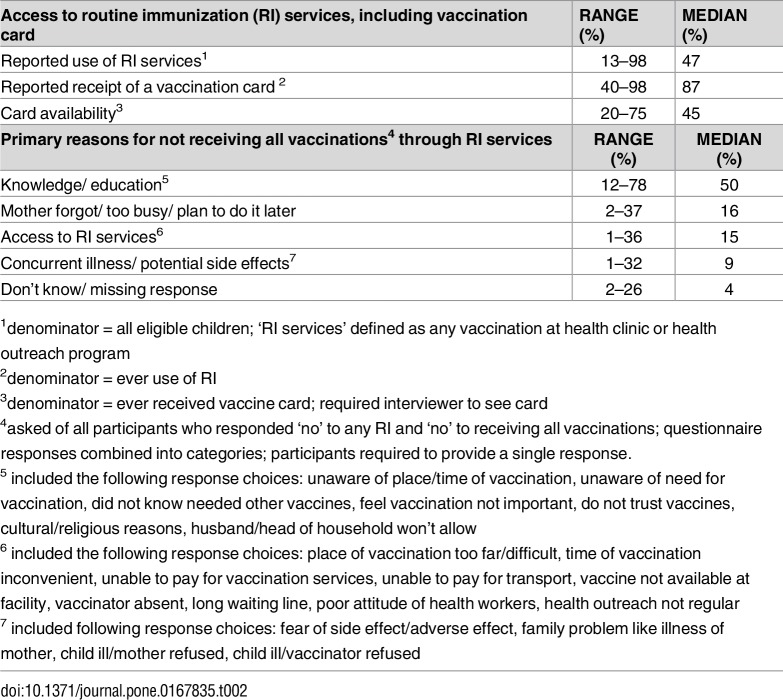
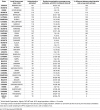
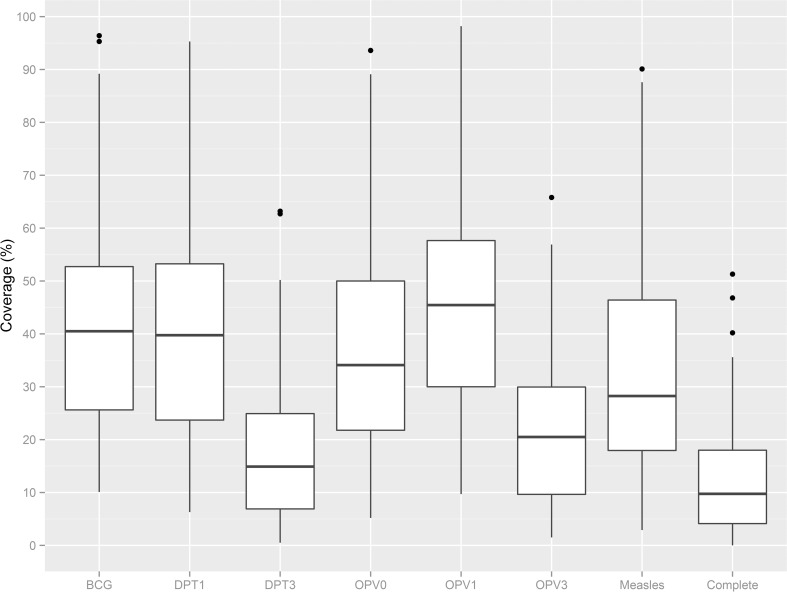
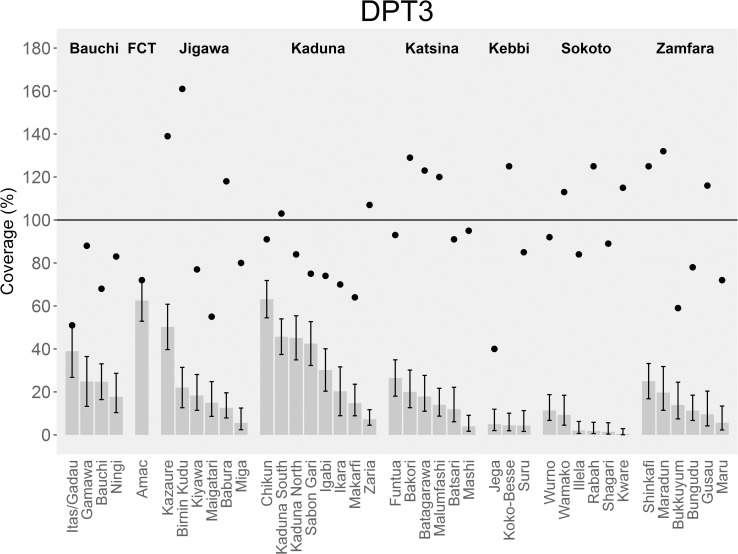
Data from 7,815 children across 40 districts were analyzed. District-level coverage with the third dose of diphtheria-pertussis-tetanus vaccine (DPT3) ranged widely from 1–63%, with all districts having DPT3 coverage below the target of 80%. Median coverage across all districts for each of eight vaccine doses (1 Bacille Calmette-Guérin dose, 3 DPT doses, 3 oral poliovirus vaccine doses, and 1 measles vaccine dose) was <50%. DPT3 coverage by survey was substantially lower (range: 28%–139%) than the 2013 administrative coverage reported among children aged <12 months. Common reported reasons for non-vaccination included lack of knowledge about vaccines and vaccination services (50%) and factors related to access to routine immunization services (15%).
Conclusions
Survey results highlighted vaccine coverage gaps that were systematically underestimated by administrative reporting across 40 polio high risk districts in northern Nigeria. Given the limitations of administrative coverage data, our approach to conducting quality district-level coverage surveys and providing data to assess and remediate issues contributing to poor vaccination coverage could serve as an example in countries with sub-optimal vaccination coverage, similar to Nigeria.
-
Subjects:
-
Source:PLoS One. 11(12).
-
Pubmed ID:27936077
-
Pubmed Central ID:PMC5148043
-
Document Type:
-
Place as Subject:
-
Volume:11
-
Issue:12
-
Collection(s):
-
Main Document Checksum:urn:sha256:33cfe86caccc66205a466f9a483209ecc1d4553200ac9d0c04d9d8a28bae7af1
-
Download URL:
-
File Type:
 [PDF
- 1.45 MB
]
[PDF
- 1.45 MB
]
Supporting Files


File Language:
English
ON THIS PAGE




CDC STACKS serves as an archival repository of CDC-published products including
scientific findings,
journal articles, guidelines, recommendations, or other public health information authored or
co-authored by CDC or funded partners.
As a repository, CDC STACKS retains documents in their original published format to ensure public access to scientific information.
As a repository, CDC STACKS retains documents in their original published format to ensure public access to scientific information.
You May Also Like
COLLECTION
CDC Public Access