


Strengthening HIV surveillance in the antiretroviral therapy era: rationale and design of a longitudinal study to monitor HIV prevalence and incidence in the uMgungundlovu District, KwaZulu-Natal, South Africa
Supporting Files

-
Nov 20 2015
-
File Language:
English
Details
-
Alternative Title:BMC Public Health
-
Personal Author:Kharsany, Ayesha B. M. ; Cawood, Cherie ; Khanyile, David ; Grobler, Anneke ; Mckinnon, Lyle R. ; Samsunder, Natasha ; Frohlich, Janet A. ; Abdool Karim, Quarraisha ; Puren, Adrian ; Welte, Alex ; George, Gavin ; Govender, Kaymarlin ; Toledo, Carlos ; Chipeta, Zawadi ; Zembe, Lycias ; Glenshaw, Mary T. ; Madurai, Lorna ; Varough M., Deyde ; Bere, Alfred
-
Description:Background
South Africa has over 6,000,000 HIV infected individuals and the province of KwaZulu-Natal (KZN) is the most severely affected. As public health initiatives to better control the HIV epidemic are implemented, timely, detailed and robust surveillance data are needed to monitor, evaluate and inform the programmatic interventions and policies over time. We describe the rationale and design of the HIV Incidence Provincial Surveillance System (HIPSS) to monitor HIV prevalence and incidence.
Methods/Design
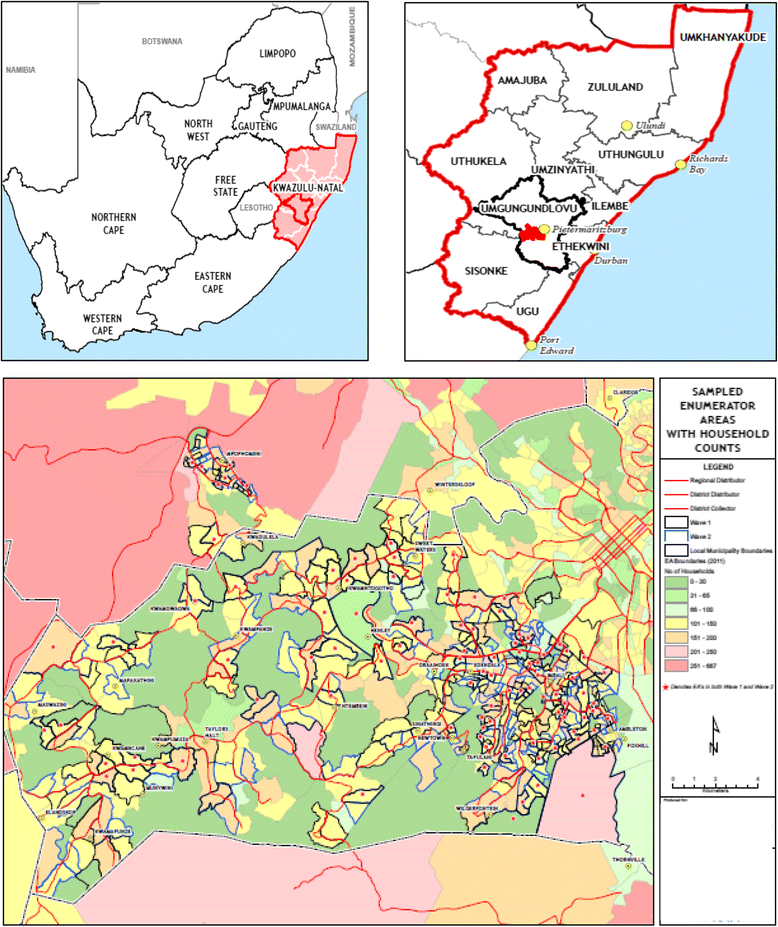
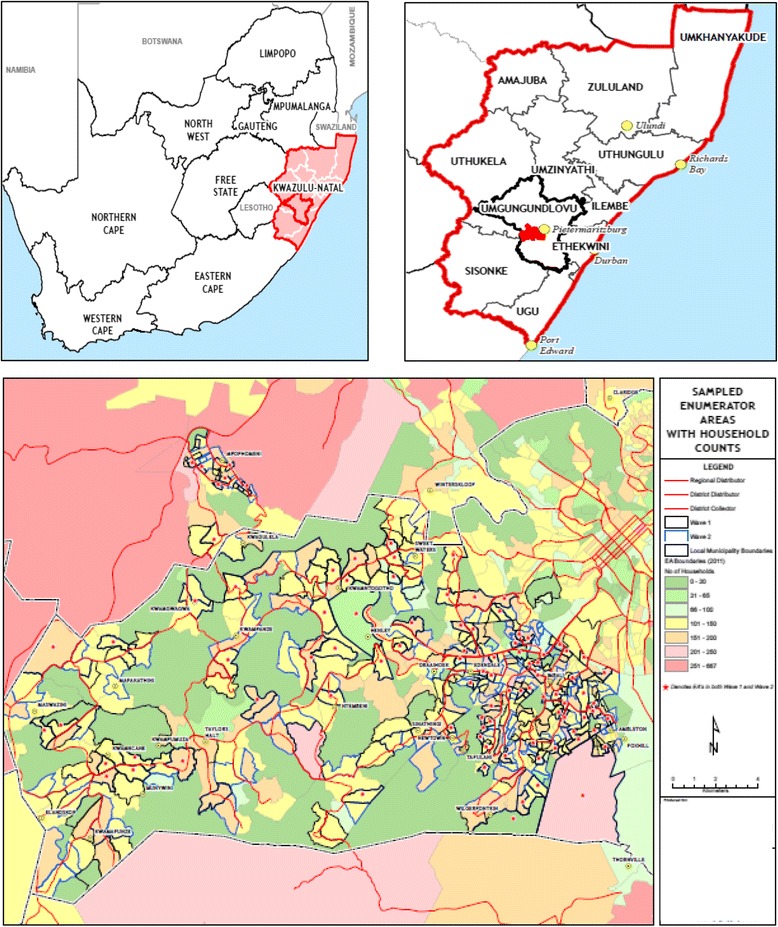
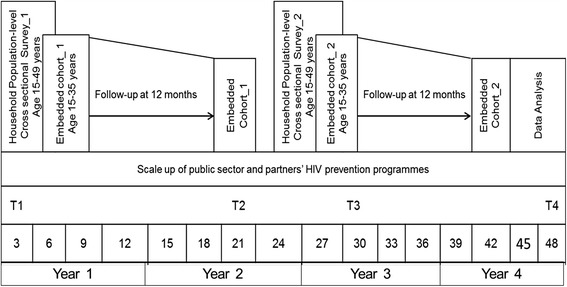
The household-based survey will include a sample of men and women from two sub-districts of the uMgungundlovu municipality (Vulindlela and the Greater Edendale) of KZN, South Africa. The study is designed as two sequential cross-sectional surveys of 10,000 randomly selected individuals aged 15–49 years to be conducted one year apart. From the cross sectional surveys, two sequential cohorts of HIV negative individuals aged 15–35 years will be followed-up one year later to measure the primary outcome of HIV incidence. Secondary outcomes include the laboratory measurements for pulmonary tuberculosis, sexually transmitted infections and evaluating tests for estimating population-level HIV incidence.
Discussion
The results from HIPSS will provide critical data regarding HIV prevalence and incidence in this community and will establish whether HIV prevention and treatment efforts in a “real world”, non-trial setting have an impact on HIV incidence at a population level. Importantly, the study design and methods will inform future methods for HIV surveillance.
-
Subjects:
-
Source:BMC Public Health. 15.
-
DOI:
-
Pubmed ID:26588902
-
Pubmed Central ID:PMC4654918
-
Document Type:
-
Funding:
-
Name as Subject:
-
Place as Subject:
-
Volume:15
-
Collection(s):
-
Main Document Checksum:urn:sha-512:cc91fe77ad19207c88bd109e2fd617b1e27de3d7913c0d632a0f515117abecba15a8631fc0e96620842a00346c89fdb74b62dac15fad93d47a12377e44e1bbb6
-
Download URL:
-
File Type:
 [PDF
- 3.19 MB
]
[PDF
- 3.19 MB
]
Supporting Files


File Language:
English
ON THIS PAGE


CDC STACKS serves as an archival repository of CDC-published products including
scientific findings,
journal articles, guidelines, recommendations, or other public health information authored or
co-authored by CDC or funded partners.
As a repository, CDC STACKS retains documents in their original published format to ensure public access to scientific information.
As a repository, CDC STACKS retains documents in their original published format to ensure public access to scientific information.
You May Also Like
COLLECTION
CDC Public Access