


Phylodynamics and Molecular Evolution of Influenza A Virus Nucleoprotein Genes in Taiwan between 1979 and 2009
Supporting Files
Public Domain

-
Aug 12 2011
-
File Language:
English
Details
-
Alternative Title:PLoS One
-
Personal Author:
-
Description:Background
Many studies concentrate on variation in the hemagglutinin glycoprotein (HA) because of its significance in host immune response, the evolution of this virus is even more complex when other genome segments are considered. Recently, it was found that cytotoxic T lymphocytes (CTL) play an important role in immunity against influenza and most CTL epitopes of human influenza viruses were remarkably conserved. The NP gene has evolved independently in human and avian hosts after 1918 flu pandemic and it has been assigned a putative role as a determinant of host range.
Methods and Findings
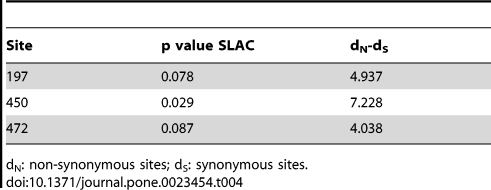
Phylodynamic patterns of the genes encoding nucleoprotein (NP) of influenza A viruses isolated from 1979–2009 were analyzed by applying the Bayesian Markov Chain Monte Carlo framework to better understand the evolutionary mechanisms of these Taiwanese isolates. Phylogenetic analysis of the NP gene showed that all available H3 worldwide isolates collected so far were genetically similar and divided into two major clades after the year 2004. We compared the deduced amino acid sequences of the NP sequences from human, avian and swine hosts to investigate the emergence of potential adaptive mutations. Overall, selective pressure on the NP gene of human influenza A viruses appeared to be dominated by purifying selection with a mean dN/dS ratio of 0.105. Site-selection analysis of 488 codons, however, also revealed 3 positively selected sites in addition to 139 negatively selected ones.
Conclusions
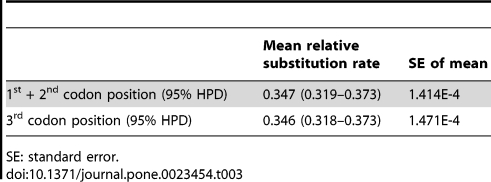
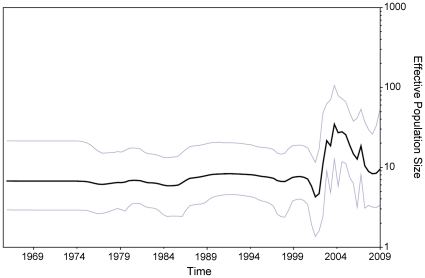
The demographic history inferred by Bayesian skyline plot showed that the effective number of infections underwent a period of smooth and steady growth from 1998 to 2001, followed by a more recent rise in the rate of spread. Further understanding the correlates of interspecies transmission of influenza A virus genes from other host reservoirs to the human population may help to elucidate the mechanisms of variability among influenza A virus.
-
Subjects:
-
Source:PLoS One. 2011; 6(8).
-
Document Type:
-
Place as Subject:
-
Volume:6
-
Issue:8
-
Collection(s):
-
Main Document Checksum:urn:sha-512:7401f434ff906c7363092cbb7a540749663e2f0946afc13ba6b1f099e78d63bdfa1af42226df2dc1b8513581dbc442b4b582a83ce07c282ff034e5812b6266b4
-
Download URL:
-
File Type:
 [PDF
- 195.60 KB
]
[PDF
- 195.60 KB
]
Supporting Files


File Language:
English
ON THIS PAGE









CDC STACKS serves as an archival repository of CDC-published products including
scientific findings,
journal articles, guidelines, recommendations, or other public health information authored or
co-authored by CDC or funded partners.
As a repository, CDC STACKS retains documents in their original published format to ensure public access to scientific information.
As a repository, CDC STACKS retains documents in their original published format to ensure public access to scientific information.
You May Also Like
COLLECTION
CDC Public Access