


Anti-Tuberculosis Drug Resistance among New and Previously Treated Sputum Smear-Positive Tuberculosis Patients in Uganda: Results of the First National Survey
Supporting Files

-
Aug 01 2013
-
File Language:
English
Details
-
Alternative Title:PLoS One
-
Personal Author:
-
Description:Background
Multidrug resistant and extensively drug resistant tuberculosis (TB) have become major threats to control of tuberculosis globally. The rates of anti-TB drug resistance in Uganda are not known. We conducted a national drug resistance survey to investigate the levels and patterns of resistance to first and second line anti-TB drugs among new and previously treated sputum smear-positive TB cases.
Methods
Sputum samples were collected from a nationally representative sample of new and previously treated sputum smear-positive TB patients registered at TB diagnostic centers during December 2009 to February 2011 using a weighted cluster sampling method. Culture and drug susceptibility testing was performed at the national TB reference laboratory.
Results
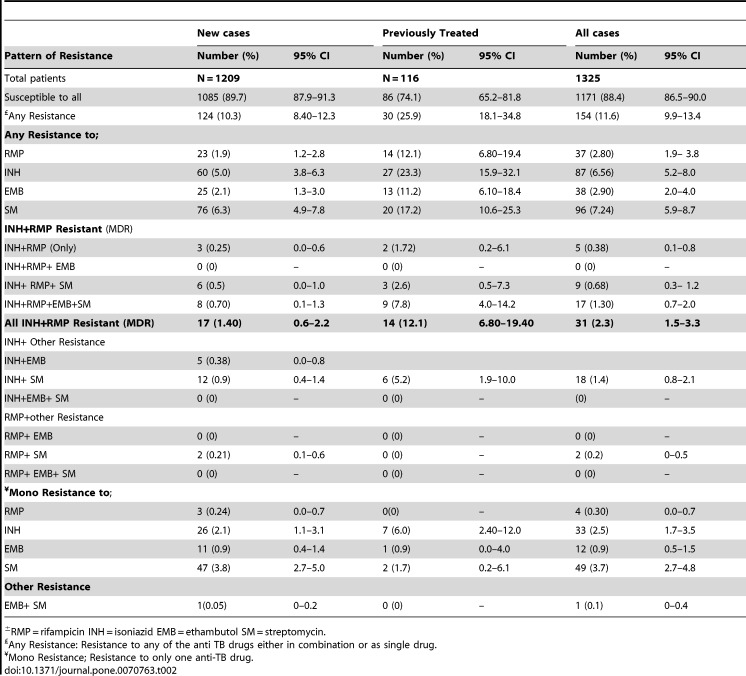
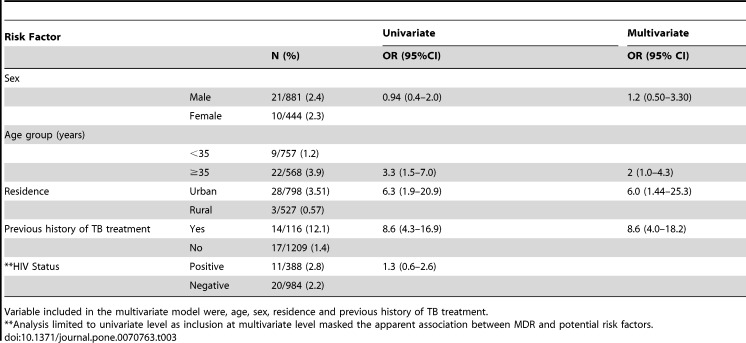
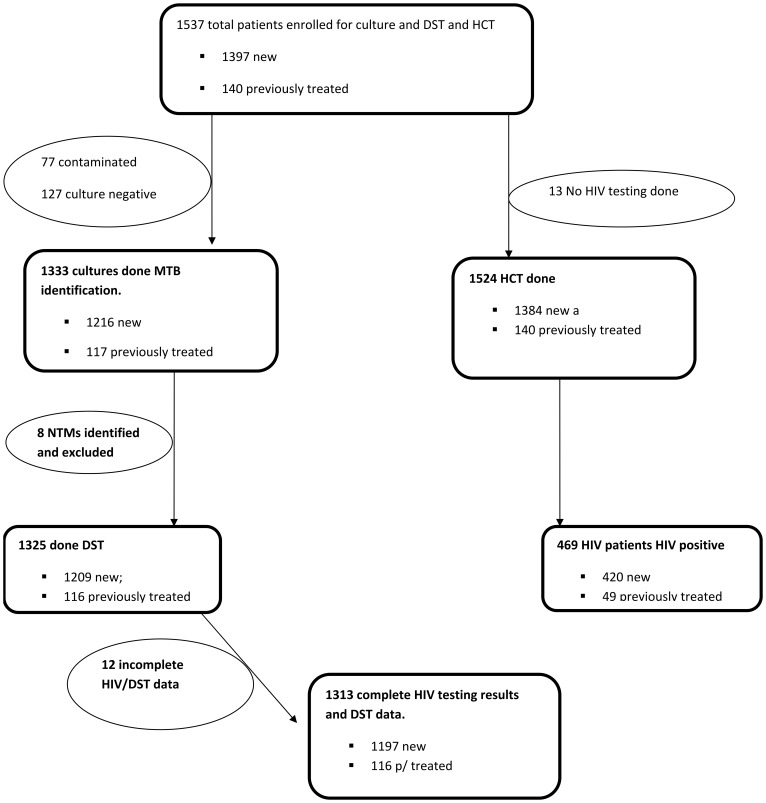
A total of 1537 patients (1397 new and 140 previously treated) were enrolled in the survey from 44 health facilities. HIV test result and complete drug susceptibility testing (DST) results were available for 1524 (96.8%) and 1325 (85.9%) patients, respectively. Of the 1209 isolates from new cases, resistance to any anti-TB drug was 10.3%, 5% were resistant to isoniazid, 1.9% to rifampicin, and 1.4% were multi drug resistant. Among the 116 isolates from previously treated cases, the prevalence of resistance was 25.9%, 23.3%, 12.1% and 12.1% respectively. Of the 1524 patients who had HIV testing 469 (30.7%) tested positive. There was no association between anti-TB drug resistance (including MDR) and HIV infection.
Conclusion
The prevalence of anti-TB drug resistance among new patients in Uganda is low relative to WHO estimates. The higher levels of MDR-TB (12.1%) and resistance to any drug (25.3%) among previously treated patients raises concerns about the quality of directly observed therapy (DOT) and adherence to treatment. This calls for strengthening existing TB control measures, especially DOT, routine DST among the previously treated TB patients or periodic drug resistance surveys, to prevent and monitor development and transmission of drug resistant TB.
-
Subjects:
-
Source:PLoS One. 2013; 8(8).
-
DOI:
-
Pubmed ID:23936467
-
Pubmed Central ID:PMC3731251
-
Document Type:
-
Funding:
-
Name as Subject:
-
Place as Subject:
-
Volume:8
-
Issue:8
-
Collection(s):
-
Main Document Checksum:urn:sha-512:c41a164cf882f207461b0fdefecca2d82fb551a5bbd206074fb114ffc87cf427df8f6e34b387357b3f8f9579fc93e7713b3dd5b18298a375817c2b53008285e9
-
Download URL:
-
File Type:
 [PDF
- 626.39 KB
]
[PDF
- 626.39 KB
]
Supporting Files


File Language:
English
ON THIS PAGE



CDC STACKS serves as an archival repository of CDC-published products including
scientific findings,
journal articles, guidelines, recommendations, or other public health information authored or
co-authored by CDC or funded partners.
As a repository, CDC STACKS retains documents in their original published format to ensure public access to scientific information.
As a repository, CDC STACKS retains documents in their original published format to ensure public access to scientific information.
You May Also Like
COLLECTION
CDC Public Access