



Trends in hospitalizations and cost associated with stroke by age, United States 2003–2012
Supporting Files

-
Jul 09 2016
-
Available in CDC Stacks on 2017-10-01T00:00:00Z
File Language:
English
Details
-
Alternative Title:Int J Stroke
-
Personal Author:
-
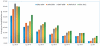
Description:Background ; The disease burden associated with stroke by age is not well known. ; Aim ; To assess the trends in stroke hospitalizations and associated cost among adults aged ≥18 years by age groups in the United States. ; Methods ; The study population consisted of 2003–2012 adult hospitalizations from the National Inpatient Sample of the Healthcare Cost and Utilization Project. Subarachnoid hemorrhage, intracerebral hemorrhage, and acute ischemic stroke hospitalizations were identified by the principal diagnosis ICD-9-CM code. We estimated national hospitalization rates and inflation-adjusted hospital costs across five consecutive 2-year time intervals, stratified by seven age groups. ; Results ; Hospitalization rates for subarachnoid hemorrhage decreased significantly from 2003–2004 to 2011–2012 for ages 35–44 (relative percent change (RPC): −23%) and 45–54 (RPC: −22%), respectively. For intracerebral hemorrhage, the rates decreased significantly for ages ≥65 years. Acute ischemic stroke hospitalization rates increased significantly for ages 18–54 and decreased significantly for ages 65–84 years. The average per-hospitalization cost for subarachnoid hemorrhage increased 7–35% among all age groups, except those aged 65–74, and increased 10–29% for intracerabral hemorrhage except those aged 75–84, and increased 6–19% among all ages for acute ischemic stroke, respectively. Overall, the estimated total national cost increased 7% for subarachnoid hemorrhage, 10% for intracerebral hemorrhage, and 18% for acute ischemic stroke from 2003–2004 to 2011–2012. ; Conclusions ; From 2003 to 2012, subarachnoid hemorrhage and intracerabral hemorrhage stroke hospitalization rates declined across all age groups. While US acute ischemic stroke hospitalizations among ages 65–84 declined significantly, the hospitalization rates increased significantly among ages 18–54. The estimated hospital costs increased across all stroke subtypes during the study period.
-
Subjects:
-
Source:Int J Stroke. 11(8):874-881.
-
Pubmed ID:27312679
-
Pubmed Central ID:PMC5161728
-
Document Type:
-
Funding:
-
Place as Subject:
-
Volume:11
-
Issue:8
-
Download URL:
-
File Type:
 [PDF - 395.88 KB]
 -
Collection(s):
-
Main Document Checksum:urn:sha256:9c216f3910366b94aae8a66dfcda3a6a857d9be034f259d009ef1bc79d0f4af8
Supporting Files


File Language:
English
 Was this page helpful?
 Found an issue?


CDC STACKS serves as an archival repository of CDC-published products including
scientific findings, journal articles, guidelines, recommendations, or other public health information authored or
co-authored by CDC or funded partners.
As a repository, CDC STACKS retains documents in their original published format to ensure public access to scientific information.
As a repository, CDC STACKS retains documents in their original published format to ensure public access to scientific information.
You May Also Like
COLLECTION
CDC Public Access