


No Association of Xenotropic Murine Leukemia Virus-Related Viruses with Prostate Cancer
Supporting Files
Public Domain

-
May 04 2011
-
File Language:
English
Details
-
Alternative Title:PLoS One
-
Personal Author:
-
Description:Background
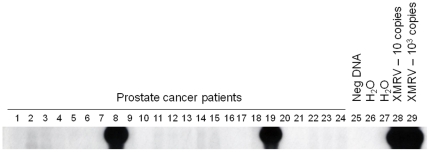
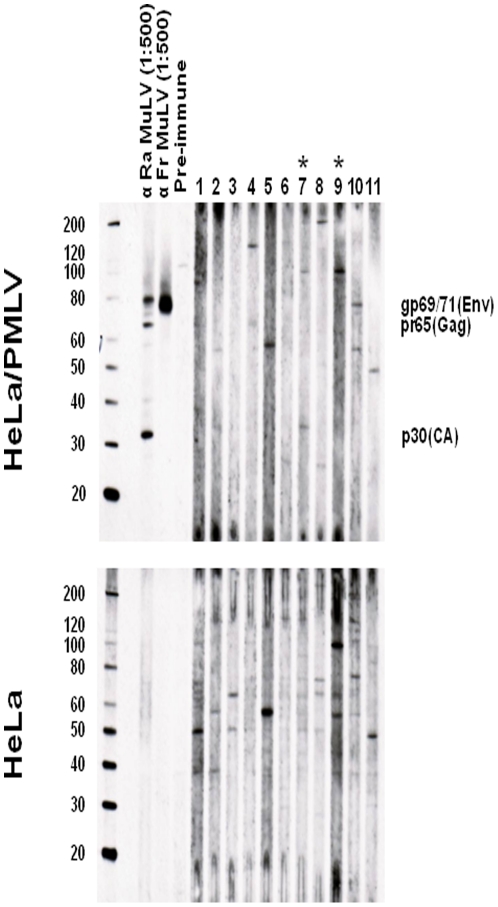
The association of the xenotropic murine leukemia virus-related virus (XMRV) with prostate cancer continues to receive heightened attention as studies report discrepant XMRV prevalences ranging from zero up to 23%. It is unclear if differences in the diagnostic testing, disease severity, geography, or other factors account for the discordant results. We report here the prevalence of XMRV in a population with well-defined prostate cancers and RNase L polymorphism. We used broadly reactive PCR and Western blot (WB) assays to detect infection with XMRV and related murine leukemia viruses (MLV).
Methodology/Principal Findings
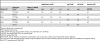
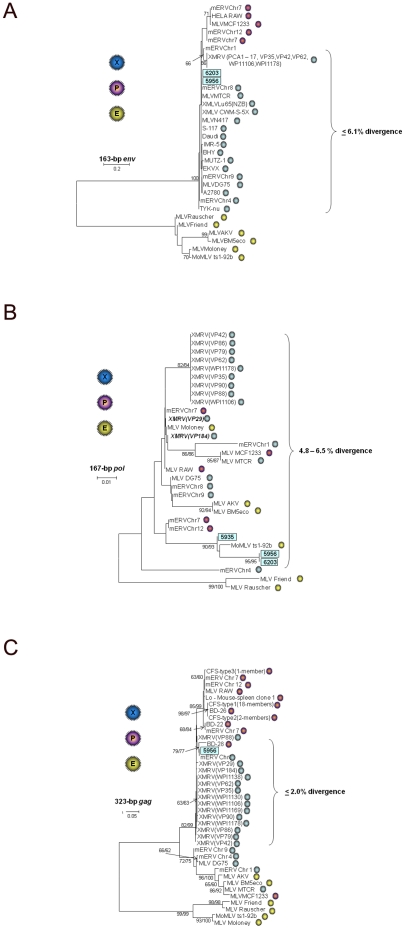
We studied specimens from 162 US patients diagnosed with prostate cancer with a intermediate to advanced stage (Gleason Scores of 5–10; moderate (46%) poorly differentiated tumors (54%)). Prostate tissue DNA was tested by PCR assays that detect XMRV and MLV variants. To exclude contamination with mouse DNA, we also designed and used a mouse-specific DNA PCR test. Detailed phylogenetic analysis was used to infer evolutionary relationships. RNase L typing showed that 9.3% were homozygous (QQ) for the R462Q RNase L mutation, while 45.6% and 45.1% were homozygous or heterozygous, respectively. Serologic testing was performed by a WB test. Three of 162 (1.9%) prostate tissue DNA were PCR-positive for XMRV and had undetectable mouse DNA. None was homozygous for the QQ mutation. Plasma from all three persons was negative for viral RNA by RT-PCR. All 162 patients were WB negative. Phylogenetic analysis inferred a distinct XMRV.
Conclusions and Their Significance
We found a very low prevalence of XMRV in prostate cancer patients. Infection was confirmed by phylogenetic analysis and absence of contaminating mouse DNA. The finding of undetectable antibodies and viremia in all three patients may reflect latent infection. Our results do not support an association of XMRV or MLV variants with prostate cancer.
-
Subjects:
-
Source:PLoS One. 6(5).
-
Document Type:
-
Volume:6
-
Issue:5
-
Collection(s):
-
Main Document Checksum:urn:sha-512:14c5f475059588f2f935bad8fab1129e77706895e17914961ce61b1dc56f2ed0e1d5d14f0244da0abbb5914e3cc1f02bba7721e9f587cdd102dd0d9d47aa50cd
-
Download URL:
-
File Type:
 [PDF
- 487.16 KB
]
[PDF
- 487.16 KB
]
Supporting Files


File Language:
English
ON THIS PAGE






CDC STACKS serves as an archival repository of CDC-published products including
scientific findings,
journal articles, guidelines, recommendations, or other public health information authored or
co-authored by CDC or funded partners.
As a repository, CDC STACKS retains documents in their original published format to ensure public access to scientific information.
As a repository, CDC STACKS retains documents in their original published format to ensure public access to scientific information.
You May Also Like
COLLECTION
CDC Public Access