


Measuring Haitian children's exposure to chikungunya, dengue and malaria
Supporting Files
Public Domain

-
Aug 31 2016
-
File Language:
English
Details
-
Alternative Title:Bull World Health Organ
-
Personal Author:
-
Description:Objective
To differentiate exposure to the newly introduced chikungunya virus from exposure to endemic dengue virus and other pathogens in Haiti.
Methods
We used a multiplex bead assay to detect immunoglobulin G (IgG) responses to a recombinant chikungunya virus antigen, two dengue virus-like particles and three recombinant Plasmodium falciparum antigens. Most (217) of the blood samples investigated were collected longitudinally, from each of 61 children, between 2011 and 2014 but another 127 were collected from a cross-sectional sample of children in 2014.
Findings
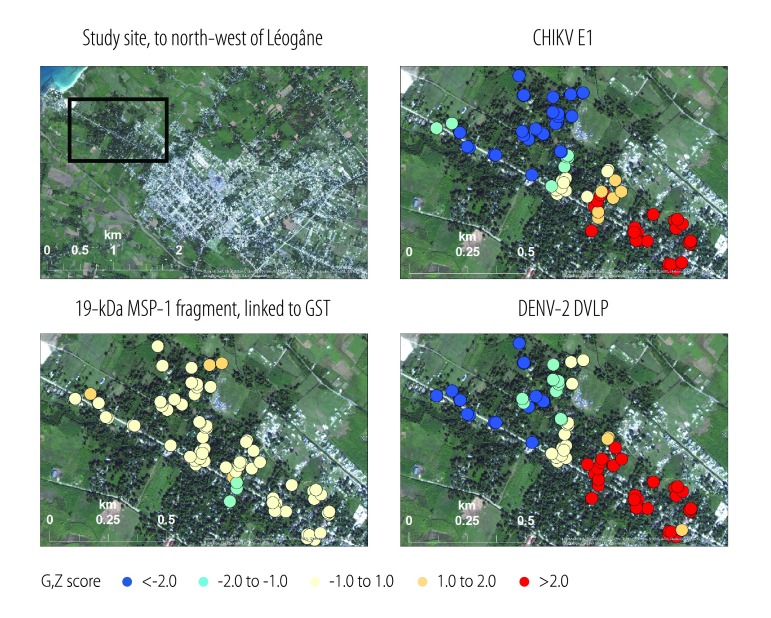
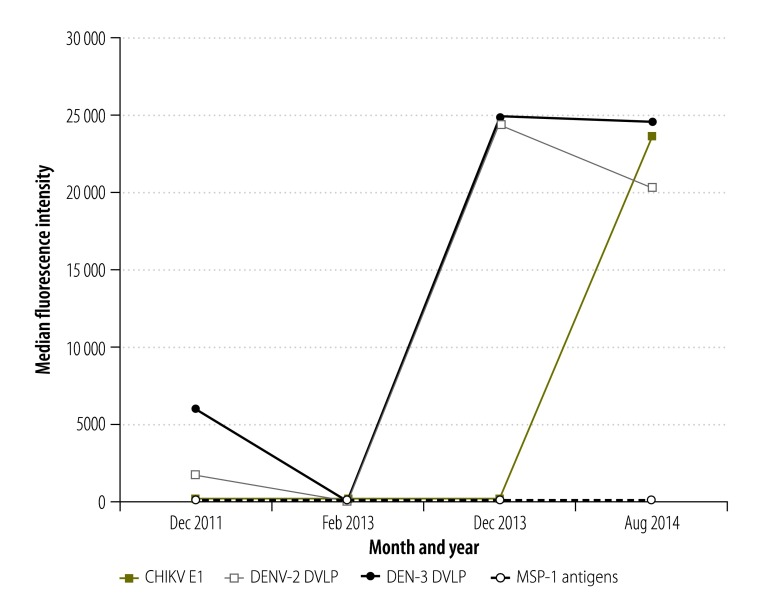
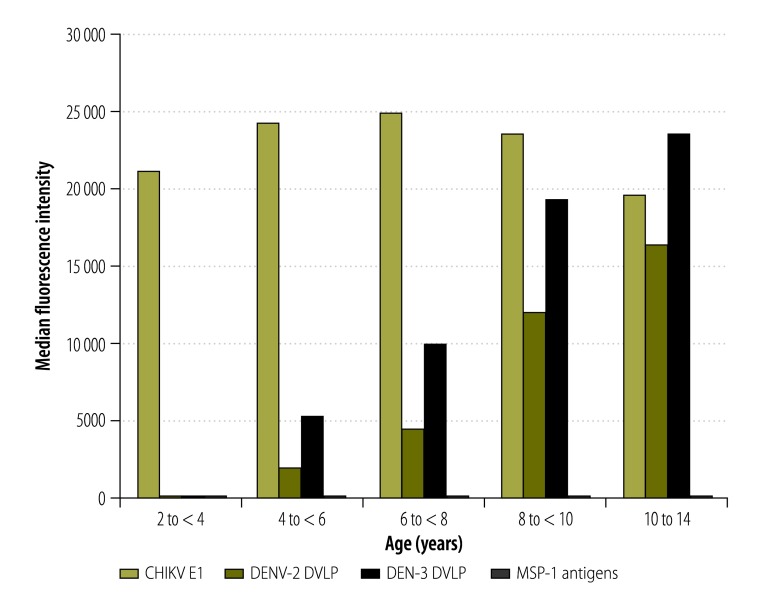
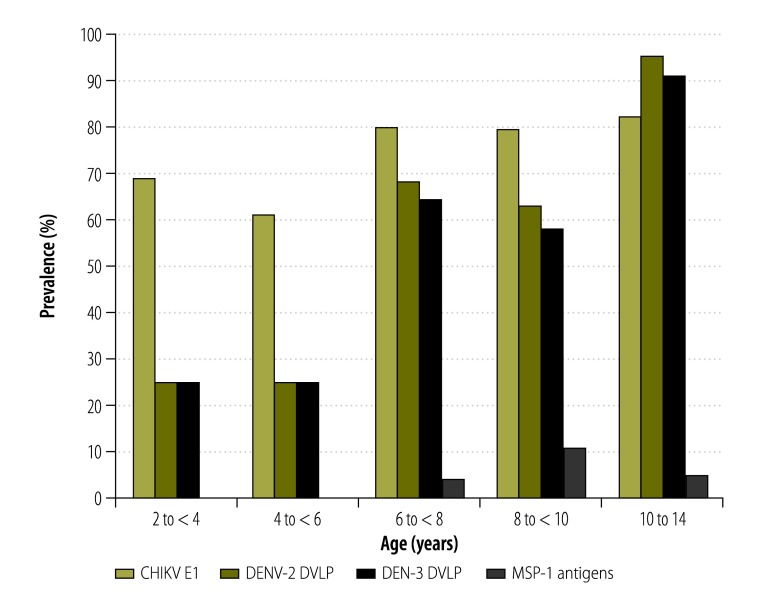
Of the samples from the longitudinal cohort, none of the 153 collected between 2011 and 2013 but 78.7% (48/61) of those collected in 2014 were positive for IgG responses to the chikungunya virus antigen. In the cross-sectional sample, such responses were detected in 96 (75.6%) of the children and occurred at similar prevalence across all age groups. In the same sample, responses to malarial antigen were only detected in eight children (6.3%) but the prevalence of IgG responses to dengue virus antigens was 60.6% (77/127) overall and increased steadily with age. Spatial analysis indicated that the prevalence of IgG responses to the chikungunya virus and one of the dengue virus-like particles decreased as the sampling site moved away from the city of Léogâne and towards the ocean.
Conclusion
Serological evidence indicates that there had been a rapid and intense dissemination of chikungunya virus in Haiti. The multiplex bead assay appears to be an appropriate serological platform to monitor the seroprevalence of multiple pathogens simultaneously.
-
Subjects:
-
Source:Bull World Health Organ. 2016; 94(11):817-825A.
-
Document Type:
-
Place as Subject:
-
Volume:94
-
Issue:11
-
Collection(s):
-
Main Document Checksum:urn:sha-512:04848d69b5bfe2f53639d95f2f60f482a28facb1ede1711558e55a69074f3a1caab9eecb4dddf63ae17beabaafb98d769ddd08d04ec346e2aa5d2aec94e23f48
-
Download URL:
-
File Type:
 [PDF
- 13.93 MB
]
[PDF
- 13.93 MB
]
Supporting Files


File Language:
English
ON THIS PAGE





CDC STACKS serves as an archival repository of CDC-published products including
scientific findings,
journal articles, guidelines, recommendations, or other public health information authored or
co-authored by CDC or funded partners.
As a repository, CDC STACKS retains documents in their original published format to ensure public access to scientific information.
As a repository, CDC STACKS retains documents in their original published format to ensure public access to scientific information.
You May Also Like
COLLECTION
CDC Public Access