



Multimorbidity and Functional Limitations Among Adults 65 or Older, NHANES 2005–2012
Supporting Files

-
Nov 03 2016
File Language:
English
Details
-
Journal Article:Preventing Chronic Disease (PCD)
-
Personal Author:
-
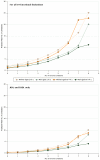
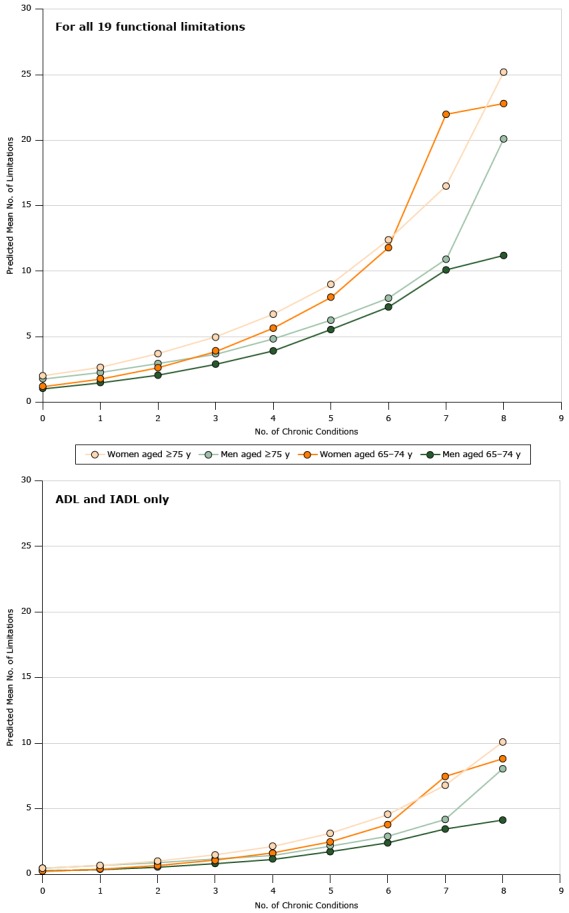
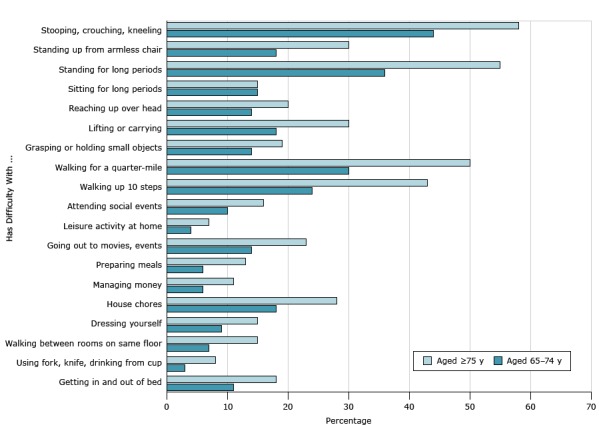
Description:Introduction ; The development of functional limitations among adults aged 65 or older has profound effects on individual and population resources. Improved understanding of the relationship between functional limitations and co-occurring chronic diseases (multimorbidity) is an emerging area of interest. The objective of this study was to investigate the association between multimorbidity and functional limitations among community-dwelling adults 65 or older in the United States and explore factors that modify this association. ; Methods ; We conducted a cross-sectional analysis of adults aged 65 or older using data from the National Health and Nutrition Examination Survey (NHANES) from 2005 through 2012. We used negative binomial regression to estimate the association between multimorbidity (≥2 concurrent diseases) and functional limitations and to determine whether the association differed by sex or age. ; Results ; The prevalence of multimorbidity in this population was 67% (95% confidence interval CI, 65%–68%). Each additional chronic condition was associated with an increase in the number of functional limitations, and the association was stronger among those aged 75 or older than among those aged 65 to 74. For those aged 65 to 74, each additional chronic condition was associated with 1.35 (95% CI, 1.27–1.43) times the number of functional limitations for men and 1.62 times (95% CI, 1.31–2.02) the number of functional limitations for women. For those 75 or older, the associations increased to 1.71 (95% CI, 1.35–2.16) for men and 2.06 (95% CI, 1.51–2.81) for women for each additional chronic condition. ; Conclusion ; Multimorbidity was associated with increases in functional limitations, and the associations were stronger among women than among men and among adults aged 75 or older than among those aged 65 to 74. These findings underscore the importance of addressing age and sex differences when formulating prevention strategies.
-
Subjects:
-
Source:Prev Chronic Dis. 13.
-
DOI:
-
ISSN:1545-1151
-
Pubmed ID:27809419
-
Pubmed Central ID:PMC5094859
-
Document Type:
-
Funding:
-
Corporate as Subject:
-
Place as Subject:
-
Volume:13
-
Download URL:
-
File Type:
 [PDF - 384.50 KB]
 -
Collection(s):
-
Main Document Checksum:urn:sha-512:ff34bdf7189bb107e0a5d032ea18ed111d4171e7dc4cc32f51d081745d01faedecfedfe6753e288f03adef57bbcda72e29165d61621f85b1711f164fb21396de
Supporting Files


File Language:
English
 Was this page helpful?
 Found an issue?


CDC STACKS serves as an archival repository of CDC-published products including
scientific findings, journal articles, guidelines, recommendations, or other public health information authored or
co-authored by CDC or funded partners.
As a repository, CDC STACKS retains documents in their original published format to ensure public access to scientific information.
As a repository, CDC STACKS retains documents in their original published format to ensure public access to scientific information.
You May Also Like
COLLECTION
Preventing Chronic Disease