


Receptor Specificity and Transmission of H2N2 Subtype Viruses Isolated from the Pandemic of 1957
Supporting Files
Public Domain

-
Jun 21 2010
-
File Language:
English
Details
-
Alternative Title:PLoS One
-
Personal Author:
-
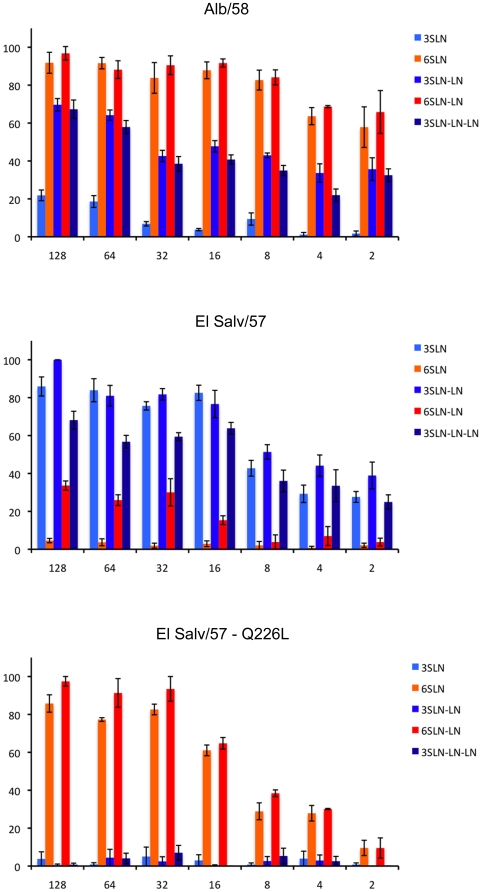
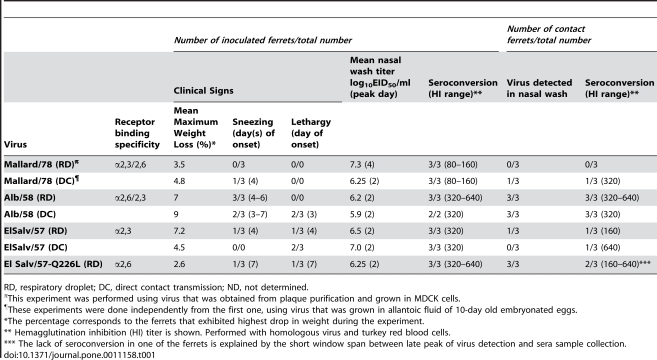
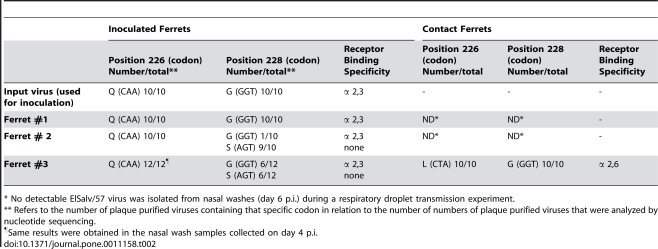
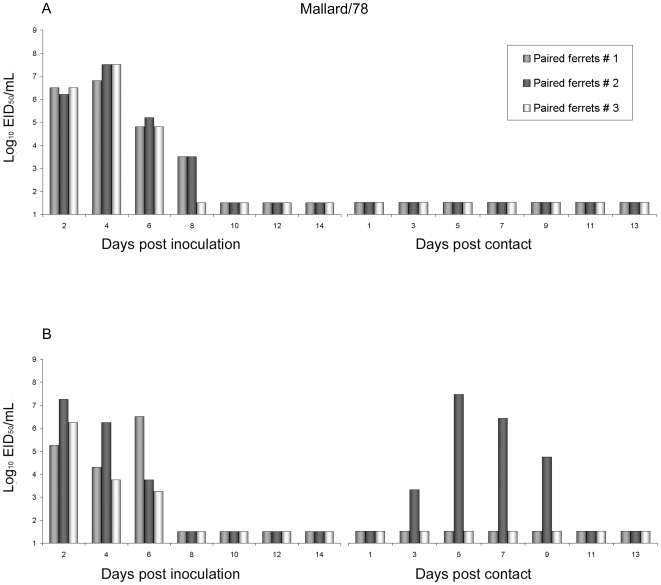
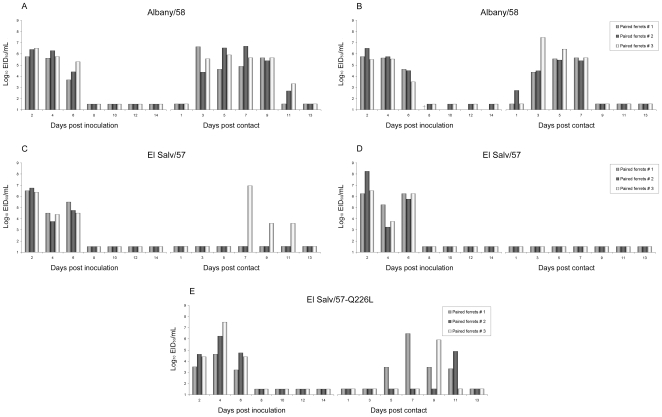
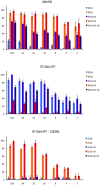
Description:Influenza viruses of the H2N2 subtype have not circulated among humans in over 40 years. The occasional isolation of avian H2 strains from swine and avian species coupled with waning population immunity to H2 hemagglutinin (HA) warrants investigation of this subtype due to its pandemic potential. In this study we examined the transmissibility of representative human H2N2 viruses, A/Albany/6/58 (Alb/58) and A/El Salvador/2/57 (ElSalv/57), isolated during the 1957/58 pandemic, in the ferret model. The receptor binding properties of these H2N2 viruses was analyzed using dose-dependent direct glycan array-binding assays. Alb/58 virus, which contains the 226L/228S amino acid combination in the HA and displayed dual binding to both alpha 2,6 and alpha 2,3 glycan receptors, transmitted efficiently to naïve ferrets by respiratory droplets. Inefficient transmission was observed with ElSalv/57 virus, which contains the 226Q/228G amino acid combination and preferentially binds alpha 2,3 over alpha 2,6 glycan receptors. However, a unique transmission event with the ElSalv/57 virus occurred which produced a 226L/228G H2N2 natural variant virus that displayed an increase in binding specificity to alpha 2,6 glycan receptors and enhanced respiratory droplet transmissibility. Our studies provide a correlation between binding affinity to glycan receptors with terminal alpha 2,6-linked sialic acid and the efficiency of respiratory droplet transmission for pandemic H2N2 influenza viruses.
-
Subjects:
-
Source:PLoS One. 5(6).
-
Document Type:
-
Volume:5
-
Issue:6
-
Collection(s):
-
Main Document Checksum:urn:sha-512:283fa674274cc7d37da8cb93d0f5192fd3dbffa84cfaa6b3437f42dea29e505a0d2df0e556018008dcd4823840fb2a04b0b1b34ec8fc94851ff6d74007767c3c
-
Download URL:
-
File Type:
 [PDF
- 487.94 KB
]
[PDF
- 487.94 KB
]
Supporting Files


File Language:
English
ON THIS PAGE






CDC STACKS serves as an archival repository of CDC-published products including
scientific findings,
journal articles, guidelines, recommendations, or other public health information authored or
co-authored by CDC or funded partners.
As a repository, CDC STACKS retains documents in their original published format to ensure public access to scientific information.
As a repository, CDC STACKS retains documents in their original published format to ensure public access to scientific information.
You May Also Like
COLLECTION
CDC Public Access