


Population pharmacokinetics of piperaquine in young Ugandan children treated with dihydroartemisinin-piperaquine for uncomplicated malaria
Supporting Files

-
May 2 2015
-
Details
-
Alternative Title:Clin Pharmacol Ther
-
Personal Author:
-
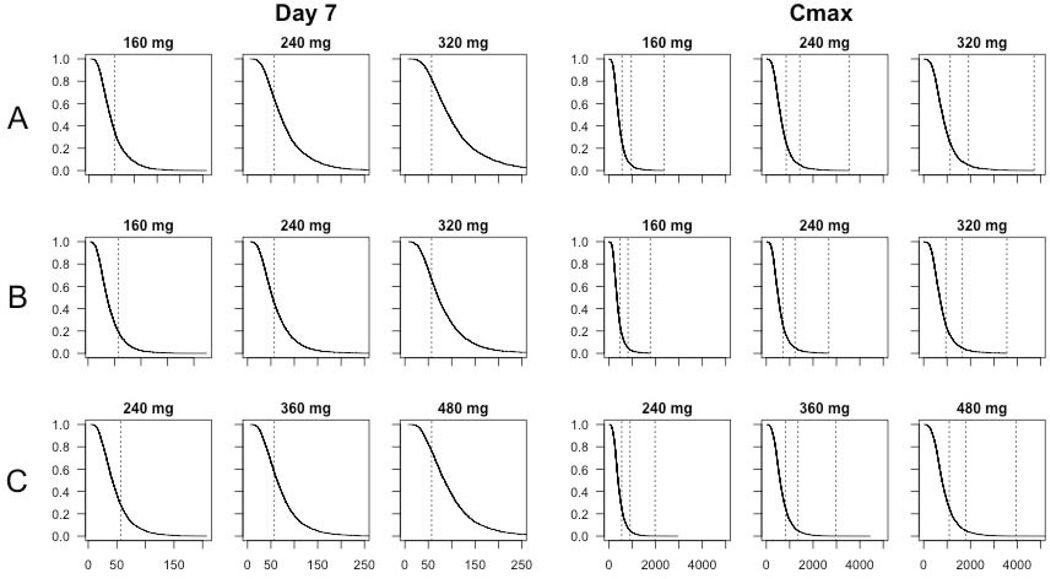
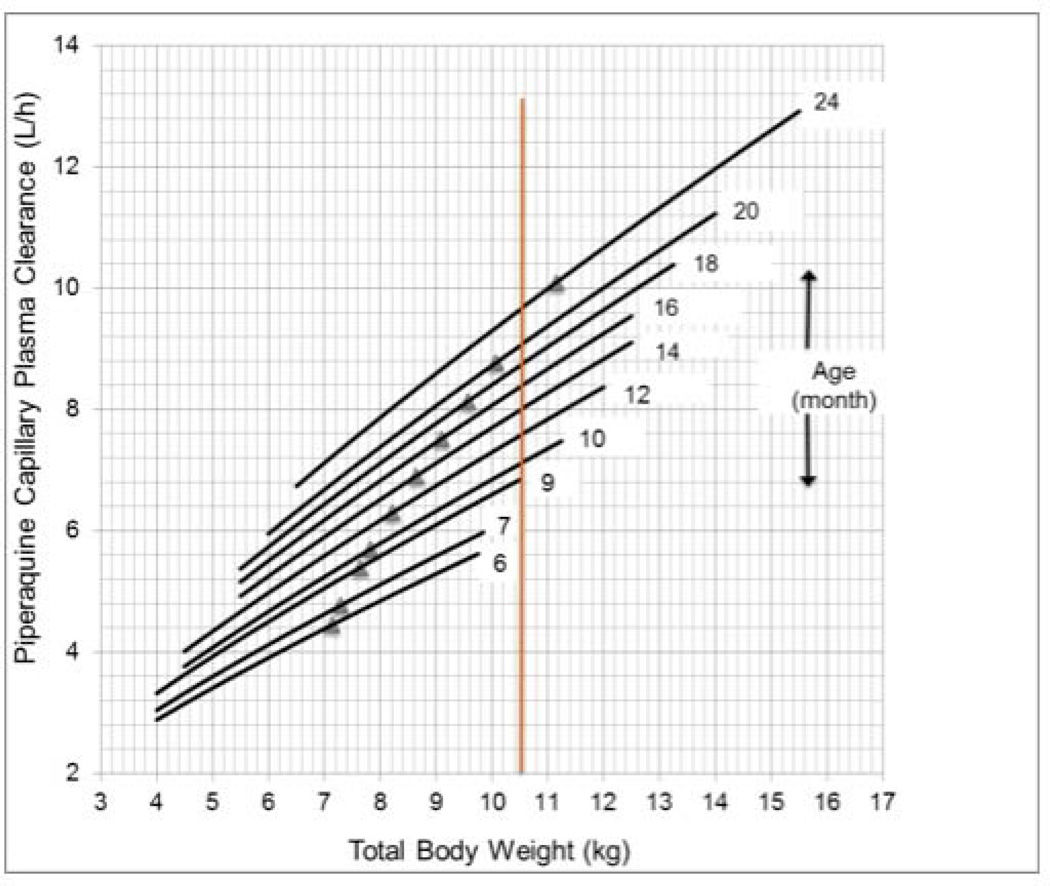
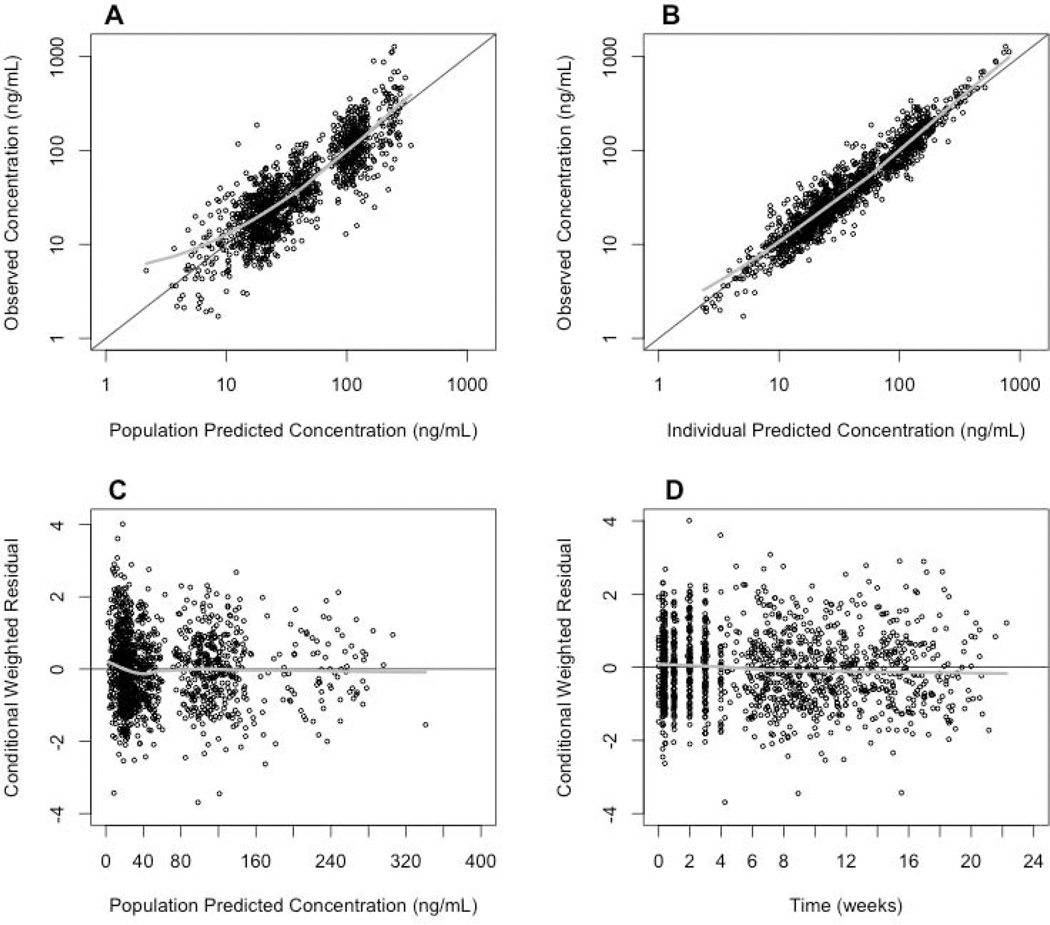
Description:This prospective trial investigated the population pharmacokinetics of piperaquine given with dihydroartemisinin to treat uncomplicated malaria in 107 Ugandan children 6 months to 2 years old, an age group previously unstudied. Current weight-based dosing does not adequately address physiological changes in early childhood. Patients were administered standard 3-day oral doses and provided 1,282 capillary plasma concentrations from 218 malaria episodes. Less than 30% of treatments achieved 57 ng/mL on day 7. A three-compartment model with first-order absorption described the data well. Age had a statistically significant effect (P < 0.005) on clearance/bioavailability in a model that accounts for allometric scaling. Simulations demonstrated that higher doses in all children, but especially in those with lower weight for age, are required for adequate piperaquine exposure, although safety and tolerance will need to be established. These findings support other evidence that both weight- and age-specific guidelines for piperaquine dosing in children are urgently needed.
-
Subjects:
-
Source:Clin Pharmacol Ther. 98(1):87-95.
-
Pubmed ID:25732044
-
Pubmed Central ID:PMC5088713
-
Document Type:
-
Funding:
-
Place as Subject:
-
Volume:98
-
Issue:1
-
Collection(s):
-
Main Document Checksum:urn:sha256:2a7f35bbb75839d4b97d28f8688625324d3898d0667dd45c07e67956a3043fb6
-
Download URL:
-
File Type:
 [PDF
- 2.74 MB
]
[PDF
- 2.74 MB
]
Supporting Files


ON THIS PAGE





CDC STACKS serves as an archival repository of CDC-published products including
scientific findings,
journal articles, guidelines, recommendations, or other public health information authored or
co-authored by CDC or funded partners.
As a repository, CDC STACKS retains documents in their original published format to ensure public access to scientific information.
As a repository, CDC STACKS retains documents in their original published format to ensure public access to scientific information.
You May Also Like
COLLECTION
CDC Public Access