



Development of the Chemical Exposure Monitor with Indoor Positioning (CEMWIP) for Workplace VOC Surveys
Supporting Files

-
2016 ; 2016
-
Available in CDC Stacks on 2017-01-01T00:00:00Z
File Language:
English
Details
-
Alternative Title:J Occup Environ Hyg
-
Personal Author:
-
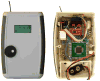
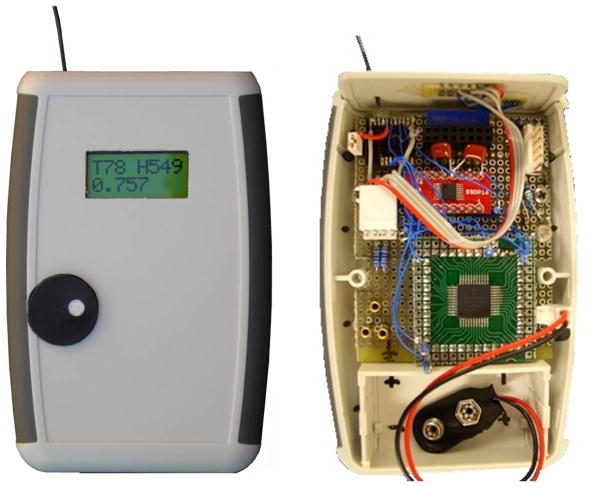
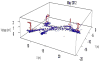
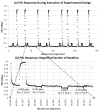
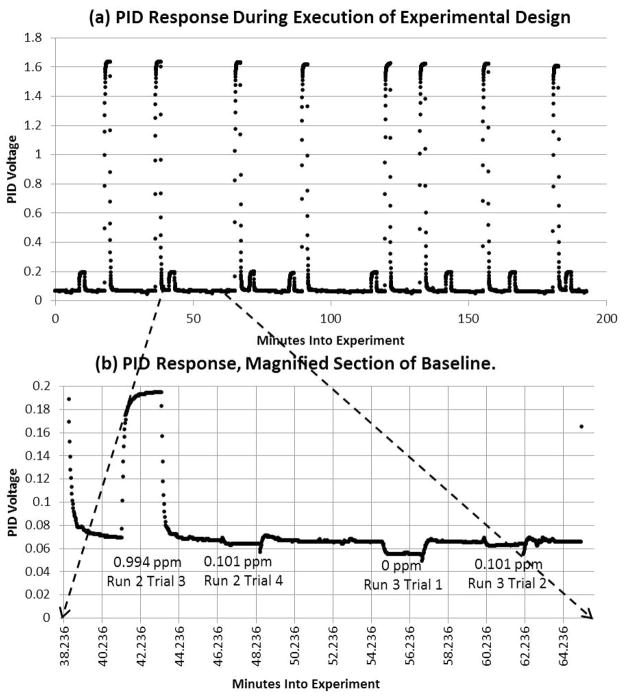
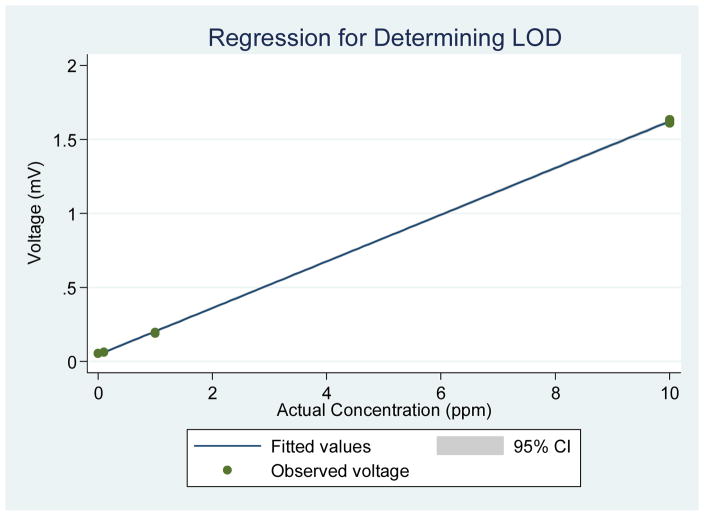
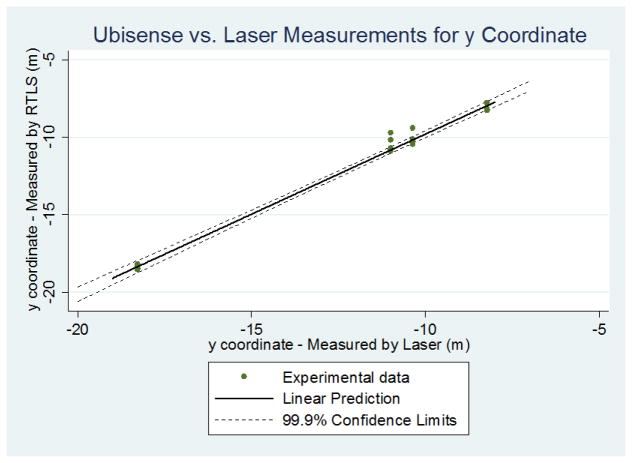
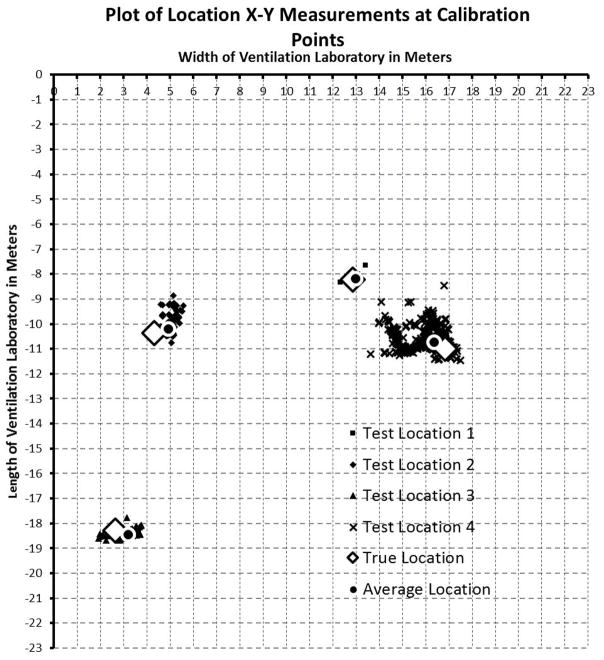
Description:The purpose of this article was to research and develop a direct-reading exposure assessment method that combined a real-time location system with a wireless direct-reading personal chemical sensor. The personal chemical sensor was a photoionization device for detecting volatile organic compounds. The combined system was calibrated and tested against the same four standard gas concentrations and calibrated at one standard location and tested at four locations that included the standard locations. Data were wirelessly collected from the chemical sensor every 1.4 sec, for volatile organic compounds concentration, location, temperature, humidity, and time. Regression analysis of the photo-ionization device voltage response against calibration gases showed the chemical sensor had a limit of detection of 0.2 ppm. The real-time location system was accurate to 13 cm ± 6 cm (standard deviation) in an open area and to 57 cm ± 31 cm in a closed room where the radio frequency has to penetrate drywall-finished walls. The streaming data were collected and graphically displayed as a three-dimensional hazard map for assessment of peak exposure with location. A real-time personal exposure assessment device with indoor positioning was practical and provided new knowledge on direct reading exposure assessment methods.
-
Subjects:
-
Keywords:
-
Source:J Occup Environ Hyg. 13(6):401-412
-
Pubmed ID:26786234
-
Pubmed Central ID:PMC5068360
-
Document Type:
-
Funding:
-
Volume:13
-
Issue:6
-
Download URL:
-
File Type:
 [PDF - 1.83 MB]
 -
Collection(s):
-
Main Document Checksum:urn:sha256:e63758a4f697af3554aab0bf2ed30dd8d2c7bc1a5c3d3d5789812adfd4eca8e4
Supporting Files


File Language:
English
 Was this page helpful?
 Found an issue?







CDC STACKS serves as an archival repository of CDC-published products including
scientific findings, journal articles, guidelines, recommendations, or other public health information authored or
co-authored by CDC or funded partners.
As a repository, CDC STACKS retains documents in their original published format to ensure public access to scientific information.
As a repository, CDC STACKS retains documents in their original published format to ensure public access to scientific information.
You May Also Like
COLLECTION
CDC Public Access