


Impact of treatment and insurance on socioeconomic disparities in survival after adolescent and young adult Hodgkin lymphoma: A population-based study
Supporting Files

-
January 29 2016
-
File Language:
English
Details
-
Alternative Title:Cancer Epidemiol Biomarkers Prev
-
Personal Author:
-
Description:Background
Previous studies documented racial/ethnic and socioeconomic disparities in survival after Hodgkin lymphoma (HL) among adolescents and young adults (AYAs), but did not consider the influence of combined-modality treatment and health insurance.
Methods
Data for 9,353 AYA patients aged 15–39 when diagnosed with HL during 1988–2011 were obtained from the California Cancer Registry. Using multivariate Cox proportional hazards regression, we examined the impact of socio-demographic characteristics (race/ethnicity, neighborhood socioeconomic status (SES), and health insurance), initial combined-modality treatment, and subsequent cancers on survival.
Results
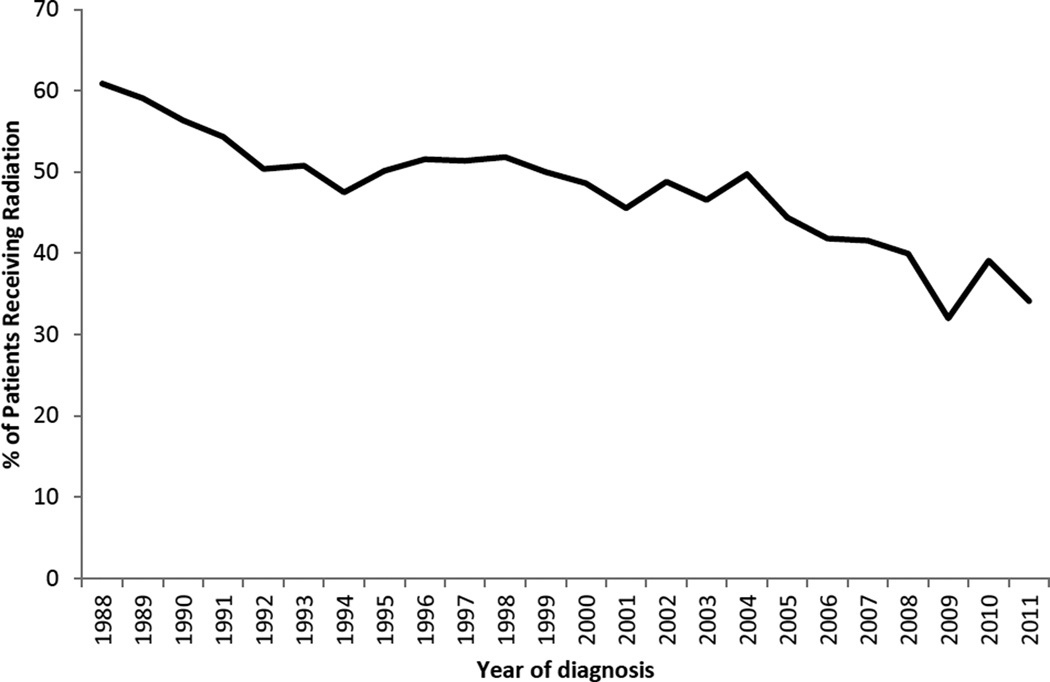
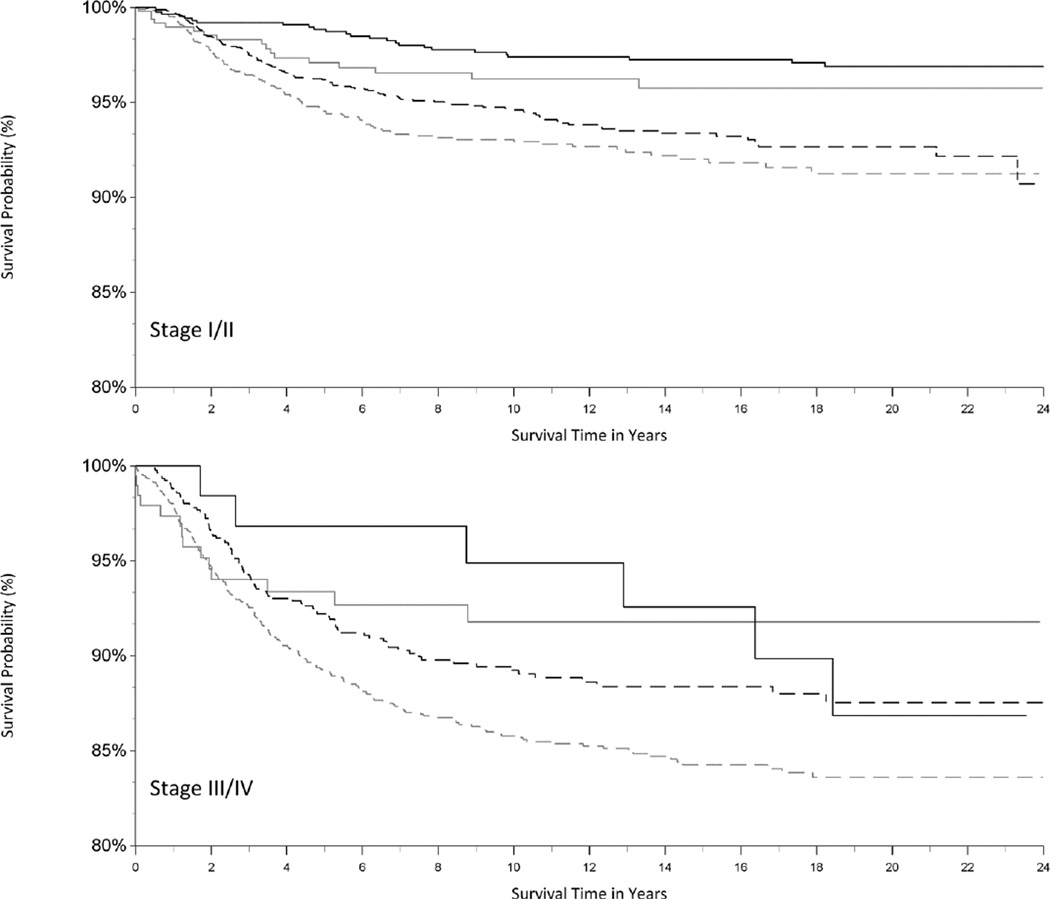
Over the 24-year study period, we observed improvements in HL-specific survival by diagnostic period and differences in survival by race/ethnicity, neighborhood SES and health insurance for a subset of more recently diagnosed patients (2001–2011). In multivariable analyses, HL-specific survival was worse for Blacks than Whites with early-stage (Hazard Ratio (HR): 1.68; 95% Confidence Interval (CI): 1.14, 2.49) and late-stage disease (HR: 1.68; 95% CI: 1.17, 2.41) and for Hispanics than Whites with late-stage disease (HR: 1.58; 95% CI: 1.22, 2.04). AYAs diagnosed with early-stage disease experienced worse survival if they also resided in lower SES neighborhoods (HR: 2.06; 95% CI: 1.59, 2.68). Furthermore, more recently diagnosed AYAs with public health insurance or who were uninsured experienced worse HL-specific survival (HR: 2.08; 95% CI: 1.52, 2.84).
Conclusion
Our findings identify several subgroups of HL patients at higher risk for HL mortality.
Impact
Identifying and reducing barriers to recommended treatment and surveillance in these AYAs at much higher risk of mortality is essential to ameliorating these survival disparities.
-
Subjects:
-
Source:Cancer Epidemiol Biomarkers Prev. 25(2):264-273
-
Pubmed ID:26826029
-
Pubmed Central ID:PMC4767568
-
Document Type:
-
Funding:HHSN261201000140C/CA/NCI NIH HHS/United States ; HHSN261201000035I/CA/NCI NIH HHS/United States ; K07 CA175063/CA/NCI NIH HHS/United States ; K07CA175063/CA/NCI NIH HHS/United States ; HHSN261201000035C/PC/NCI NIH HHS/United States ; HHSN261201000034C/CA/NCI NIH HHS/United States ; U58 DP003862/DP/NCCDPHP CDC HHS/United States ; UL1 TR001120/TR/NCATS NIH HHS/United States
-
Volume:25
-
Issue:2
-
Collection(s):
-
Main Document Checksum:urn:sha256:7a85e4fb6b15ea9087a1c318c10e0ac53e02f85e037bfd515dec35983384353d
-
Download URL:
-
File Type:
 [PDF
- 1.15 MB
]
[PDF
- 1.15 MB
]
Supporting Files


File Language:
English
ON THIS PAGE


CDC STACKS serves as an archival repository of CDC-published products including
scientific findings,
journal articles, guidelines, recommendations, or other public health information authored or
co-authored by CDC or funded partners.
As a repository, CDC STACKS retains documents in their original published format to ensure public access to scientific information.
As a repository, CDC STACKS retains documents in their original published format to ensure public access to scientific information.
You May Also Like
COLLECTION
CDC Public Access