


Intra-urban vulnerability to heat-related mortality in New York City, 1997–2006
Supporting Files

-
Sep 06 2014
File Language:
English
Details
-
Alternative Title:Health Place
-
Personal Author:
-
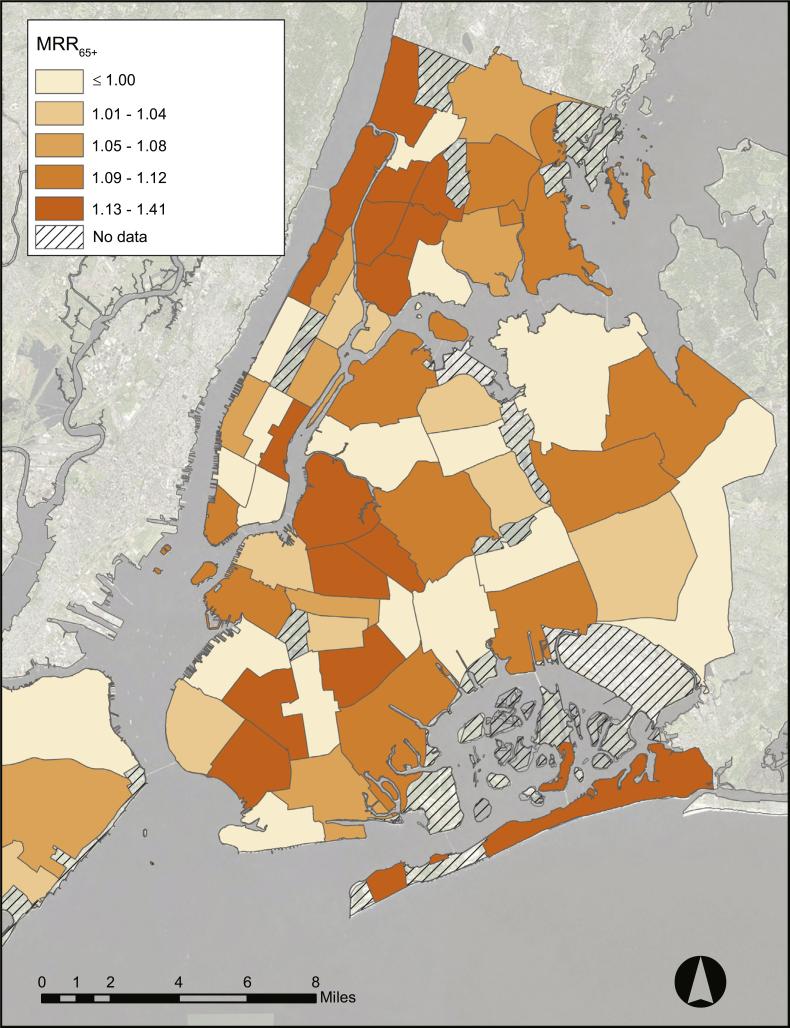
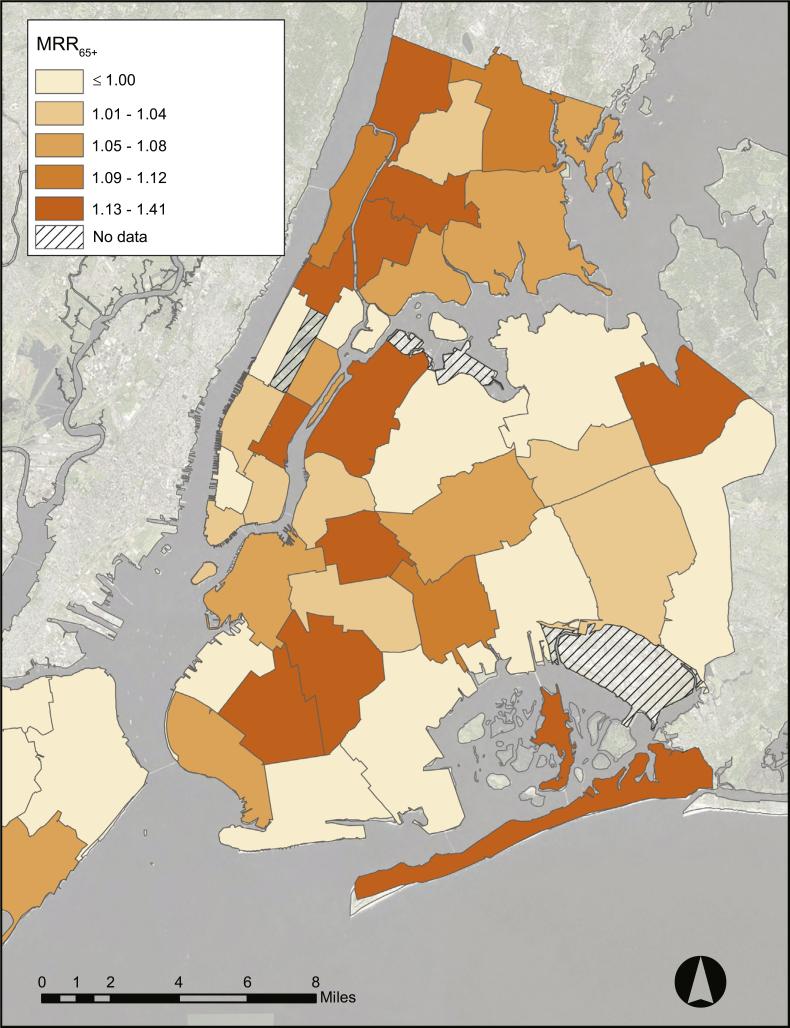
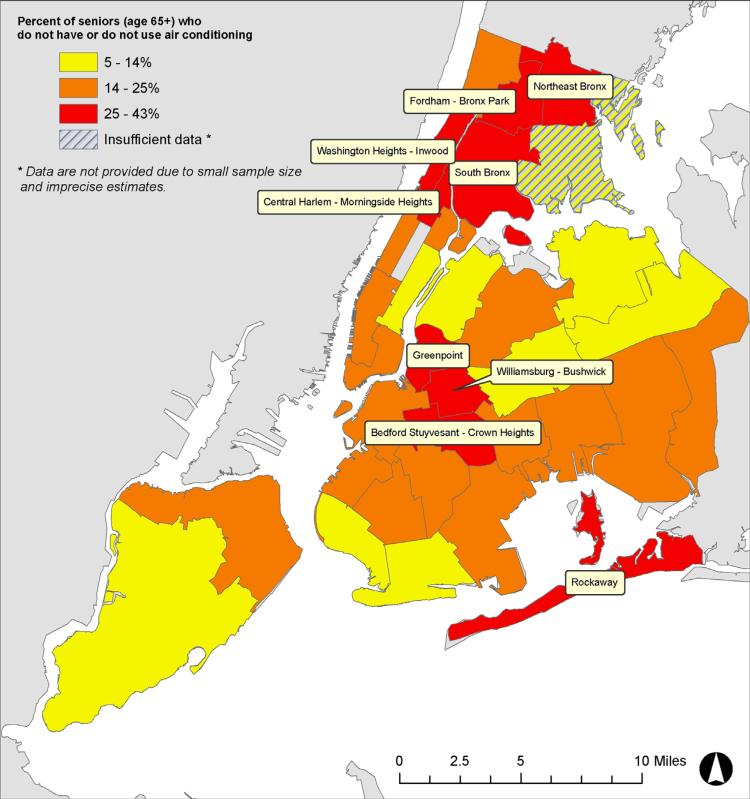
Description:The health impacts of exposure to summertime heat are a significant problem in New York City (NYC) and for many cities and are expected to increase with a warming climate. Most studies on heat-related mortality have examined risk factors at the municipal or regional scale and may have missed the intra-urban variation of vulnerability that might inform prevention strategies. We evaluated whether place-based characteristics (socioeconomic/demographic and health factors, as well as the built and biophysical environment) may be associated with greater risk of heat-related mortality for seniors during heat events in NYC. As a measure of relative vulnerability to heat, we used the natural cause mortality rate ratio among those aged 65 and over (MRR65+), comparing extremely hot days (maximum heat index 100°F+) to all warm season days, across 1997-2006 for NYC's 59 Community Districts and 42 United Hospital Fund neighborhoods. Significant positive associations were found between the MRR65+ and neighborhood-level characteristics: poverty, poor housing conditions, lower rates of access to air-conditioning, impervious land cover, surface temperatures aggregated to the area-level, and seniors' hypertension. Percent Black/African American and household poverty were strong negative predictors of seniors' air conditioning access in multivariate regression analysis.
-
Subjects:
-
Source:Health Place. 2014; 30:45-60.
-
Pubmed ID:25199872
-
Pubmed Central ID:PMC4348023
-
Document Type:
-
Funding:
-
Place as Subject:
-
Volume:30
-
Collection(s):
-
Main Document Checksum:urn:sha256:3b72c76acdadcc32bf1cb9bb597a985f01fcaf981d0311ffca27f3f8dde77d17
-
Download URL:
-
File Type:
 [PDF
- 1.74 MB
]
[PDF
- 1.74 MB
]
Supporting Files


File Language:
English
ON THIS PAGE


CDC STACKS serves as an archival repository of CDC-published products including
scientific findings,
journal articles, guidelines, recommendations, or other public health information authored or
co-authored by CDC or funded partners.
As a repository, CDC STACKS retains documents in their original published format to ensure public access to scientific information.
As a repository, CDC STACKS retains documents in their original published format to ensure public access to scientific information.
You May Also Like
COLLECTION
CDC Public Access