


Elevated peripheral eosinophils are associated with new onset and persistent wheeze and airflow obstruction in World Trade Center exposed individuals
Supporting Files

-
Dec 11 2012
-
File Language:
English
Details
-
Alternative Title:J Asthma
-
Personal Author:
-
Description:Background
Exposure to World Trade Center (WTC) dust and fumes is associated with onset of asthma-like respiratory symptoms in rescue and recovery workers and exposed community members. Eosinophilic inflammation with increased lung and peripheral eosinophils has been described in subpopulations with asthma. We hypothesized that persistent asthma-like symptoms in WTC-exposed individuals would be associated with systemic inflammation characterized by peripheral eosinophils.
Methods
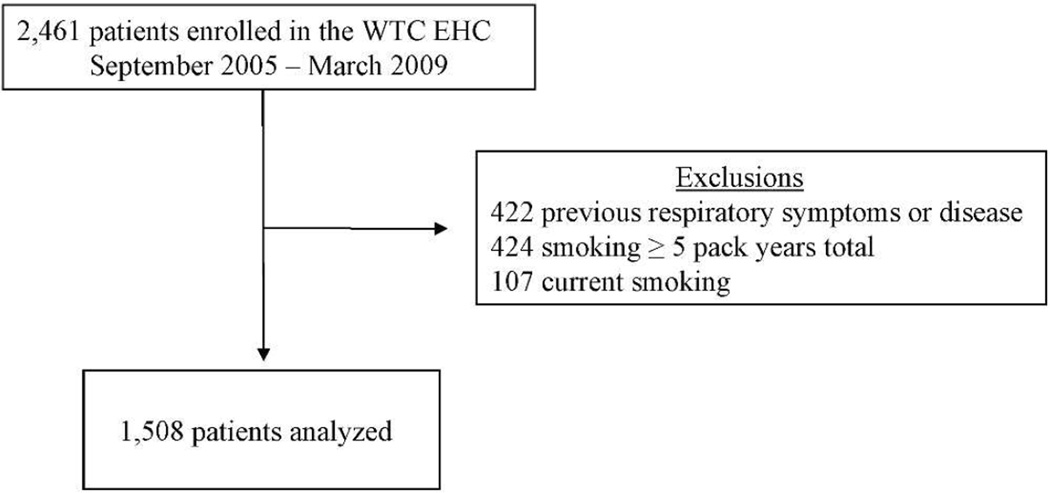
The WTC Environmental Health Center (EHC) is a treatment program for local residents, local workers, and clean-up workers with presumed WTC-related symptoms. Patients undergo a standardized evaluation including questionnaires and complete blood count. Between 9/2005–3/2009, 2461 individuals enrolled in the program and were available for analysis. Individuals with pre-existing respiratory symptoms or lung disease diagnoses prior to 9/11/2001 and current or significant tobacco use were excluded.
Results
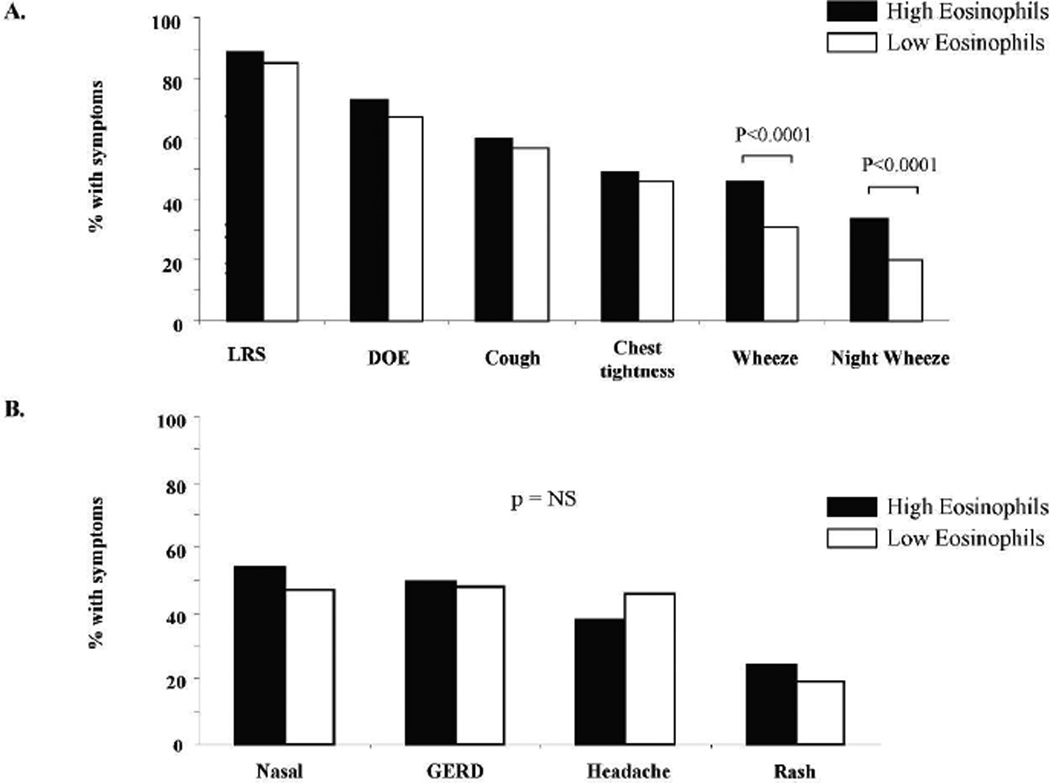
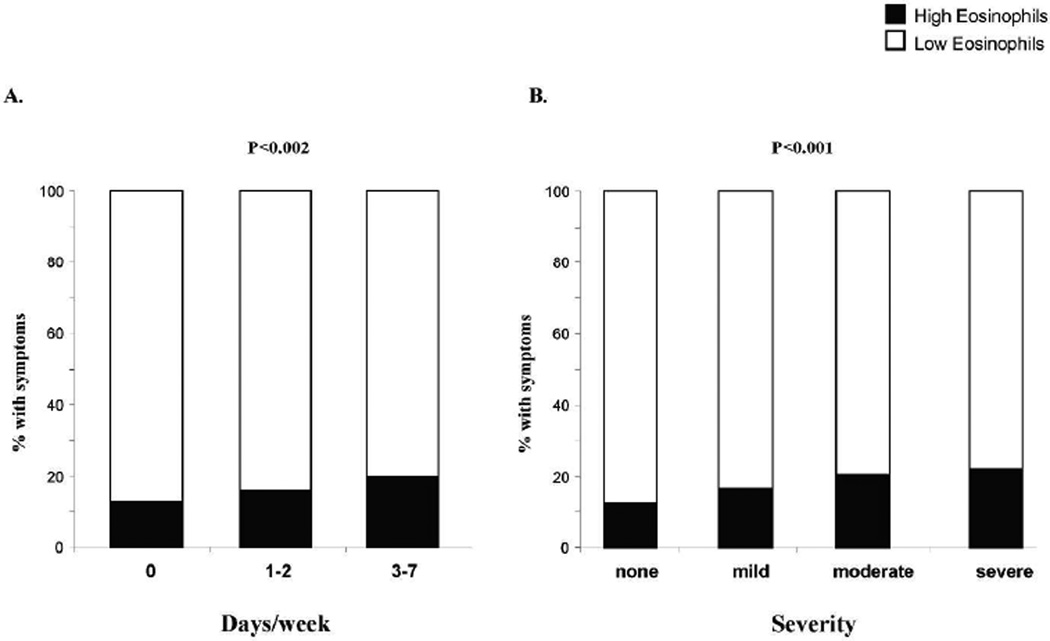
1508 individuals met inclusion criteria. These patients had a mean age of 47 years, were mostly female (51%) and had a diverse race/ethnicity. Respiratory symptoms that developed after WTC dust/fume exposure and remained persistent included dyspnea on exertion (68%), cough (57%), chest tightness (46%), and wheeze (33%). A larger percentage of those with wheeze had elevated peripheral eosinophils compared to those without wheeze (21% vs. 13%, p<0.0001). Individuals with elevated peripheral eosinophils were more likely to have airflow obstruction on spirometry (16% vs. 7%, p = 0.0003).
Conclusions
Peripheral eosinophils were associated with wheeze and reduced lung function in a diverse WTC-exposed population. These data suggest that eosinophils may participate in lung inflammation in this population with symptoms consistent with WTC-related asthma.
-
Subjects:
-
Source:J Asthma. 50(1):25-32.
-
Pubmed ID:23227974
-
Pubmed Central ID:PMC4001795
-
Document Type:
-
Funding:
-
Name as Subject:
-
Place as Subject:
-
Volume:50
-
Issue:1
-
Collection(s):
-
Main Document Checksum:urn:sha256:16429e1fcbe469dacf09fa39778f05771ec1e29cc5b02286a99c094cf98eb244
-
Download URL:
-
File Type:
 [PDF
- 955.23 KB
]
[PDF
- 955.23 KB
]
Supporting Files


File Language:
English
ON THIS PAGE

CDC STACKS serves as an archival repository of CDC-published products including
scientific findings,
journal articles, guidelines, recommendations, or other public health information authored or
co-authored by CDC or funded partners.
As a repository, CDC STACKS retains documents in their original published format to ensure public access to scientific information.
As a repository, CDC STACKS retains documents in their original published format to ensure public access to scientific information.
You May Also Like
COLLECTION
CDC Public Access