



The atrazine metabolite diaminochlorotriazine suppresses LH release from murine LβT2 cells by suppressing GnRH-induced intracellular calcium transients
Supporting Files

-
5 1 2013 ; 5-1-
-
Available in CDC Stacks on 2014-05-01T00:00:00Z
File Language:
English
Details
-
Alternative Title:Toxicol Res (Camb)
-
Personal Author:
-
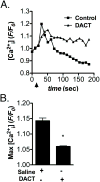
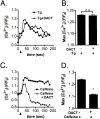
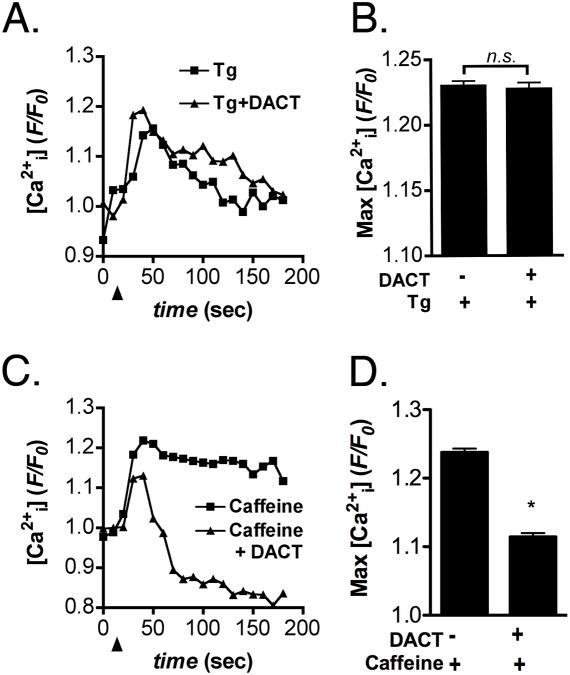
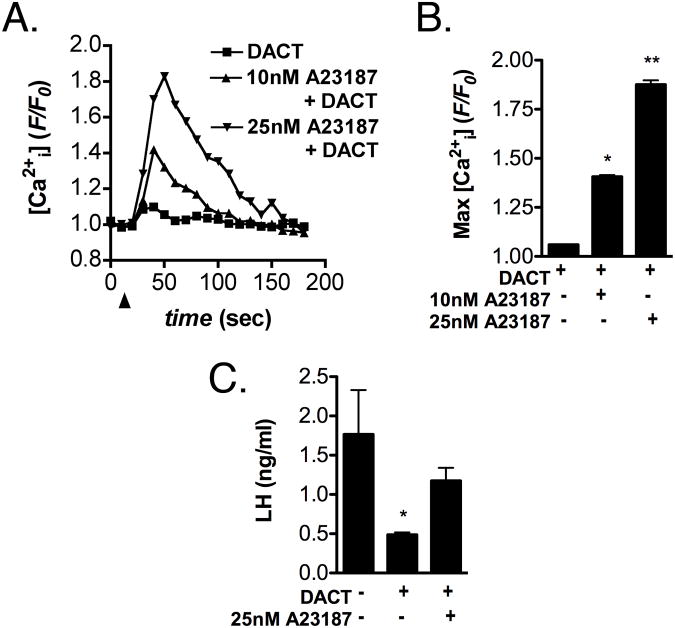
Description:The primary metabolite of the herbicide atrazine (ATRA), diaminochlorotriazine (DACT), has been suggested to cause disruption in the hypothalamic-pituitary-gonadal axis leading to inhibition of luteinizing hormone (LH) release. DACT is a reactive electrophile known to form covalent protein adducts both | and | following ATRA exposure and maybe targeting proteins involved in GnRH-induced calcium signaling and subsequent LH release. To test this hypothesis, LβT2 pituitary cells were exposed to 300 μM DACT for 24 hrs and examined by fluorescence microscopy for GnRH-induced changes in intracellular calcium and LH release. LβT2 cells exposed to DACT had markedly diminished GnRH-induced intracellular calcium transients and a significant decreased LH release in response to GnRH. DACT appeared to cause a selective decrease in caffeine-sensitive ryanodine receptor-operated calcium stores in LβT2 cells, rather than in thapsigargin-sensitive ER calcium stores. This sensitivity correlated with the formation of covalent protein adducts by DACT, as determined by mass spectrometry. ERp57 was identified by mass spectrometry as a target of DACT adduction in the ER that could potentially mediate the effects of DACT on inhibition of GnRH-induced calcium signaling and inhibition of LH release. Intracellular calcium responses to GnRH and release of LH were restored in DACT-treated cells with the addition of a calcium ionophore (A23187). These data suggest that DACT forms adducts on proteins involved in calcium handling within the ER and that dysfunction in this critical signaling system is associated with loss of normal sensitivity to GnRH and subsequent decreased release of LH.
-
Subjects:
-
Source:Toxicol Res (Camb). 2(3):180-186
-
Pubmed ID:24052811
-
Pubmed Central ID:PMC3774316
-
Document Type:
-
Funding:
-
Volume:2
-
Issue:3
-
Download URL:
-
File Type:
 [PDF - 604.31 KB]
 -
Collection(s):
-
Main Document Checksum:urn:sha256:7d6af27cef8fb404384b82f6045e5b1635d6008a520242ca060aa9546ef612a8
Supporting Files


File Language:
English
 Was this page helpful?
 Found an issue?





CDC STACKS serves as an archival repository of CDC-published products including
scientific findings, journal articles, guidelines, recommendations, or other public health information authored or
co-authored by CDC or funded partners.
As a repository, CDC STACKS retains documents in their original published format to ensure public access to scientific information.
As a repository, CDC STACKS retains documents in their original published format to ensure public access to scientific information.
You May Also Like
COLLECTION
CDC Public Access