


Automated subject-specific, hexahedral mesh generation via image registration
Supporting Files

-
Oct 01 2011
-
File Language:
English
Details
-
Alternative Title:Finite Elem Anal Des
-
Personal Author:
-
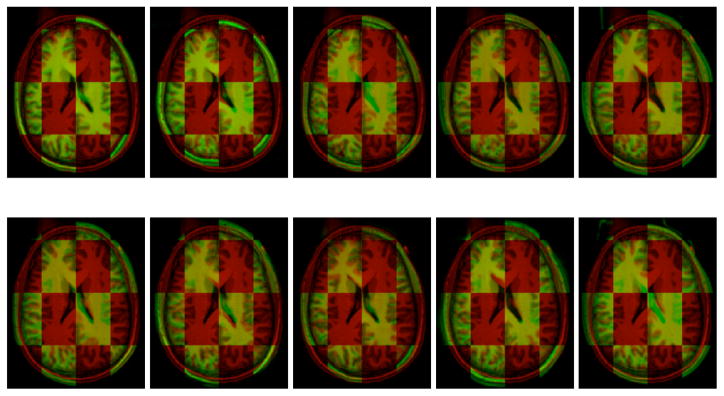
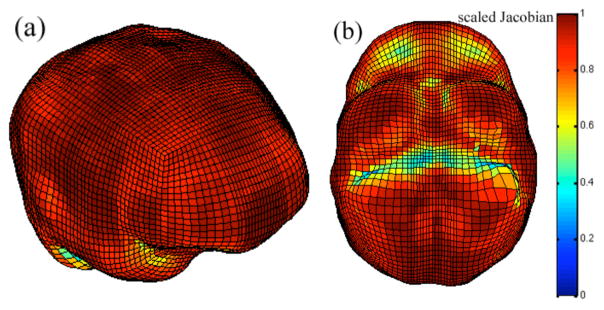
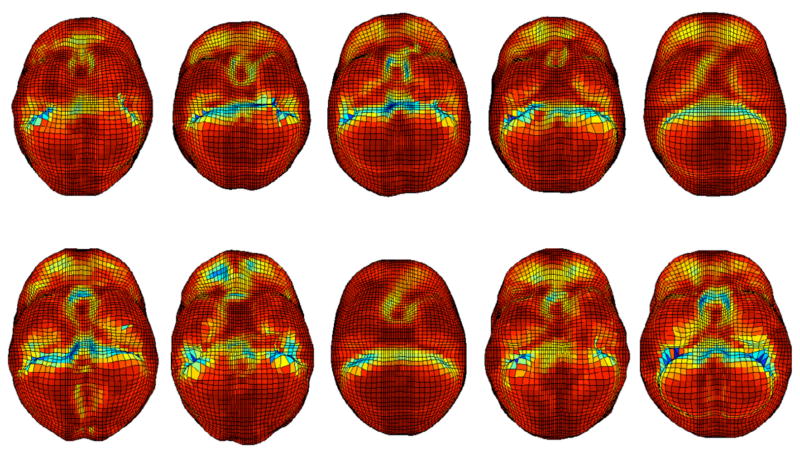
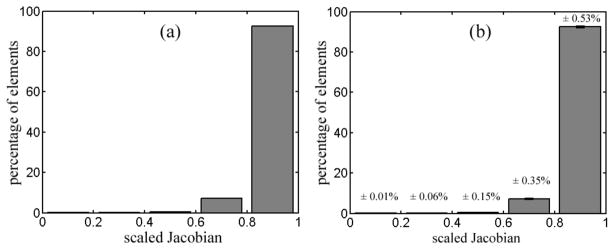
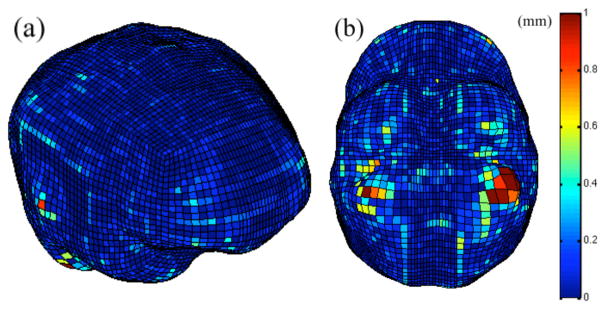
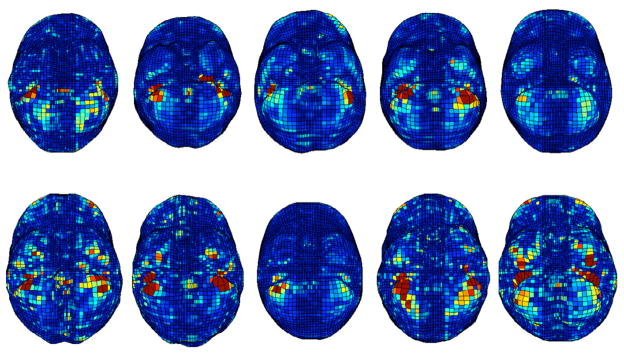
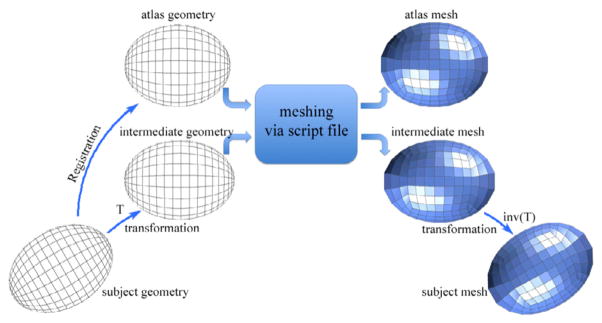
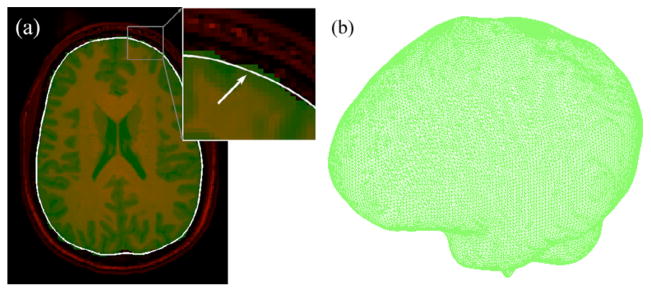
Description:Generating subject-specific, all-hexahedral meshes for finite element analysis continues to be of significant interest in biomechanical research communities. To date, most automated methods "morph" an existing atlas mesh to match with a subject anatomy, which usually result in degradation in mesh quality because of mesh distortion. We present an automated meshing technique that produces satisfactory mesh quality and accuracy without mesh repair. An atlas mesh is first developed using a script. A subject-specific mesh is generated with the same script after transforming the geometry into the atlas space following rigid image registration, and is transformed back into the subject space. By meshing the brain in 11 subjects, we demonstrate that the technique's performance is satisfactory in terms of both mesh quality (99.5% of elements had a scaled Jacobian >0.6 while <0.01% were between 0 and 0.2) and accuracy (average distance between mesh boundary and geometrical surface was 0.07 mm while <1% greater than 0.5mm). The combined computational cost for image registration and meshing was <4 min. Our results suggest that the technique is effective for generating subject-specific, all-hexahedral meshes and that it may be useful for meshing a variety of anatomical structures across different biomechanical research fields.
-
Subjects:
-
Source:Finite Elem Anal Des. 47(10):1178-1185
-
Pubmed ID:21731153
-
Pubmed Central ID:PMC3124828
-
Document Type:
-
Funding:
-
Volume:47
-
Issue:10
-
Collection(s):
-
Main Document Checksum:urn:sha256:0f8f56563f7902f3c1f3c32cb4b5972beeae8d70cf15ceaa00f5826448c9946a
-
Download URL:
-
File Type:
 [PDF
- 2.14 MB
]
[PDF
- 2.14 MB
]
Supporting Files


File Language:
English
ON THIS PAGE







CDC STACKS serves as an archival repository of CDC-published products including
scientific findings,
journal articles, guidelines, recommendations, or other public health information authored or
co-authored by CDC or funded partners.
As a repository, CDC STACKS retains documents in their original published format to ensure public access to scientific information.
As a repository, CDC STACKS retains documents in their original published format to ensure public access to scientific information.
You May Also Like
COLLECTION
CDC Public Access