


The preventive services use self-efficacy (PRESS) scale in older women: development and psychometric properties
Supporting Files

-
Feb 20 2016
File Language:
English
Details
-
Alternative Title:BMC Health Serv Res
-
Personal Author:
-
Description:Background
Preventive services offered to older Americans are currently under-utilized despite considerable evidence regarding their health and economic benefits. Individuals with low self-efficacy in accessing these services need to be identified and provided self-efficacy enhancing interventions. Scales measuring self-efficacy in the management of chronic diseases exist, but do not cover the broad spectrum of preventive services and behaviors that can improve the health of older adults, particularly older women who are vulnerable to poorer health and lesser utilization of preventive services. This study aimed to evaluate the psychometric properties of a new preventive services use self-efficacy scale, by measuring its internal consistency reliability, assessing internal construct validity by exploring factor structure, and examining differences in self-efficacy scores according to participant characteristics.
Methods
The Preventive Services Use Self-Efficacy (PRESS) Scale was developed by an expert panel at the University of Pittsburgh Center for Aging and Population Health - Prevention Research Center. It was administered to 242 women participating in an ongoing trial and the data were analyzed to assess its psychometric properties. An exploratory factor analysis with a principal axis factoring approach and orthogonal varimax rotation was used to explore the underlying structure of the items in the scale. The internal consistency of the subscales was assessed using Cronbach’s alpha coefficient.
Results
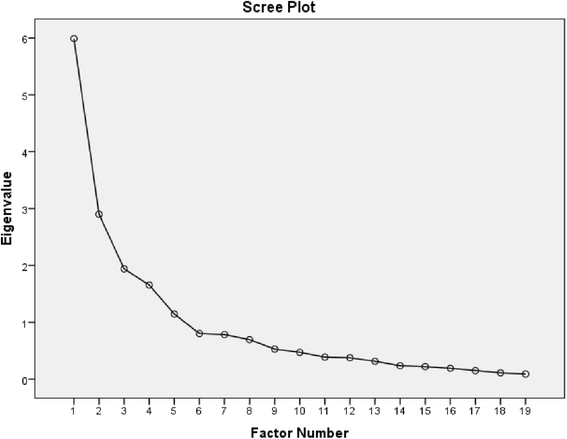
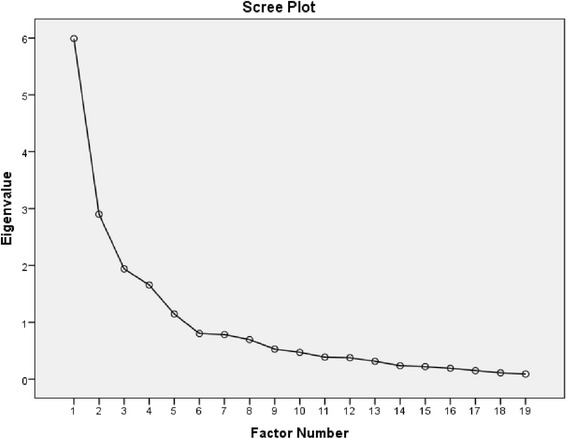
The exploratory factor analysis defined five self-efficacy factors (self-efficacy for exercise, communication with physicians, self-management of chronic disease, obtaining screening tests, and getting vaccinations regularly) formed by 16 items from the scale. The internal consistency of the subscales ranged from .81 to .94. Participants who accessed a preventive service had higher self-efficacy scores in the corresponding sub-scale than those who did not.
Conclusions
The 16-item PRESS scale demonstrates preliminary validity and reliability in measuring self-efficacy in the use of preventive services among older women. It can potentially be used to evaluate the impact of interventions designed to improve self-efficacy in the use of preventive services in community-dwelling older women.
-
Subjects:
-
Source:BMC Health Serv Res. 16.
-
Pubmed ID:26897364
-
Pubmed Central ID:PMC4761175
-
Document Type:
-
Funding:
-
Volume:16
-
Collection(s):
-
Main Document Checksum:urn:sha-512:570f7d289d6b387ed5f550004a8081f661da0b2129434c233113f4c688e6a2dc0ce43aeb9a07fd43424a5ce9a95d8864bc96d8cd3c25cc810bce19bb383a78f9
-
Download URL:
-
File Type:
 [PDF
- 563.97 KB
]
[PDF
- 563.97 KB
]
Supporting Files


File Language:
English
ON THIS PAGE

CDC STACKS serves as an archival repository of CDC-published products including
scientific findings,
journal articles, guidelines, recommendations, or other public health information authored or
co-authored by CDC or funded partners.
As a repository, CDC STACKS retains documents in their original published format to ensure public access to scientific information.
As a repository, CDC STACKS retains documents in their original published format to ensure public access to scientific information.
You May Also Like
COLLECTION
CDC Public Access