


Urinary proteomics and metabolomics studies to monitor bladder health and urological diseases
Supporting Files

-
Mar 22 2016
Details
-
Alternative Title:BMC Urol
-
Personal Author:
-
Description:Background
Assays of molecular biomarkers in urine are non-invasive compared to other body fluids and can be easily repeated. Based on the hypothesis that the secreted markers from the diseased organs may locally release into the body fluid in the vicinity of the injury, urine-based assays have been considered beneficial to monitoring bladder health and urological diseases. The urine proteome is much less complex than the serum and tissues, but nevertheless can contain biomarkers for diagnosis and prognosis of diseases. The urine metabolome has a much higher number and concentration of low-molecular metabolites than the serum or tissues, with a far lower lipid concentration, yet informs directly about dietary and microbial metabolism.
Discussion
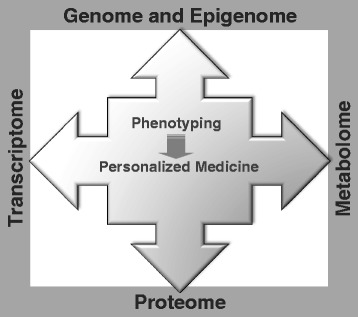
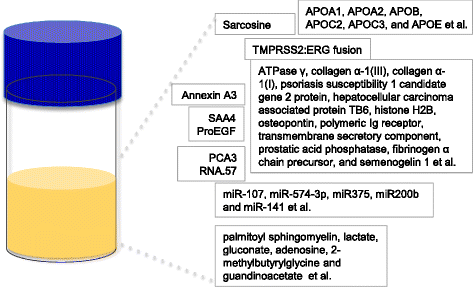
We here discuss the use of mass spectrometry-based proteomics and metabolomics for urine biomarker assays, specifically with respect to the underlying mechanisms that trigger the pathological condition.
Conclusion
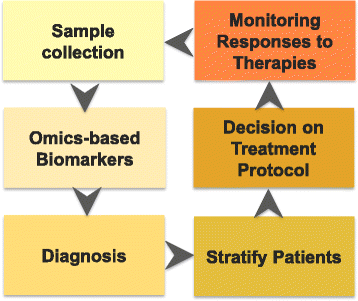
Molecular biomarker profiles, based on proteomics and metabolomics studies, reliably distinguish patients from healthy controls, stratify sub-populations with respect to treatment options, and predict therapeutic response of patients with urological disease.
-
Subjects:
-
Source:BMC Urol. 16.
-
Pubmed ID:27000794
-
Pubmed Central ID:PMC4802825
-
Document Type:
-
Funding:
-
Volume:16
-
Collection(s):
-
Main Document Checksum:urn:sha256:fad6a387c2cedc1a0902b9174fddaf7ee10e6d6715d687e7d08798bfef431c18
-
Download URL:
-
File Type:
 [PDF
- 1.04 MB
]
[PDF
- 1.04 MB
]
Supporting Files


ON THIS PAGE



CDC STACKS serves as an archival repository of CDC-published products including
scientific findings,
journal articles, guidelines, recommendations, or other public health information authored or
co-authored by CDC or funded partners.
As a repository, CDC STACKS retains documents in their original published format to ensure public access to scientific information.
As a repository, CDC STACKS retains documents in their original published format to ensure public access to scientific information.
You May Also Like
COLLECTION
CDC Public Access