



The High Prevalence of Diabetes in a Large Cohort of Patients Drawn From Safety Net Clinics
Supporting Files
Public Domain

-
Jun 16 2016
File Language:
English
Details
-
Journal Article:Preventing Chronic Disease (PCD)
-
Personal Author:
-
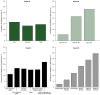
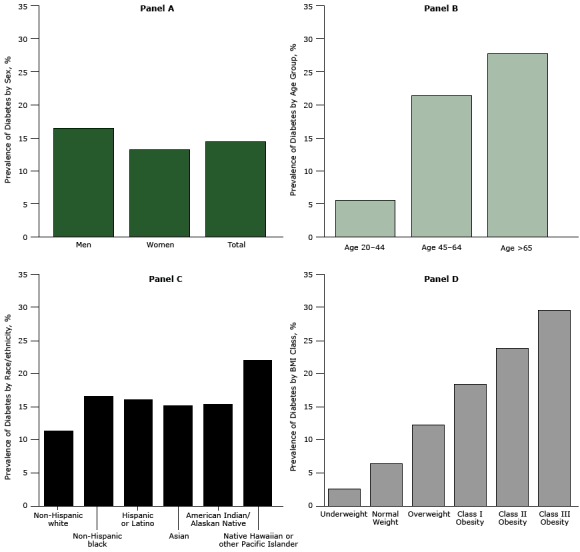
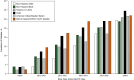
Description:Introduction ; Underserved populations have been overlooked or underrepresented in research based on data from diabetes registries. We estimated diabetes prevalence using a cohort developed from the electronic health records of 3 networks of safety net clinics that provide care to underserved populations. ; Methods ; ADVANCE (Accelerating Data Value Across a National Community Health Center Network) is a partnership of the OCHIN Community Health Information Network (OCHIN), the Health Choice Network (HCN), and the Fenway Health Institute (FHI), representing 97 federally qualified health centers (FQHCs) and 744 clinic sites in 22 US states. Among 952,316 adults with a body mass index (BMI) measurement and at least 2 outpatient visits in 2012 to 2014, we calculated diabetes prevalence using outpatient diagnoses, diagnostic laboratory results, or dispenses of anti-hyperglycemic agents no more than 730 days apart. We calculated prevalence by age, sex, race, Hispanic ethnicity, and BMI class. ; Results ; The crude prevalence of diabetes was 14.4%. Men had a higher prevalence than women (16.5% vs 13.2%); diabetes prevalence increased across age categories. White patients had the lowest prevalence (11.4%) and Hawaiian/Pacific Islanders, the highest prevalence (21.9%), with prevalence ranging from 15.2% to 16.5% for other race/ethnicities. The association between BMI class and diabetes prevalence was similar across all racial/ethnic groups. ; Conclusion ; The ADVANCE diabetes cohort offers an opportunity to conduct epidemiologic and comparative effectiveness research on underserved and underrepresented individuals, who have a higher prevalence of diabetes than the general US population.
-
Subjects:
-
Source:Prev Chronic Dis. 13.
-
DOI:
-
ISSN:1545-1151
-
Pubmed ID:27309415
-
Pubmed Central ID:PMC4927267
-
Document Type:
-
Place as Subject:
-
Volume:13
-
Download URL:
-
File Type:
 [PDF - 299.16 KB]
 -
Collection(s):
-
Main Document Checksum:urn:sha-512:58dda071d75dd8ed1f1920e6f9358c6de52415c532f6fe0bbc139d810a63a2ccd22f0dada50995af32026f55bc12521db3795036049cab7a3dfe6634c5e66af3
Supporting Files

Related Documents


File Language:
English
 Was this page helpful?
 Found an issue?


CDC STACKS serves as an archival repository of CDC-published products including
scientific findings, journal articles, guidelines, recommendations, or other public health information authored or
co-authored by CDC or funded partners.
As a repository, CDC STACKS retains documents in their original published format to ensure public access to scientific information.
As a repository, CDC STACKS retains documents in their original published format to ensure public access to scientific information.
You May Also Like
COLLECTION
Preventing Chronic Disease