


Strain-Specific Virolysis Patterns of Human Noroviruses in Response to Alcohols
Supporting Files
Public Domain

-
Jun 23 2016
-
File Language:
English
Details
-
Alternative Title:PLoS One
-
Personal Author:
-
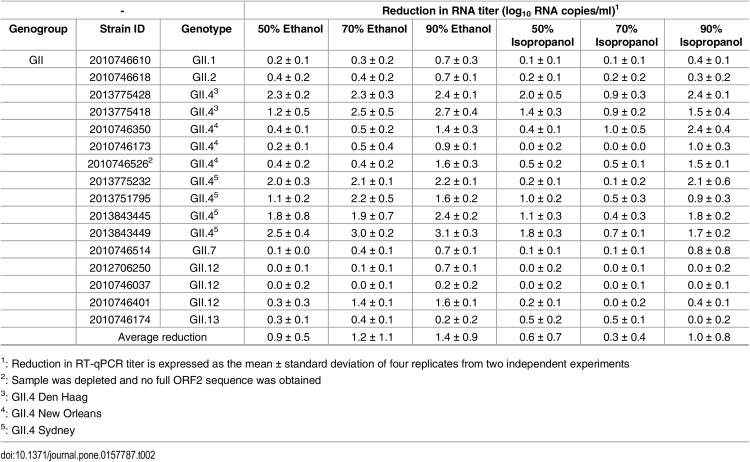
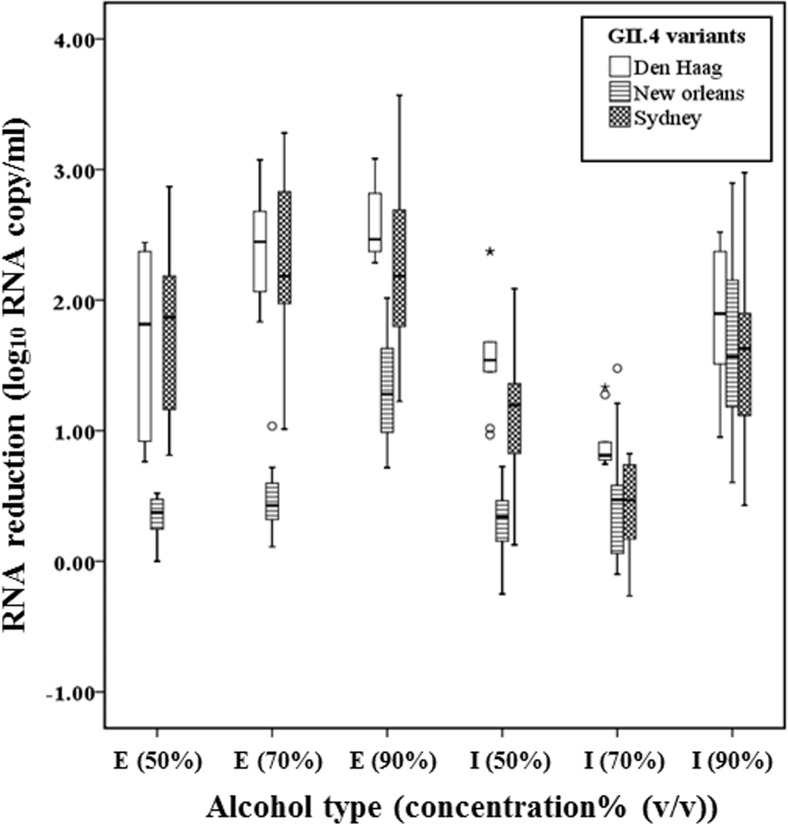
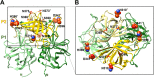
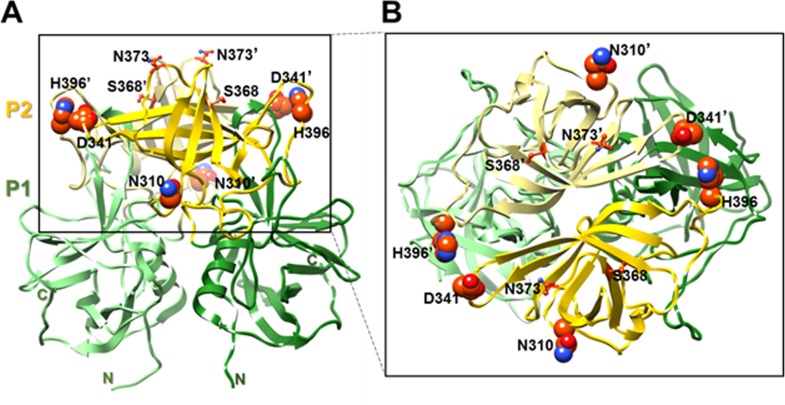
Description:Alcohol-based hand sanitizers are widely used to disinfect hands to prevent the spread of pathogens including noroviruses. Alcohols inactivate norovirus by destruction of the viral capsid, resulting in the leakage of viral RNA (virolysis). Since conflicting results have been reported on the susceptibility of human noroviruses against alcohols, we exposed a panel of 30 human norovirus strains (14 GI and 16 GII strains) to different concentrations (50%, 70%, 90%) of ethanol and isopropanol and tested the viral RNA titer by RT-qPCR. Viral RNA titers of 10 (71.4%), 14 (100%), 3 (21.4%) and 7 (50%) of the 14 GI strains were reduced by > 1 log10 RNA copies/ml after exposure to 70% and 90% ethanol, and 70% and 90% isopropanol, respectively. RNA titers of 6 of the 7 non-GII 4 strains remained unaffected after alcohol exposure. Compared to GII strains, GI strains were more susceptible to ethanol than to isopropanol. At 90%, both alcohols reduced RNA titers of 8 of the 9 GII.4 strains by ≥ 1 log10 RNA copies/ml. After exposure to 70% ethanol, RNA titers of GII.4 Den Haag and Sydney strains decreased by ≥ 1.9 log10, whereas RNA reductions for GII.4 New Orleans strains were < 0.5 log10. To explain these differences, we sequenced the complete capsid gene of the 9 GII.4 strains and identified 17 amino acid substitutions in the P2 region among the 3 GII.4 variant viruses. When comparing with an additional set of 200 GII.4 VP1 sequences, only S310 and P396 were present in all GII.4 New Orleans viruses but not in the ethanol-sensitive GII.4 Sydney and GII.4 Den Haag viruses Our data demonstrate that alcohol susceptibility patterns between different norovirus genotypes vary widely and that virolysis data for a single strain or genotype are not representative for all noroviruses.
-
Subjects:
-
Source:PLoS One. 11(6).
-
Pubmed ID:27337036
-
Pubmed Central ID:PMC4919085
-
Document Type:
-
Volume:11
-
Issue:6
-
Collection(s):
-
Main Document Checksum:urn:sha256:cb7c39e4c51330deb2c12fc60d01ce95b688e8e58725a65534e0b7777243776e
-
Download URL:
-
File Type:
 [PDF
- 2.20 MB
]
[PDF
- 2.20 MB
]
Supporting Files


File Language:
English
ON THIS PAGE






CDC STACKS serves as an archival repository of CDC-published products including
scientific findings,
journal articles, guidelines, recommendations, or other public health information authored or
co-authored by CDC or funded partners.
As a repository, CDC STACKS retains documents in their original published format to ensure public access to scientific information.
As a repository, CDC STACKS retains documents in their original published format to ensure public access to scientific information.
You May Also Like
COLLECTION
CDC Public Access