


Assessing Commitment and Reporting Fidelity to a Text Message-Based Participatory Surveillance in Rural Western Uganda
Supporting Files
Public Domain

-
Jun 09 2016
-
File Language:
English
Details
-
Alternative Title:PLoS One
-
Personal Author:
-
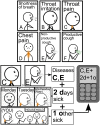
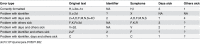
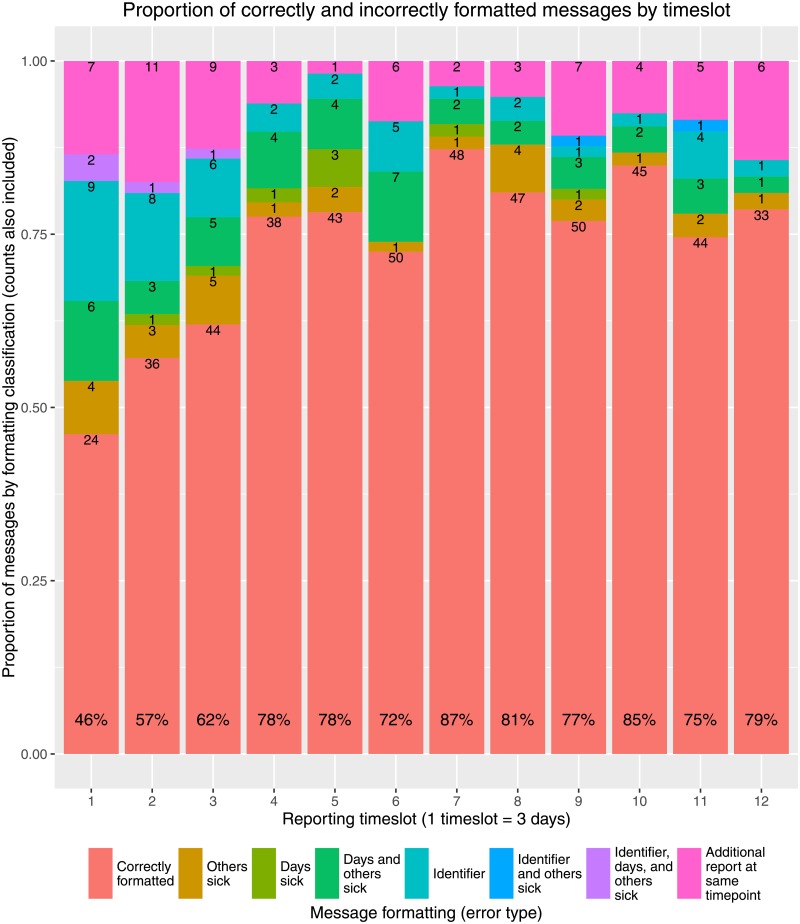
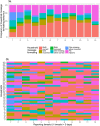
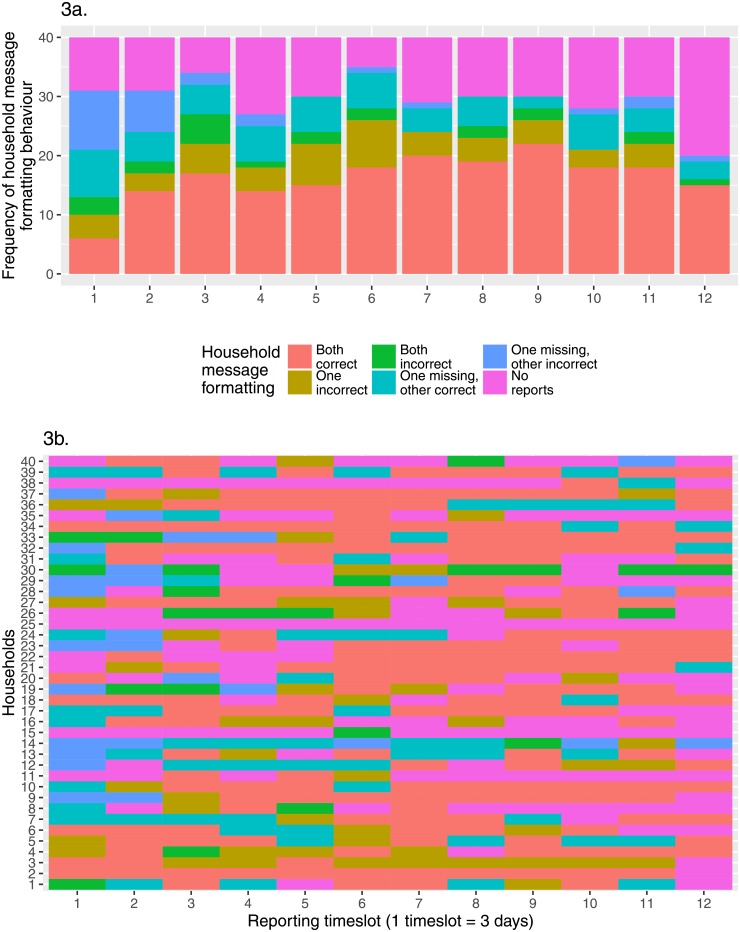
Description:Syndromic surveillance, the collection of symptom data from individuals prior to or in the absence of diagnosis, is used throughout the developed world to provide rapid indications of outbreaks and unusual patterns of disease. However, the low cost of syndromic surveillance also makes it highly attractive for the developing world. We present a case study of electronic participatory syndromic surveillance, using participant-mobile phones in a rural region of Western Uganda, which has a high infectious disease burden, and frequent local and regional outbreaks. Our platform uses text messages to encode a suite of symptoms, their associated durations, and household disease burden, and we explore the ability of participants to correctly encode their symptoms, with an average of 75.2% of symptom reports correctly formatted between the second and 11th reporting timeslots. Concomitantly we identify divisions between participants able to rapidly adjust to this unusually participatory style of data collection, and those few for whom the study proved more challenging. We then perform analyses of the resulting syndromic time series, examining the clustering of symptoms by time and household to identify patterns such as a tendency towards the within-household sharing of respiratory illness.
-
Subjects:
-
Source:PLoS One. 11(6).
-
Pubmed ID:27281020
-
Pubmed Central ID:PMC4900526
-
Document Type:
-
Place as Subject:
-
Volume:11
-
Issue:6
-
Collection(s):
-
Main Document Checksum:urn:sha256:1c61d016f2a51e0736c608ffed9194fb6fa2c0df8651189c17ab556dd35da21b
-
Download URL:
-
File Type:
 [PDF
- 887.46 KB
]
[PDF
- 887.46 KB
]
Supporting Files


File Language:
English
ON THIS PAGE




CDC STACKS serves as an archival repository of CDC-published products including
scientific findings,
journal articles, guidelines, recommendations, or other public health information authored or
co-authored by CDC or funded partners.
As a repository, CDC STACKS retains documents in their original published format to ensure public access to scientific information.
As a repository, CDC STACKS retains documents in their original published format to ensure public access to scientific information.
You May Also Like
COLLECTION
CDC Public Access