


Evaluation of pulmonary and systemic toxicity following lung exposure to graphite nanoplates: a member of the graphene-based nanomaterial family
Supporting Files
Public Domain

-
Jun 21 2016
-
File Language:
English
Details
-
Alternative Title:Part Fibre Toxicol
-
Personal Author:Roberts, Jenny R. ; Mercer, Robert R. ; Stefaniak, Aleksandr B. ; Seehra, Mohindar S. ; Geddam, Usha K. ; Chaudhuri, Ishrat S. ; Kyrlidis, Angelos ; Kodali, Vamsi K. ; Sager, Tina ; Kenyon, Allison ; Bilgesu, Suzan A. ; Eye, Tracy ; Scabilloni, James F. ; Leonard, Stephen S. ; Fix, Natalie R. ; Schwegler-Berry, Diane ; Farris, Breanne Y. ; Wolfarth, Michael G. ; Porter, Dale W. ; Castranova, Vincent ; Erdely, Aaron
-
Description:Background
Graphene, a monolayer of carbon, is an engineered nanomaterial (ENM) with physical and chemical properties that may offer application advantages over other carbonaceous ENMs, such as carbon nanotubes (CNT). The goal of this study was to comparatively assess pulmonary and systemic toxicity of graphite nanoplates, a member of the graphene-based nanomaterial family, with respect to nanoplate size.
Methods
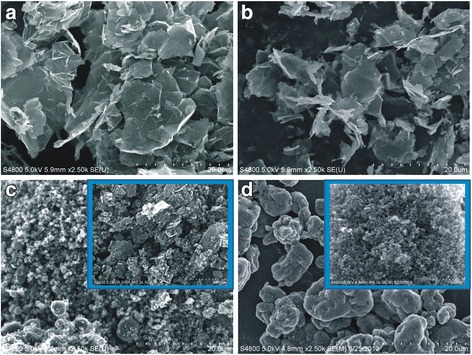
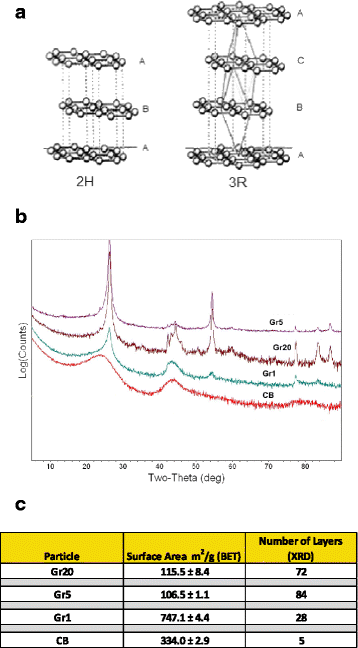
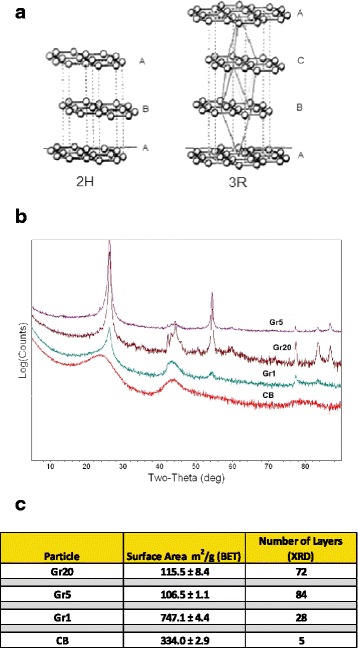
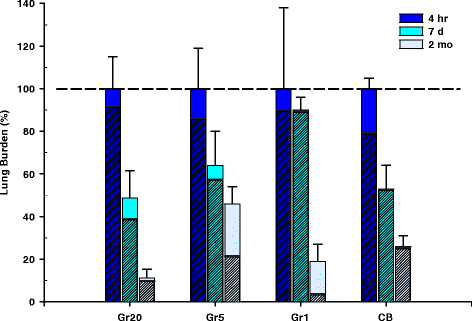
Three sizes of graphite nanoplates [20 μm lateral (Gr20), 5 μm lateral (Gr5), and <2 μm lateral (Gr1)] ranging from 8–25 nm in thickness were characterized for difference in surface area, structure,, zeta potential, and agglomeration in dispersion medium, the vehicle for in vivo studies. Mice were exposed by pharyngeal aspiration to these 3 sizes of graphite nanoplates at doses of 4 or 40 μg/mouse, or to carbon black (CB) as a carbonaceous control material. At 4 h, 1 day, 7 days, 1 month, and 2 months post-exposure, bronchoalveolar lavage was performed to collect fluid and cells for analysis of lung injury and inflammation. Particle clearance, histopathology and gene expression in lung tissue were evaluated. In addition, protein levels and gene expression were measured in blood, heart, aorta and liver to assess systemic responses.
Results
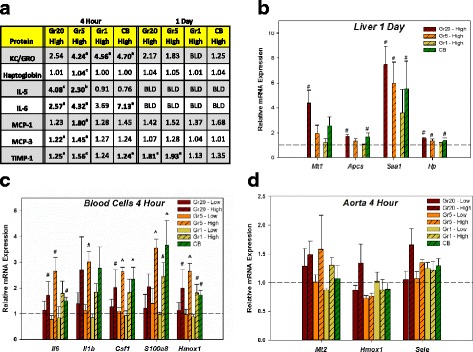
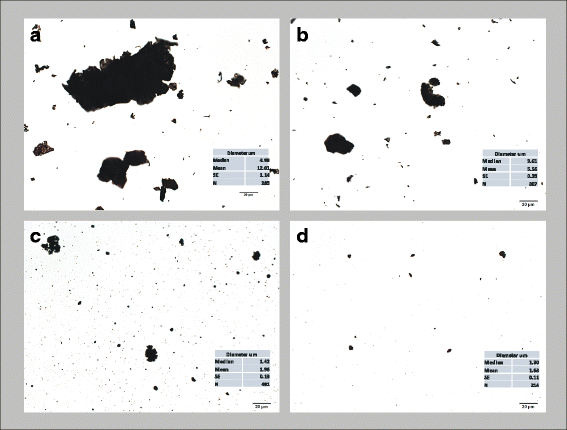
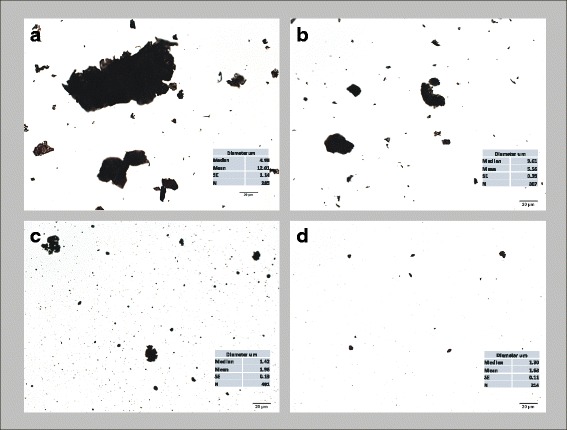
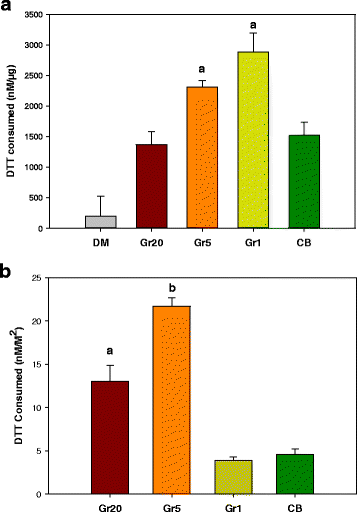
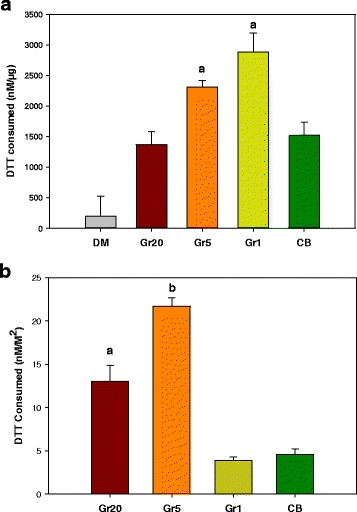
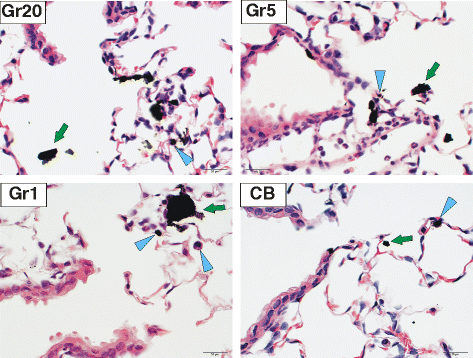
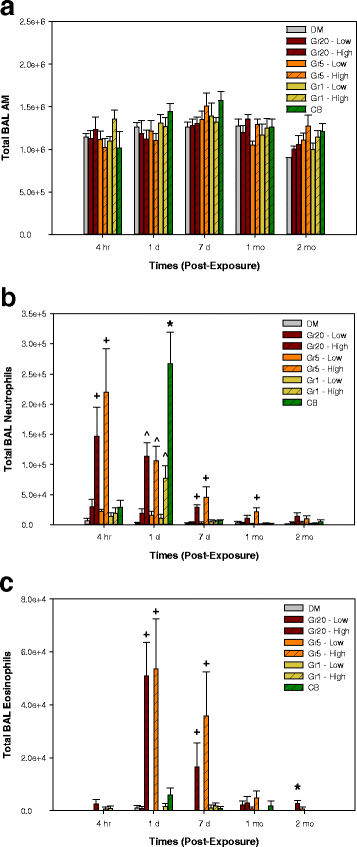
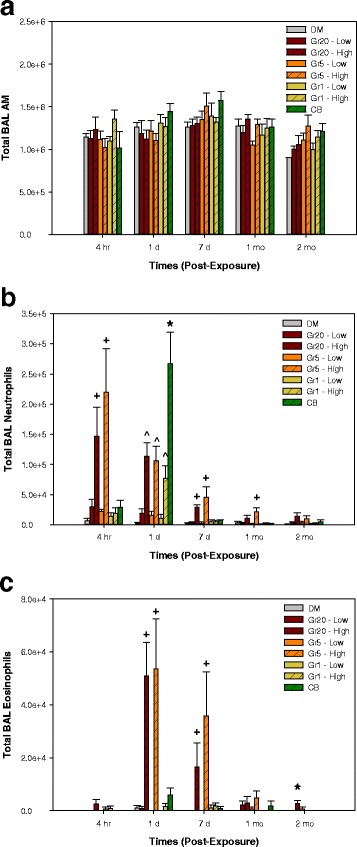
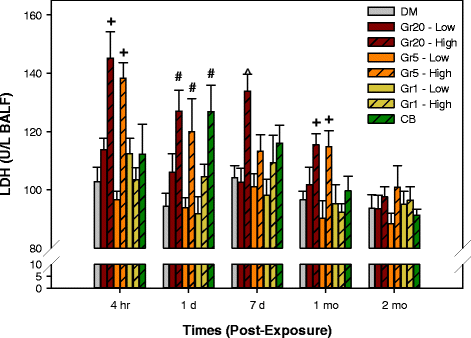
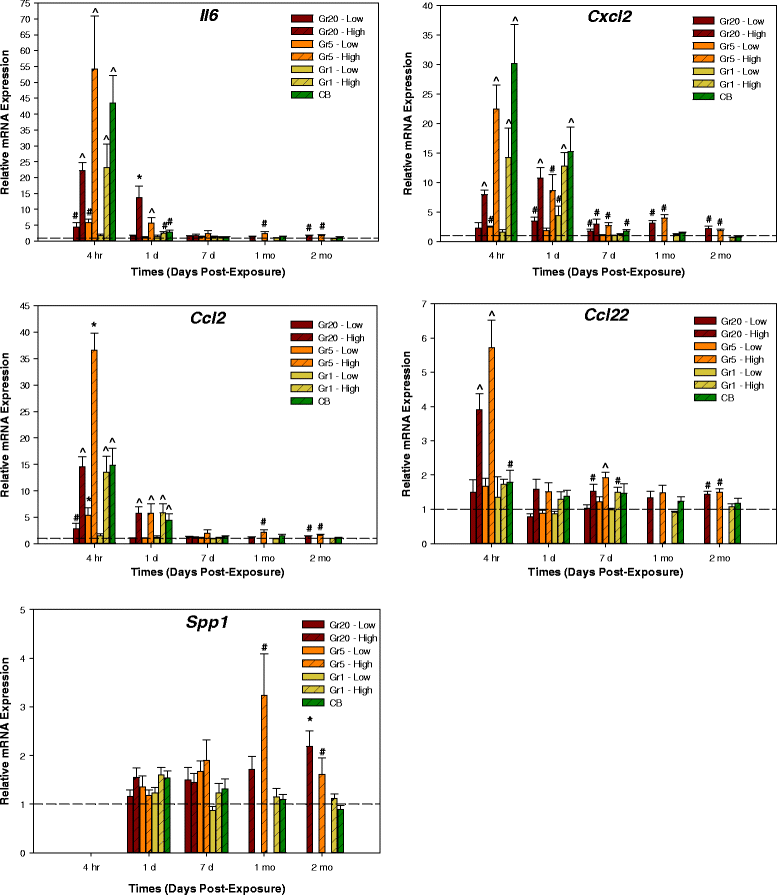
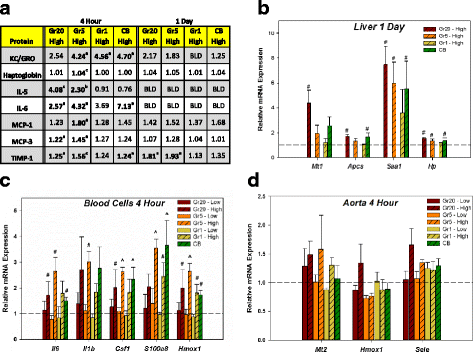
All Gr samples were found to be similarly composed of two graphite structures and agglomerated to varying degrees in DM in proportion to the lateral dimension. Surface area for Gr1 was approximately 7-fold greater than Gr5 and Gr20, but was less reactive reactive per m2. At the low dose, none of the Gr materials induced toxicity. At the high dose, Gr20 and Gr5 exposure increased indices of lung inflammation and injury in lavage fluid and tissue gene expression to a greater degree and duration than Gr1 and CB. Gr5 and Gr20 showed no or minimal lung epithelial hypertrophy and hyperplasia, and no development of fibrosis by 2 months post-exposure. In addition, the aorta and liver inflammatory and acute phase genes were transiently elevated in Gr5 and Gr20, relative to Gr1.
Conclusions
Pulmonary and systemic toxicity of graphite nanoplates may be dependent on lateral size and/or surface reactivity, with the graphite nanoplates > 5 μm laterally inducing greater toxicity which peaked at the early time points post-exposure relative to the 1–2 μm graphite nanoplate.
Electronic supplementary material
The online version of this article (doi:10.1186/s12989-016-0145-5) contains supplementary material, which is available to authorized users.
-
Subjects:
-
Source:Part Fibre Toxicol. 13.
-
Pubmed ID:27328692
-
Pubmed Central ID:PMC4915050
-
Document Type:
-
Volume:13
-
NIOSHTIC Number:nn:20048271
-
Collection(s):
-
Main Document Checksum:urn:sha-512:daebea18d606f65b403af9f8067d42a09343995848e773a275e4cee1725422432ad54ab571d8c709b3fe1a97a6133f159066f8c2212a9cc79f982c262baf4f9c
-
Download URL:
-
File Type:
 [PDF
- 2.73 MB
]
[PDF
- 2.73 MB
]
Supporting Files


File Language:
English
ON THIS PAGE









CDC STACKS serves as an archival repository of CDC-published products including
scientific findings,
journal articles, guidelines, recommendations, or other public health information authored or
co-authored by CDC or funded partners.
As a repository, CDC STACKS retains documents in their original published format to ensure public access to scientific information.
As a repository, CDC STACKS retains documents in their original published format to ensure public access to scientific information.
You May Also Like