



Economic Evaluation of Combined Diet and Physical Activity Promotion Programs to Prevent Type 2 Diabetes Among Persons at Increased Risk: A Systematic Review for the Community Preventive Services Task Force
Supporting Files

-
9 15 2015 ; 9-15-
-
Available in CDC Stacks on September 15, 2016, 12:00 AM
File Language:
English
Details
-
Alternative Title:Ann Intern Med
-
Personal Author:
-
Description:Background
Diabetes is a highly prevalent and costly disease. Studies indicate that combined diet and physical activity promotion programs can prevent type 2 diabetes among persons at increased risk.
Purpose
To systematically evaluate the evidence on cost, cost-effectiveness, and cost-benefit estimates of diet and physical activity promotion programs.
Data Sources
Cochrane Library, EMBASE, MEDLINE, PsycINFO, Sociological Abstracts, Web of Science, EconLit, and CINAHL through 7 April 2015.
Study Selection
English-language studies from high-income countries that provided data on cost, cost-effectiveness, or cost-benefit ratios of diet and physical activity promotion programs with at least 2 sessions over at least 3 months delivered to persons at increased risk for type 2 diabetes.
Data Extraction
Dual abstraction and assessment of relevant study details.
Data Synthesis
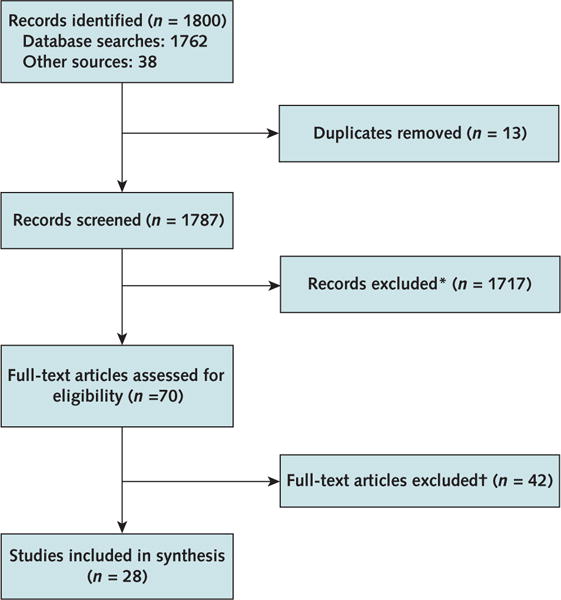
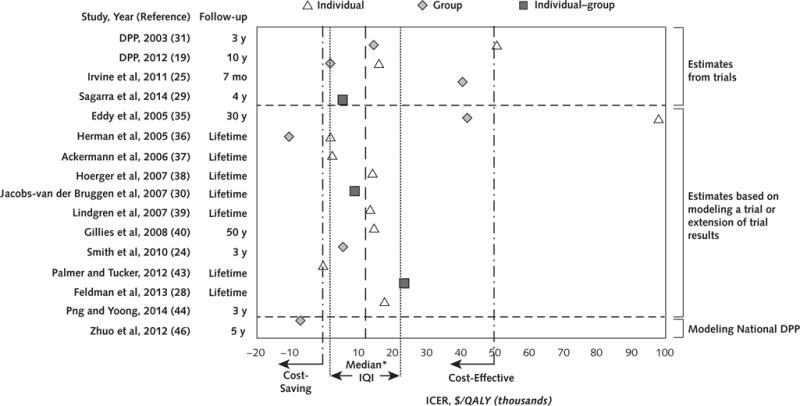
Twenty-eight studies were included. Costs were expressed in 2013 U.S. dollars. The median program cost per participant was $653. Costs were lower for group-based programs (median, $417) and programs implemented in community or primary care settings (median, $424) than for the U.S. DPP (Diabetes Prevention Program) trial and the DPP Outcomes Study ($5881). Twenty-two studies assessed the incremental cost-effectiveness ratios (ICERs) of the programs. From a health system perspective, 16 studies reported a median ICER of $13 761 per quality-adjusted life-year (QALY) saved. Group-based programs were more cost-effective (median, $1819 per QALY) than those that used individual sessions (median, $15 846 per QALY). No cost-benefit studies were identified.
Limitation
Information on recruitment costs and cost-effectiveness of translational programs implemented in community and primary care settings was limited.
Conclusion
Diet and physical activity promotion programs to prevent type 2 diabetes are cost-effective among persons at increased risk. Costs are lower when programs are delivered to groups in community or primary care settings.
Primary Funding Source
None. -
Keywords:
-
Source:Ann Intern Med. 163(6):452-460
-
Pubmed ID:26167962
-
Pubmed Central ID:PMC4913890
-
Document Type:
-
Funding:
-
Volume:163
-
Issue:6
-
Download URL:
-
File Type:
 [PDF - 360.87 KB]
 -
Collection(s):
-
Main Document Checksum:urn:sha256:bb15a6bda8f6bfd517ee0bb50ae1998fad9a45a8fd28ae24581774dc78da7bf2
Supporting Files


File Language:
English
 Was this page helpful?
 Found an issue?


CDC STACKS serves as an archival repository of CDC-published products including
scientific findings, journal articles, guidelines, recommendations, or other public health information authored or
co-authored by CDC or funded partners.
As a repository, CDC STACKS retains documents in their original published format to ensure public access to scientific information.
As a repository, CDC STACKS retains documents in their original published format to ensure public access to scientific information.
You May Also Like
COLLECTION
CDC Public Access