



Identification of Work-Related Musculoskeletal Disorders in Mining
Supporting Files

-
2016 ; 2016
-
Available in CDC Stacks on June 10, 2016, 12:00 AM
File Language:
English
Details
-
Alternative Title:J Saf Health Environ Res
-
Personal Author:
-
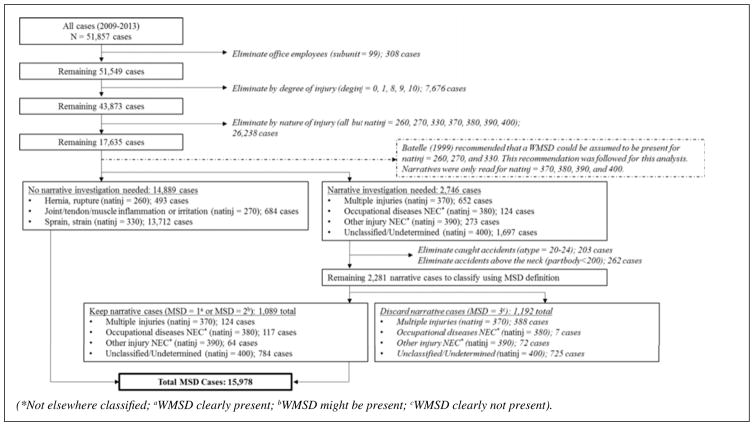
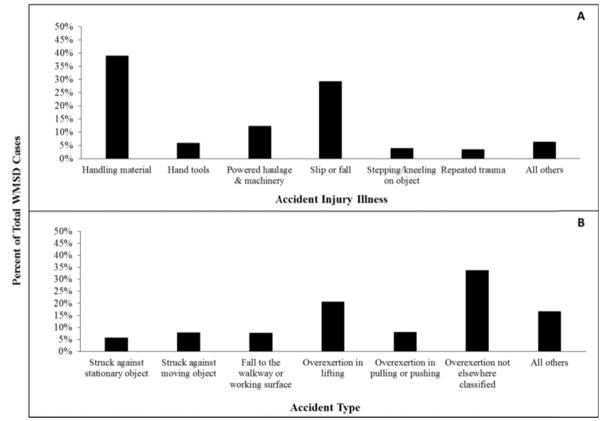
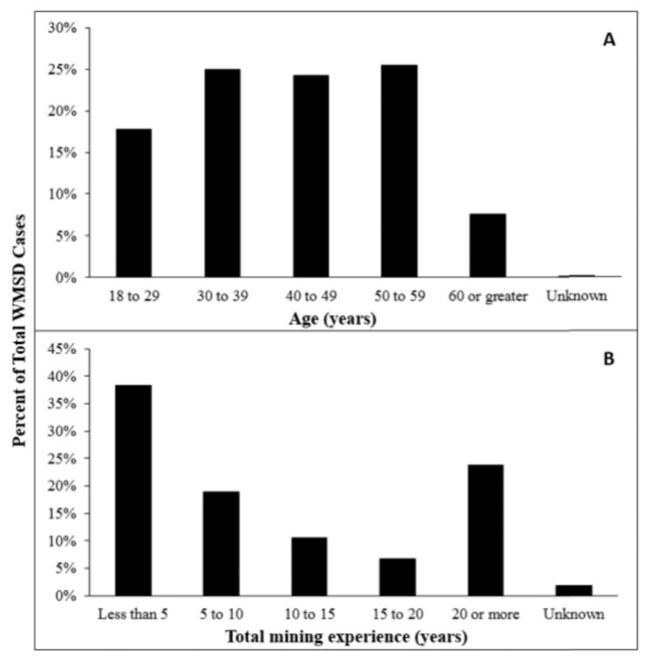
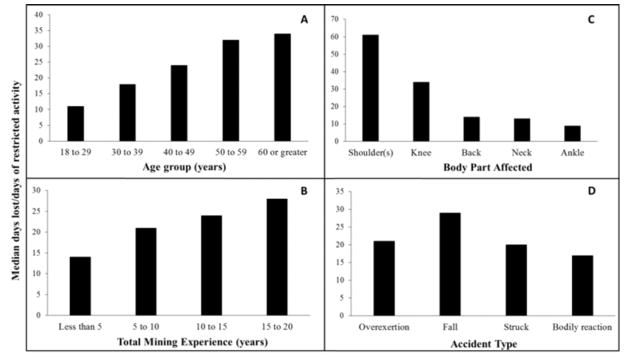
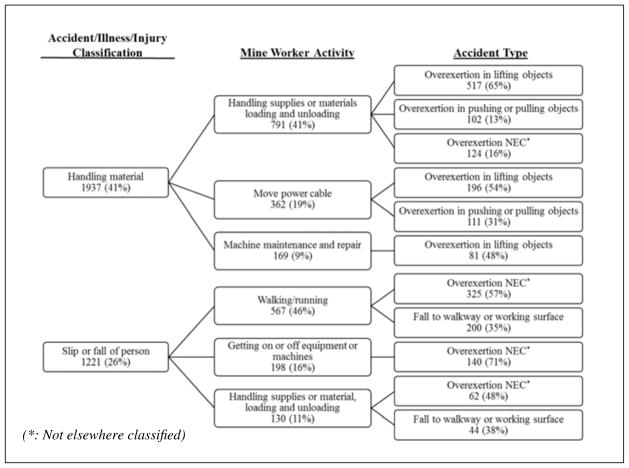
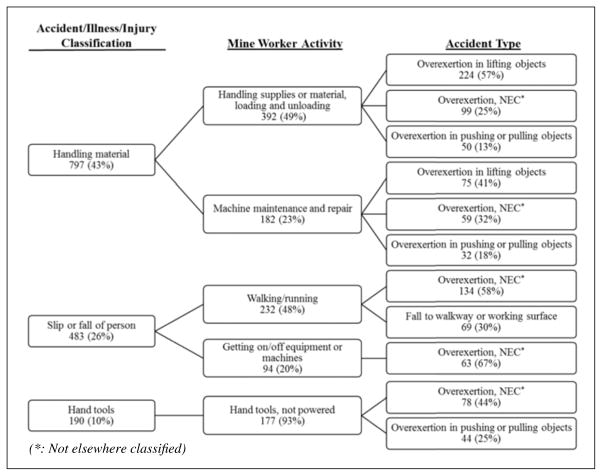
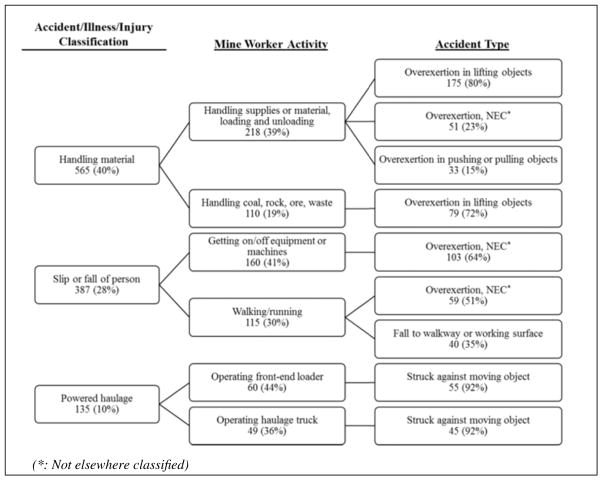
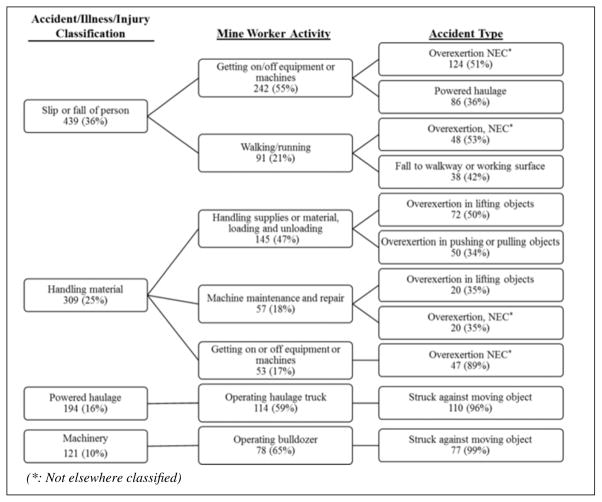
Description:Work-related musculoskeletal disorder (WMSD) prevention measures have been studied in great depth throughout various industries. While the nature and causes of these disorders have been characterized in many industries, WMSDs occurring in the U.S. mining sector have not been characterized for several years. In this report, MSHA accident/injury/illness data from 2009 to 2013 were characterized to determine the most frequently reported WMSDs in the U.S. mining sector. WMSDs were most frequently reported in workers with less than 5 years or more than 20 years of mining experience. The number of days lost from work was the highest for shoulder and knee injuries and was found to increase with worker age. Underground and surface coal, surface stone and stone processing plants experienced the greatest number of WMSDs over the period studied. WMSDs were most commonly caused by an employee suffering from an overexertion, falls or being struck by an object while performing materials handling, maintenance and repair tasks, getting on or off equipment or machines, and walking or running. The injury trends presented should be used to help determine the focus of future WMSD prevention research in mining.
-
Keywords:
-
Source:J Saf Health Environ Res. 12(1):274-283
-
Pubmed ID:27294012
-
Pubmed Central ID:PMC4902268
-
Document Type:
-
Funding:
-
Volume:12
-
Issue:1
-
Download URL:
-
File Type:
 [PDF - 1.02 MB]
 -
Collection(s):
-
Main Document Checksum:urn:sha256:f566d8284832b09532f450f85e918f863faecccce60c57457d29e32c5cabf338
Supporting Files


File Language:
English
 Was this page helpful?
 Found an issue?



CDC STACKS serves as an archival repository of CDC-published products including
scientific findings, journal articles, guidelines, recommendations, or other public health information authored or
co-authored by CDC or funded partners.
As a repository, CDC STACKS retains documents in their original published format to ensure public access to scientific information.
As a repository, CDC STACKS retains documents in their original published format to ensure public access to scientific information.
You May Also Like
COLLECTION
CDC Public Access