


Detectable HIV Viral Load in Kenya: Data from a Population-Based Survey
Supporting Files
Public Domain

-
May 18 2016
-
File Language:
English
Details
-
Alternative Title:PLoS One
-
Personal Author:
-
Description:Introduction
At the individual level, there is clear evidence that Human Immunodeficiency Virus (HIV) transmission can be substantially reduced by lowering viral load. However there are few data describing population-level HIV viremia especially in high-burden settings with substantial under-diagnosis of HIV infection. The 2nd Kenya AIDS Indicator Survey (KAIS 2012) provided a unique opportunity to evaluate the impact of antiretroviral therapy (ART) coverage on viremia and to examine the risks for failure to suppress viral replication. We report population-level HIV viral load suppression using data from KAIS 2012.
Methods
Between October 2012 to February 2013, KAIS 2012 surveyed household members, administered questionnaires and drew serum samples to test for HIV and, for those found to be infected with HIV, plasma viral load (PVL) was measured. Our principal outcome was unsuppressed HIV viremia, defined as a PVL ≥ 550 copies/mL. The exposure variables included current treatment with ART, prior history of an HIV diagnosis, and engagement in HIV care. All point estimates were adjusted to account for the KAIS 2012 cluster sampling design and survey non-response.
Results
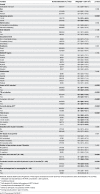
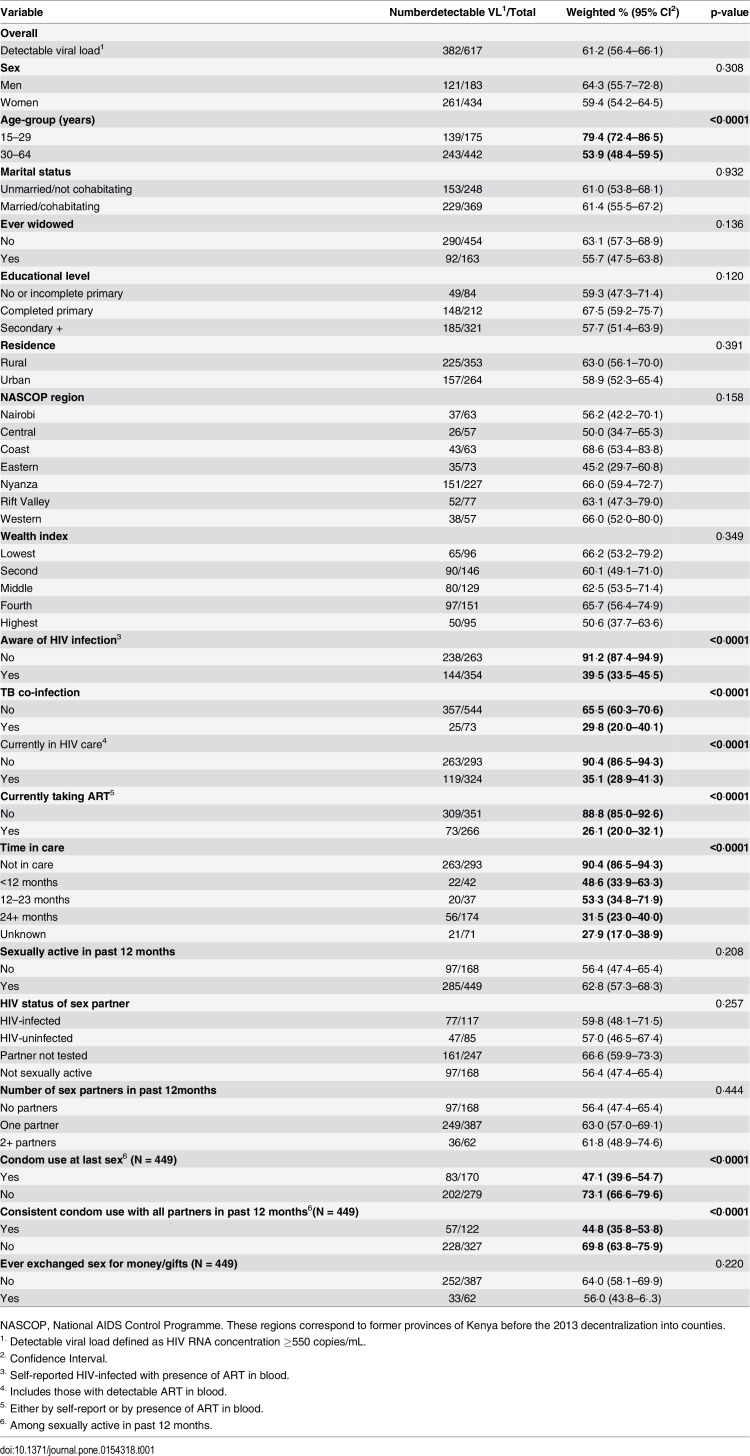
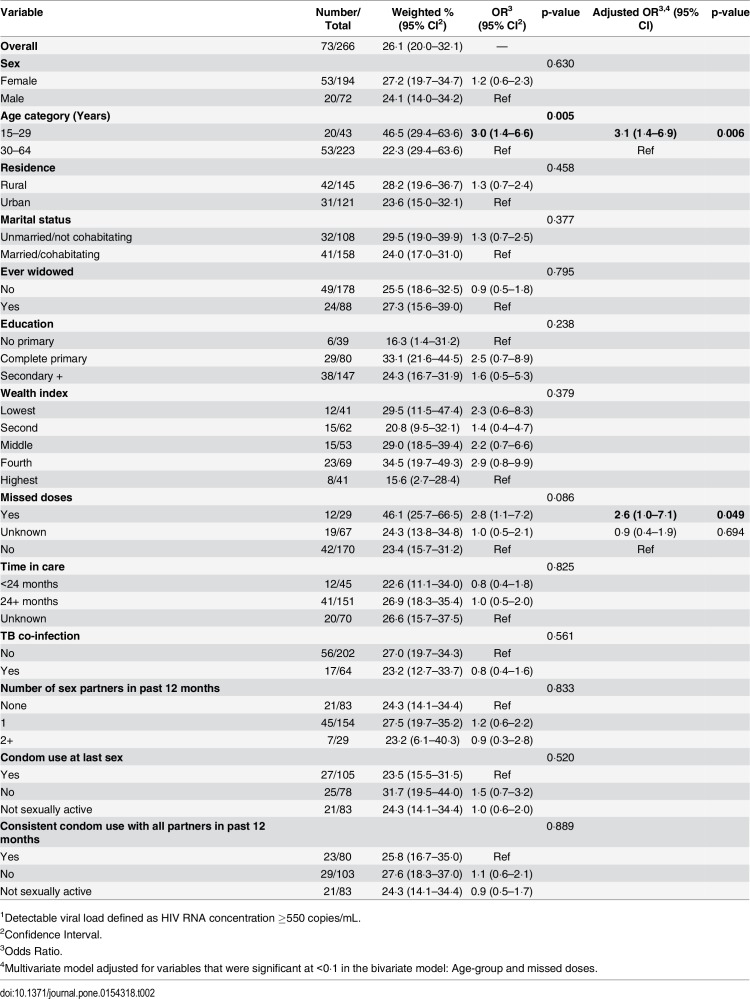
Overall, 61·2% (95% CI: 56·4–66·1) of HIV-infected Kenyans aged 15–64 years had not achieved virological suppression. The base10 median (interquartile range [IQR]) and mean (95% CI) VL was 4,633 copies/mL (0–51,596) and 81,750 copies/mL (59,366–104,134), respectively. Among 266 persons taking ART, 26.1% (95% CI: 20.0–32.1) had detectable viremia. Non-ART use, younger age, and lack of awareness of HIV status were independently associated with significantly higher odds of detectable viral load. In multivariate analysis for the sub-sample of patients on ART, detectable viremia was independently associated with younger age and sub-optimal adherence to ART.
Discussion
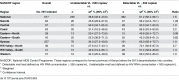
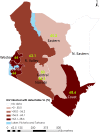
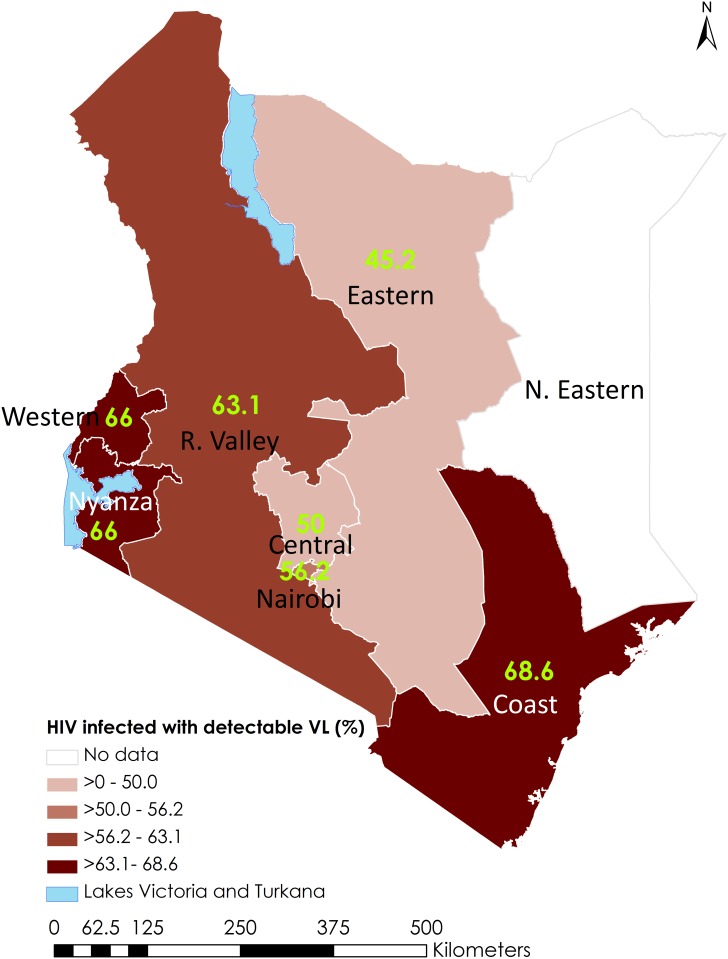
This report adds to the limited data of nationally-representative surveys to report population- level virological suppression. We established heterogeneity across the ten administrative and HIV programmatic regions on levels of detectable viral load. Timely initiation of ART and retention in care are crucial for the elimination of transmission of HIV through sex, needle and syringe use or from mother to child. Further refinement of geospatial mapping of populations with highest risk of transmission is necessary.
-
Subjects:
-
Source:PLoS One. 11(5).
-
Pubmed ID:27192052
-
Pubmed Central ID:PMC4871583
-
Document Type:
-
Place as Subject:
-
Volume:11
-
Issue:5
-
Collection(s):
-
Main Document Checksum:urn:sha256:61c81fff16ac938c5abb7dcd2d52ab7fd4684e029c840c5db7464ca65a50a05e
-
Download URL:
-
File Type:
 [PDF
- 658.35 KB
]
[PDF
- 658.35 KB
]
Supporting Files


File Language:
English
ON THIS PAGE


CDC STACKS serves as an archival repository of CDC-published products including
scientific findings,
journal articles, guidelines, recommendations, or other public health information authored or
co-authored by CDC or funded partners.
As a repository, CDC STACKS retains documents in their original published format to ensure public access to scientific information.
As a repository, CDC STACKS retains documents in their original published format to ensure public access to scientific information.
You May Also Like
COLLECTION
CDC Public Access