


Childhood Social Inequalities Influences Neural Processes in Young Adult Caregiving
Supporting Files

-
May 15 2015
-
Details
-
Alternative Title:Dev Psychobiol
-
Personal Author:
-
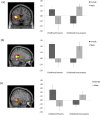
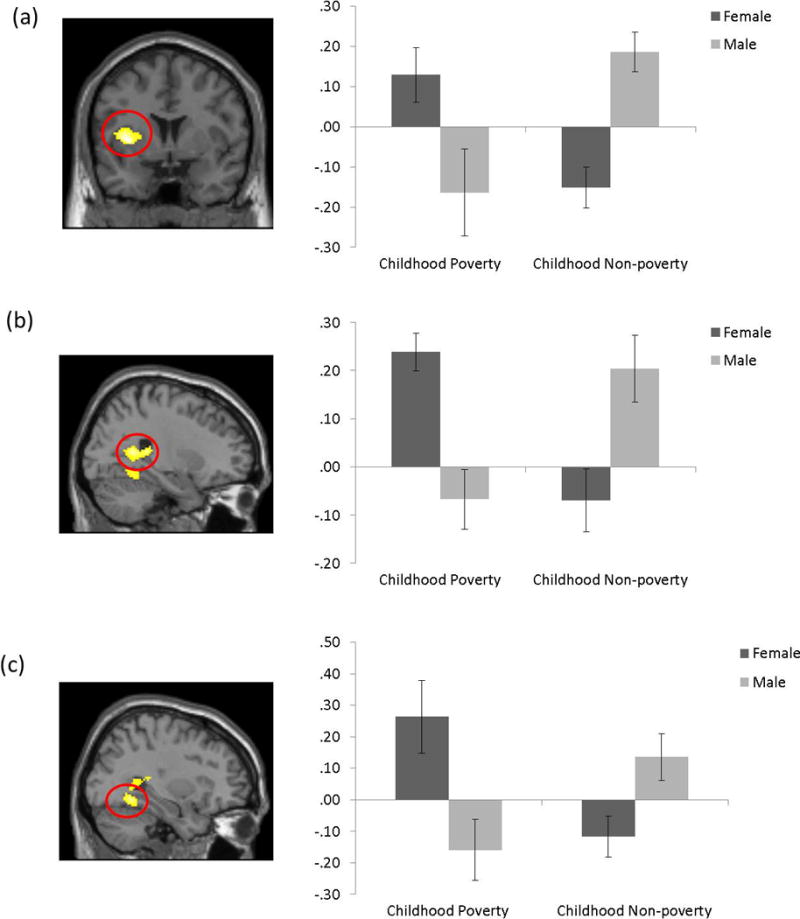
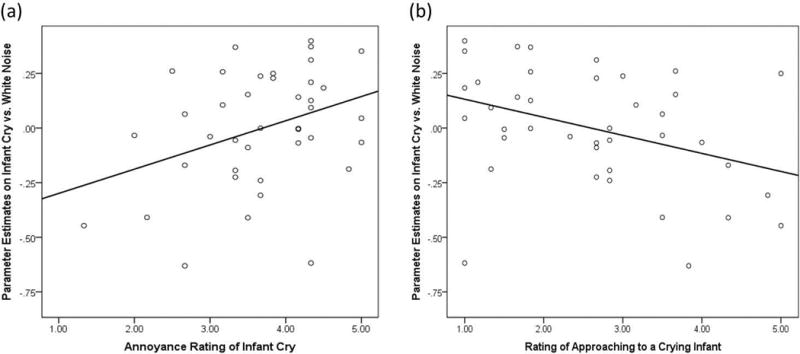
Description:Childhood poverty is associated with harsh parenting with a risk of transmission to the next generation. This prospective study examined the relations between childhood poverty and non-parent adults' neural responses to infant cry sounds. While no main effects of poverty were revealed in contrasts of infant cry versus acoustically matched white noise, a gender by childhood poverty interaction emerged. In females, childhood poverty was associated with increased neural activations in the posterior insula, striatum, calcarine sulcus, hippocampus, and fusiform gyrus, while, in males, childhood poverty was associated with reduced levels of neural responses to infant cry in the same regions. Irrespective of gender, neural activation in these regions was associated with higher levels of annoyance with the cry sound and reduced desire to approach the crying infant. The findings suggest gender differences in neural and emotional responses to infant cry sounds among young adults growing up in poverty.
-
Subjects:
-
Source:Dev Psychobiol. 57(8):948-960.
-
Pubmed ID:25981334
-
Pubmed Central ID:PMC4821405
-
Document Type:
-
Funding:
-
Volume:57
-
Issue:8
-
Collection(s):
-
Main Document Checksum:urn:sha256:6ed73dc1bb75e553623778d379989fa74d7c48cd4b8fb9b8cc49257739248093
-
Download URL:
-
File Type:
 [PDF
- 508.58 KB
]
[PDF
- 508.58 KB
]
Supporting Files


ON THIS PAGE


CDC STACKS serves as an archival repository of CDC-published products including
scientific findings,
journal articles, guidelines, recommendations, or other public health information authored or
co-authored by CDC or funded partners.
As a repository, CDC STACKS retains documents in their original published format to ensure public access to scientific information.
As a repository, CDC STACKS retains documents in their original published format to ensure public access to scientific information.
You May Also Like
COLLECTION
CDC Public Access