



Descriptive Epidemiology of Somatising Tendency: Findings from the CUPID Study
Supporting Files
Peer Reviewed

-
2016/04/29
File Language:
English
Details
-
Journal Article:PLoS One
-
Personal Author:Vargas-Prada, Sergio ; Coggon, David ; Ntani, Georgia ; Walker-Bone, Karen E. ; Palmer, Keith T. ; Felli, Vanda E. ; Harari, Raul ; Barrero, Lope H. ; Felknor, Sarah A. ; Gimeno, David ; Cattrell, Anna ; Bonzini, Matteo ; Solidaki, Eleni ; Merisalu, Eda ; Habib, Rima R. ; Sadeghian, Farideh ; Kadir, M. Masood ; Warnakulasuriya, Sudath S. P. ; Matsudaira, Ko ; Nyantumbu, Busisiwe ; Sim, Malcolm R. ; Harcombe, Helen ; Cox, Ken ; Sarquis, Leila M. M. ; Marziale, Maria H. ; Harari, Florencia ; Freire, Rocio ; Harari, Natalia ; Monroy, Magda V. ; Quintana, Leonardo A. ; Rojas, Marianela ; Harris, E. Clare ; Serra, Consol ; Martinez, J. Miguel ; Delclos, George L. ; Benavides, Fernando G. ; Carugno, Michele ; Ferrario, Marco M. ; Pesatori, Angela C. ; Chatzi, Leda ; Bitsios, Panos ; Kogevinas, Manolis ; Oha, Kristel ; Freimann, Tiina ; Sadeghian, Ali ; Peiris-John, Roshini J. ; Sathiakumar, Nalini ; Wickremasinghe, A. Rajitha ; Yoshimura, Noriko ; Kelsall, Helen L. ; Hoe, Victor C. W. ; Urquhart, Donna M. ; Derrett, Sarah ; McBride, David ; Herbison, Peter ; Gray, Andrew ; Salazar Vega, Eduardo J.
-
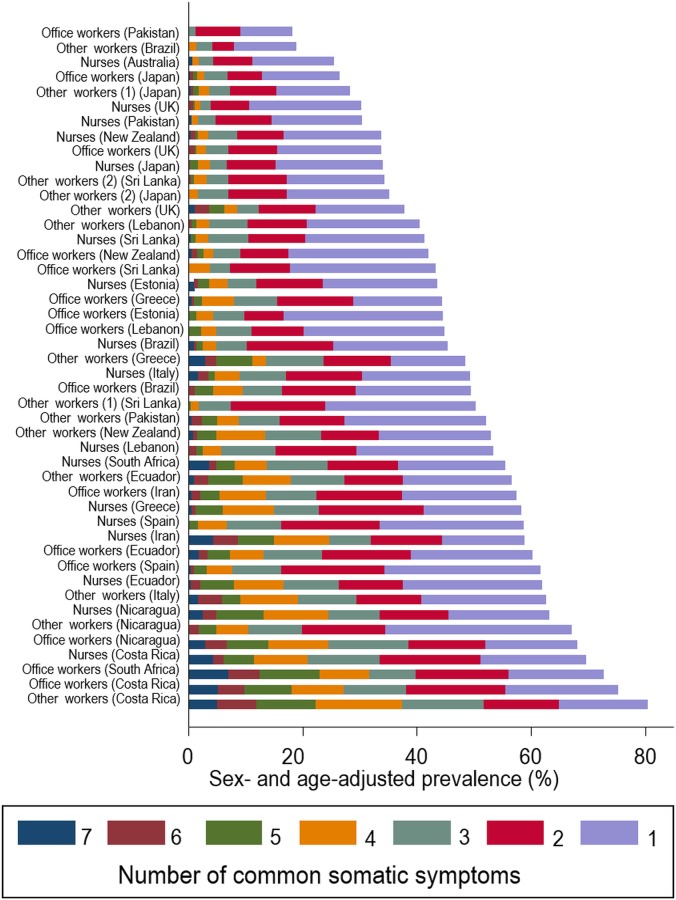
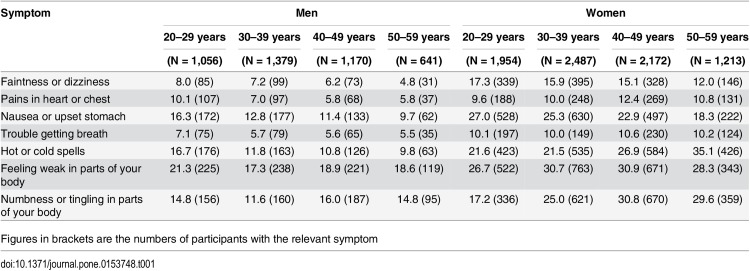
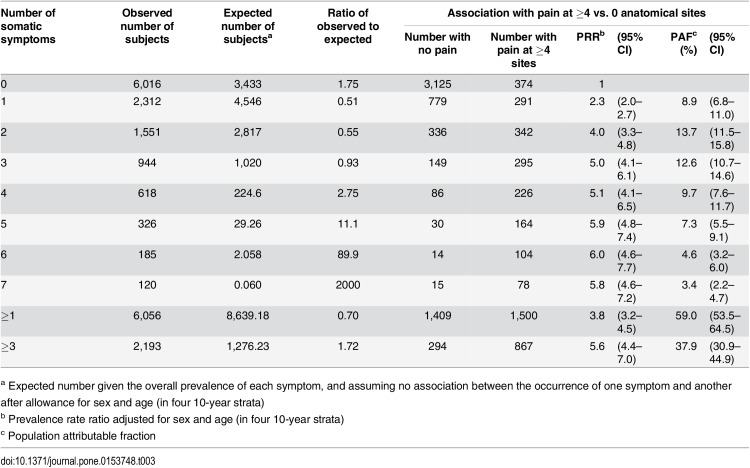
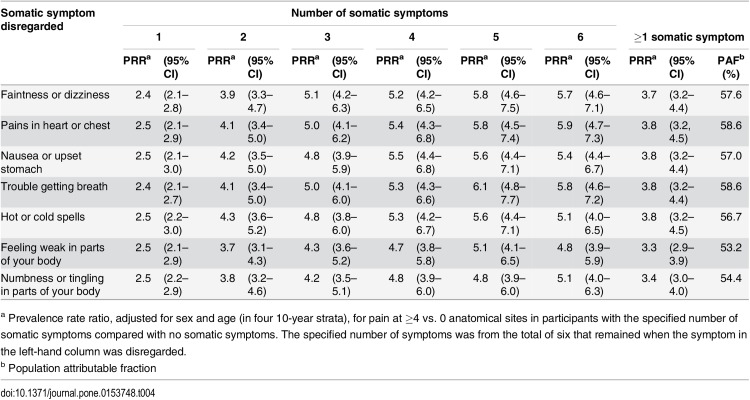
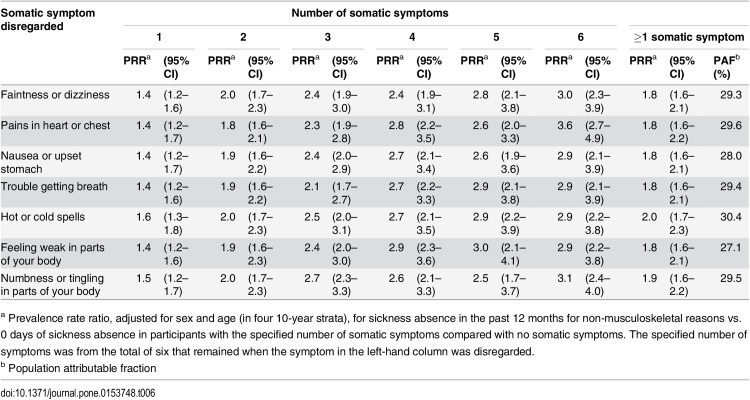
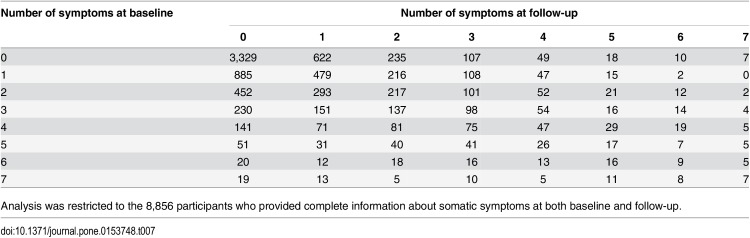
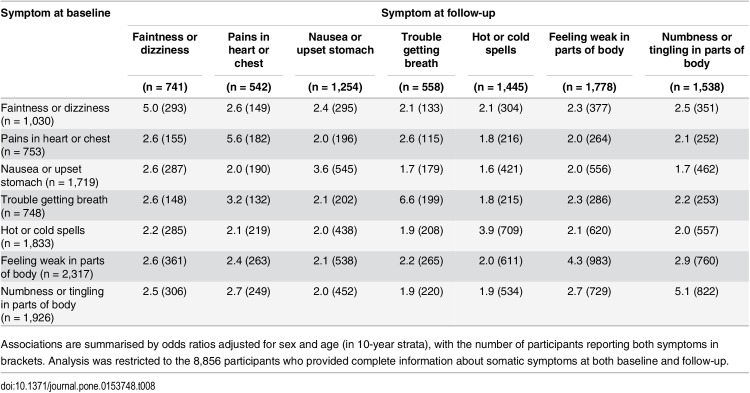
Description:Somatising tendency, defined as a predisposition to worry about common somatic symptoms, is importantly associated with various aspects of health and health-related behaviour, including musculoskeletal pain and associated disability. To explore its epidemiological characteristics, and how it can be specified most efficiently, we analysed data from an international longitudinal study. A baseline questionnaire, which included questions from the Brief Symptom Inventory about seven common symptoms, was completed by 12,072 participants aged 20-59 from 46 occupational groups in 18 countries (response rate 70%). The seven symptoms were all mutually associated (odds ratios for pairwise associations 3.4 to 9.3), and each contributed to a measure of somatising tendency that exhibited an exposure-response relationship both with multi-site pain (prevalence rate ratios up to six), and also with sickness absence for non-musculoskeletal reasons. In most participants, the level of somatising tendency was little changed when reassessed after a mean interval of 14 months (75% having a change of 0 or 1 in their symptom count), although the specific symptoms reported at follow-up often differed from those at baseline. Somatising tendency was more common in women than men, especially at older ages, and varied markedly across the 46 occupational groups studied, with higher rates in South and Central America. It was weakly associated with smoking, but not with level of education. Our study supports the use of questions from the Brief Symptom Inventory as a method for measuring somatising tendency, and suggests that in adults of working age, it is a fairly stable trait. Description provided by NIOSH
-
Subjects:
-
Keywords:
-
Source:PLoS One 2016 Apr; 11(4):e0153748
-
ISSN:1932-6203
-
Pubmed ID:27128094
-
Pubmed Central ID:PMC4851348
-
Document Type:
-
Funding:
-
Genre:
-
Place as Subject:
-
CIO:
-
Division:
-
Topic:
-
Location:
-
Pages in Document:17 pdf pages
-
Volume:11
-
Issue:4
-
NIOSHTIC Number:nn:20064893
-
Contact Point Address:David Coggon, Medical Research Council Lifecourse Epidemiology Unit and Arthritis Research UK/MRC Centre for Musculoskeletal Health and Work, University of Southampton, Southampton, United Kingdom
-
Email:dnc@mrc.soton.ac.uk
-
Federal Fiscal Year:2016
-
Performing Organization:University of Texas Health Science Center, Houston
-
Peer Reviewed:True
-
Download URL:
-
File Type:
 [PDF - 912.05 KB]
 -
Collection(s):
-
Main Document Checksum:urn:sha-512:08e382941f35ac916b68fab518debf6417760034d97602a1619f1532920957cd660037a84c9d30218511f6b182503aa46d2120cd315454101db6ba8bd5cd015d
Supporting Files


File Language:
English
 Was this page helpful?
 Found an issue?







CDC STACKS serves as an archival repository of CDC-published products including
scientific findings, journal articles, guidelines, recommendations, or other public health information authored or
co-authored by CDC or funded partners.
As a repository, CDC STACKS retains documents in their original published format to ensure public access to scientific information.
As a repository, CDC STACKS retains documents in their original published format to ensure public access to scientific information.
You May Also Like