



50-Hertz Magnetic Field and Calcium Transients in Jurkat Cells: Results of a Research and Public Information Dissemination (RAPID) Program Study
Supporting Files
Public Domain

-
2000/02/01
-
File Language:
English
Details
-
Journal Article:Environmental Health Perspectives
-
Personal Author:
-
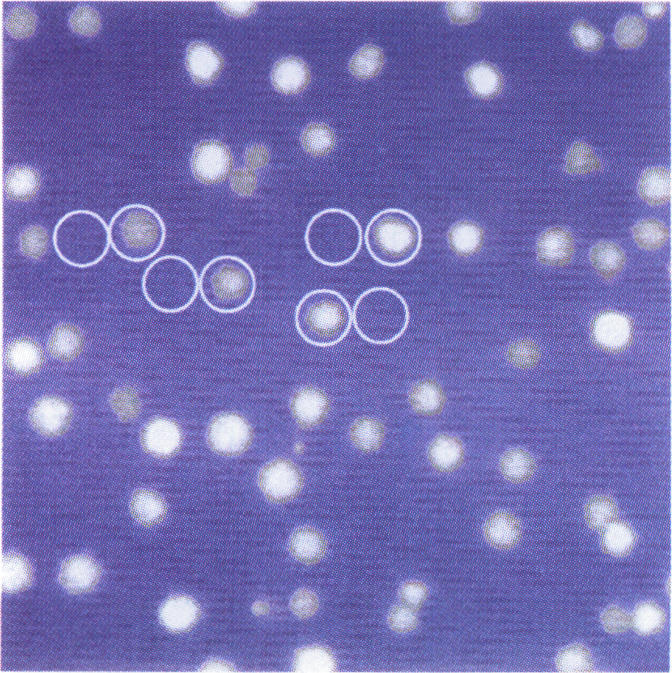
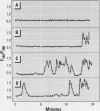
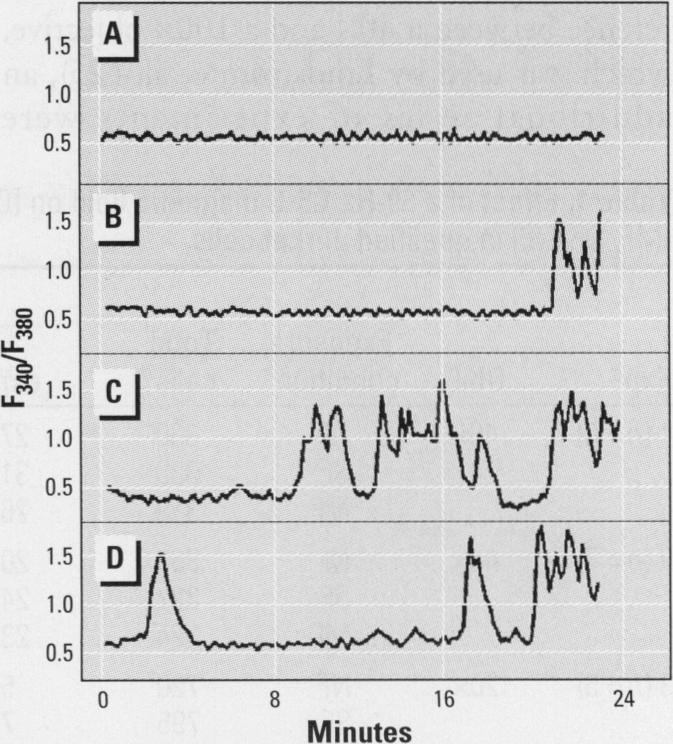
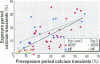
Description:An effect on intracellular calcium continues to be proposed as a biochemical pathway for the mediation of biologic effects of electrical-power-frequency magnetic fields (MF). However, reproducible results among laboratories are difficult to attain and the characteristics of magnetic field effects on intracellular free calcium ([Ca(2+)](i)) are not well understood. We attempted to repeat the studies of Lindstrom et al. [Intracellular Calcium Oscillations in a T-Cell Line by a Weak 50 Hz Magnetic Field. J Cell Physiol 156:395-398 (1993)] by investigating the effect of a 1.5-G 50-Hz MF on [Ca(2+)](i) in the Jurkat lymphocyte T-cell line. Changes in [Ca(2+)](i) were determined using microscopic imaging of fura-2 loaded Jurkat cells on poly-l-lysine-coated glass coverslips. The MF was generated by a single coil constructed with bifilar wire and located in the same plane as the cells. Cells were randomly exposed for 8 min to MF, sham field (SF), or no field (NF) conditions. The exposure condition remained coded until data analysis was complete. Each exposure period was preceded by an 8-min data collection to establish a baseline for [Ca(2+)](i). After each exposure condition, cells were exposed to anti-CD3 antibody that induced a rapid increase in [Ca(2+)](i) in responsive cells; this provided a positive control. [Ca(2+)](i) was analyzed for individual cells as spatially-averaged background-corrected 340/380 nm ratios, and a [Ca(2+)](i) transient was considered significant for positive deviations from baseline of 3 [multiple] an estimate of noise in the baseline. Typically, 25-50 cells/field were viewed and approximately 50% had no [Ca(2+)](i) transients in the baseline period and also responded to positive control. Only cells responding to positive control and lacking changes in [Ca(2+)](i) during the baseline period were considered qualified for assessment during the exposure period. The incidences of [Ca(2+)](i) transients during the exposure period for two experiments (40 [multiple] objective) were 16.5, 14.6, and 14.2% for MF, SF, and NF, respectively, and were not statistically significantly different. Previous studies by Lindstrom et al. [Intracellular Calcium Oscillations in a T-Cell Line after Exposure to Extremely-Low-Frequency Magnetic Fields with Variable Frequencies and Flux Densities. Bioelectromagnetics 16:41-47 (1995)] showed a high response rate (92%) for exposure to 1. 5-G 50-Hz MF when individual cells were preselected for investigation. We found no such effect when examining many cells simultaneously in a random and blind fashion. These results do not preclude an effect of MF on [Ca(2+)](i), but suggest that responsive cells, if they exist, were not identified using the approaches that we used in this study. [Description provided by NIOSH]
-
Subjects:
-
Keywords:
-
Source:Environ Health Perspect 2000 Feb; 108(2):135-140
-
ISSN:0091-6765
-
Document Type:
-
Genre:
-
Place as Subject:
-
CIO:
-
Division:
-
Topic:
-
Location:
-
Pages in Document:6 pdf pages
-
Volume:108
-
Issue:2
-
NIOSHTIC Number:nn:20024923
-
Contact Point Address:M. Toraason, National Institute for Occupational Safety and Health (NIOSH), MS-C23, 4676 Columbia Parkway, Cincinnati OH 45226 USA
-
Email:mht1@cdc.gov
-
CAS Registry Number:
-
Federal Fiscal Year:2000
-
Peer Reviewed:True
-
Collection(s):
-
Main Document Checksum:urn:sha-512:a8b8d90ad1b65918e16911f635feb3b2a05b0c7e1ebff9dffa580d01744b36f8767eff40e1a200dad086f6c4cb32292ad3b74d5a84d709c3ac75855995cec0d5
-
Download URL:
-
File Type:
 [PDF
- 2.44 MB
]
[PDF
- 2.44 MB
]
Supporting Files


File Language:
English
 Was this page helpful?
 Found an issue?

CDC STACKS serves as an archival repository of CDC-published products including
scientific findings,
journal articles, guidelines, recommendations, or other public health information authored or
co-authored by CDC or funded partners.
As a repository, CDC STACKS retains documents in their original published format to ensure public access to scientific information.
As a repository, CDC STACKS retains documents in their original published format to ensure public access to scientific information.
You May Also Like