



Development and Validation of an Improved PCR Method Using the 23S-5S Intergenic Spacer for Detection of Rickettsiae in Dermacentor variabilis Ticks and Tissue Samples from Humans and Laboratory Animals
Supporting Files
Public Domain

-
Jan 27 2016
-
Available in CDC Stacks on March 25, 2016, 12:00 AM
Details
-
Alternative Title:J Clin Microbiol
-
Personal Author:
-
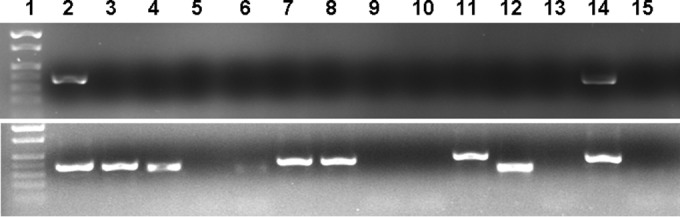
Description:A novel nested PCR assay was developed to detectRickettsiaspp. in ticks and tissue samples from humans and laboratory animals. Primers were designed for the nested run to amplify a variable region of the 23S-5S intergenic spacer (IGS) ofRickettsiaspp. The newly designed primers were evaluated using genomic DNA from 11Rickettsiaspecies belonging to the spotted fever, typhus, and ancestral groups and, in parallel, compared to otherRickettsia-specific PCR targets (ompA,gltA, and the 17-kDa protein gene). The new 23S-5S IGS nested PCR assay amplified all 11Rickettsiaspp., but the assays employing other PCR targets did not. The novel nested assay was sensitive enough to detect one copy of a cloned 23S-5S IGS fragment from "CandidatusRickettsia amblyommii." Subsequently, the detection efficiency of the 23S-5S IGS nested assay was compared to those of the other three assays using genomic DNA extracted from 40 adultDermacentor variabilisticks. The nested 23S-5S IGS assay detectedRickettsiaDNA in 45% of the ticks, while the amplification rates of the other three assays ranged between 5 and 20%. The novel PCR assay was validated using clinical samples from humans and laboratory animals that were known to be infected with pathogenic species ofRickettsia The nested 23S-5S IGS PCR assay was coupled with reverse line blot hybridization with species-specific probes for high-throughput detection and simultaneous identification of the species ofRickettsiain the ticks. "CandidatusRickettsia amblyommii,"R. montanensis,R. felis, andR. belliiwere frequently identified species, along with some potentially novelRickettsiastrains that were closely related toR. belliiandR. conorii.
-
Subjects:
-
Source:J Clin Microbiol. 2016; 54(4):972-979.
-
Pubmed ID:26818674
-
Pubmed Central ID:PMC4809929
-
Document Type:
-
Volume:54
-
Issue:4
-
Download URL:
-
File Type:
 [PDF - 640.03 KB]
-
Collection(s):
-
Main Document Checksum:urn:sha256:788faee6eff4419e593c49be63038a89af59728bb1b2d823f3847fe17907c3b7
Supporting Files


 Was this page helpful?
 Found an issue?




CDC STACKS serves as an archival repository of CDC-published products including
scientific findings, journal articles, guidelines, recommendations, or other public health information authored or
co-authored by CDC or funded partners.
As a repository, CDC STACKS retains documents in their original published format to ensure public access to scientific information.
As a repository, CDC STACKS retains documents in their original published format to ensure public access to scientific information.