



Indoor Air Quality in Green-renovated vs. Non-Green Low-Income Homes of Children Living in a Temperate Region of US (Ohio)
Supporting Files

-
6 1 2016 ; 6-1-
-
Available in CDC Stacks on 2017-06-01T00:00:00Z
File Language:
English
Details
-
Alternative Title:Sci Total Environ
-
Personal Author:Coombs, Kanistha C. ; Chew, Ginger L. ; Schaffer, Christopher ; Ryan, Patrick H. ; Brokamp, Cole ; Grinshpun, Sergey A. ; Adamkiewicz, Gary ; Chillrud, Steve ; Hedman, Curtis ; Colton, Meryl ; Ross, Jamie ; Reponen, Tiina
-
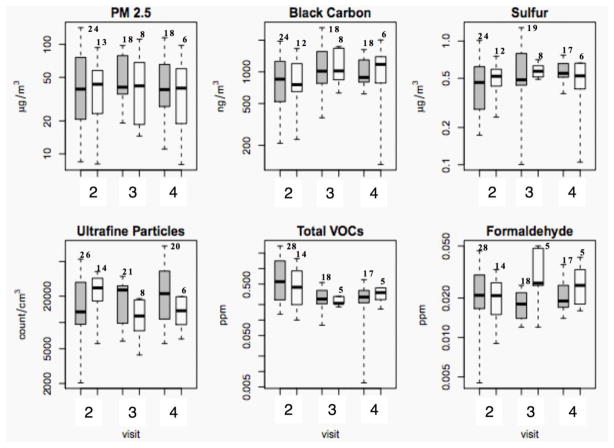
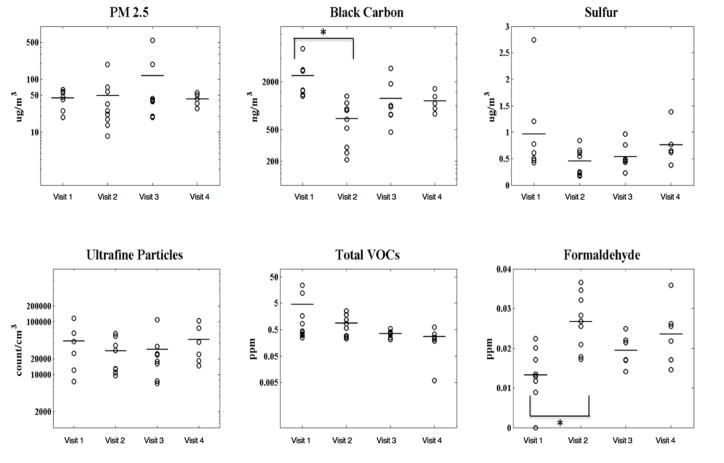
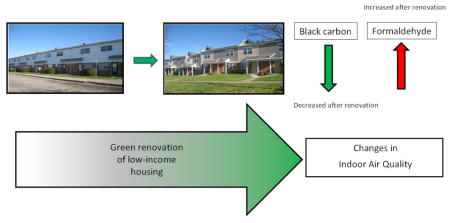
Description:Green eco-friendly housing includes approaches to reduce indoor air pollutant sources and to increase energy efficiency. Although sealing/tightening buildings can save energy and reduce the penetration of outdoor pollutants, an adverse outcome can be increased buildup of pollutants with indoor sources. The objective of this study was to determine the differences in the indoor air quality (IAQ) between green and non-green homes in low-income housing complexes. In one housing complex, apartments were renovated using green principles (n=28). Home visits were conducted immediately after the renovation, and subsequently at 6 months and at 12 months following the renovation. Of these homes, eight homes had pre-renovation home visits; this allowed pre- and post-renovation comparisons within the same homes. Parallel visits were conducted in non-green (control) apartments (n=14) in a nearby low-income housing complex. The IAQ assessments included PM2.5, black carbon, ultrafine particles, sulfur, total volatile organic compounds (VOCs), formaldehyde, and air exchange rate. Data were analyzed using linear mixed-effects models. None of the indoor pollutant concentrations were significantly different between green and non-green homes. However, we found differences when comparing the concentrations before and after renovation. Measured immediately after renovation, indoor black carbon concentrations were significantly lower averaging 682 ng/m(3) in post-renovation vs. 2364 ng/m(3) in pre-renovation home visits (p=0.01). In contrast, formaldehyde concentrations were significantly higher in post-renovated (0.03 ppm) than in pre-renovated homes (0.01 ppm) (p=0.004). Questionnaire data showed that opening of windows occurred less frequently in homes immediately post-renovation compared to pre-renovation; this factor likely affected the levels of indoor black carbon (from outdoor sources) and formaldehyde (from indoor sources) more than the renovation status itself. To reduce IAQ problems and potentially improve health, careful selection of indoor building materials and ensuring sufficient ventilation are important for green building designs.
-
Subjects:
-
Keywords:
-
Source:Sci Total Environ. 554-555:178-185
-
Pubmed ID:26950631
-
Pubmed Central ID:PMC4818700
-
Document Type:
-
Funding:
-
Download URL:
-
File Type:
 [PDF - 488.00 KB]
 -
Collection(s):
-
Main Document Checksum:urn:sha256:6a77edb6fec232f03e38a3994c0d0e018f530d9aae758a1562be12349012c573
Supporting Files


File Language:
English
 Was this page helpful?
 Found an issue?



CDC STACKS serves as an archival repository of CDC-published products including
scientific findings, journal articles, guidelines, recommendations, or other public health information authored or
co-authored by CDC or funded partners.
As a repository, CDC STACKS retains documents in their original published format to ensure public access to scientific information.
As a repository, CDC STACKS retains documents in their original published format to ensure public access to scientific information.
You May Also Like
COLLECTION
CDC Public Access