



Methods of applying the 1994 case definition of chronic fatigue syndrome – impact on classification and observed illness characteristics
Supporting Files
Public Domain

-
Mar 12 2016
-
Details
-
Alternative Title:Popul Health Metr
-
Personal Author:
-
Description:Background
Multiple case definitions are in use to identify chronic fatigue syndrome (CFS). Even when using the same definition, methods used to apply definitional criteria may affect results. The Centers for Disease Control and Prevention (CDC) conducted two population-based studies estimating CFS prevalence using the 1994 case definition; one relied on direct questions for criteria of fatigue, functional impairment and symptoms (1997 Wichita; Method 1), and the other used subscale score thresholds of standardized questionnaires for criteria (2004 Georgia; Method 2). Compared to previous reports the 2004 CFS prevalence estimate was higher, raising questions about whether changes in the method of operationalizing affected this and illness characteristics.
Methods
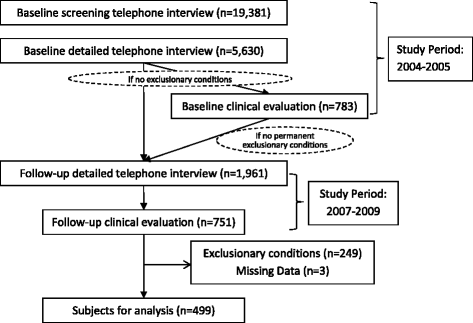
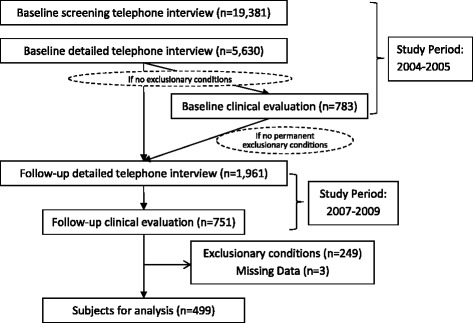
The follow-up of the Georgia cohort allowed direct comparison of both methods of applying the 1994 case definition. Of 1961 participants (53 % of eligible) who completed the detailed telephone interview, 919 (47 %) were eligible for and 751 (81 %) underwent clinical evaluation including medical/psychiatric evaluations. Data from the 499 individuals with complete data and without exclusionary conditions was available for this analysis.
Results
A total of 86 participants were classified as CFS by one or both methods; 44 cases identified by both methods, 15 only identified by Method 1, and 27 only identified by Method 2 (Kappa 0.63; 95 % confidence interval [CI]: 0.53, 0.73 and concordance 91.59 %). The CFS group identified by both methods were more fatigued, had worse functioning, and more symptoms than those identified by only one method. Moderate to severe depression was noted in only one individual who was classified as CFS by both methods. When comparing the CFS groups identified by only one method, those only identified by Method 2 were either similar to or more severely affected in fatigue, function, and symptoms than those only identified by Method 1.
Conclusions
The two methods demonstrated substantial concordance. While Method 2 classified more participants as CFS, there was no indication that they were less severely ill or more depressed. The classification differences do not fully explain the prevalence increase noted in the 2004 Georgia study. Use of standardized instruments for the major CFS domains provides advantages for disease stratification and comparing CFS patients to other illnesses.
-
Subjects:
-
Source:Popul Health Metr. 14.
-
Pubmed ID:26973437
-
Pubmed Central ID:PMC4788915
-
Document Type:
-
Volume:14
-
Collection(s):
-
Main Document Checksum:urn:sha256:75b11646b5033ee140802906a3b8cbf73bb16fad3d3d00a42af25a20a22adf62
-
Download URL:
-
File Type:
 [PDF
- 613.92 KB
]
[PDF
- 613.92 KB
]
Supporting Files


 Was this page helpful?
 Found an issue?
CDC STACKS serves as an archival repository of CDC-published products including
scientific findings,
journal articles, guidelines, recommendations, or other public health information authored or
co-authored by CDC or funded partners.
As a repository, CDC STACKS retains documents in their original published format to ensure public access to scientific information.
As a repository, CDC STACKS retains documents in their original published format to ensure public access to scientific information.
You May Also Like
COLLECTION
CDC Public Access