


The Sources of Inflammatory Mediators in the Lung after Silica Exposure
Supporting Files
Public Domain

-
Dec 2004
-
Details
-
Alternative Title:Environ Health Perspect
-
Personal Author:
-
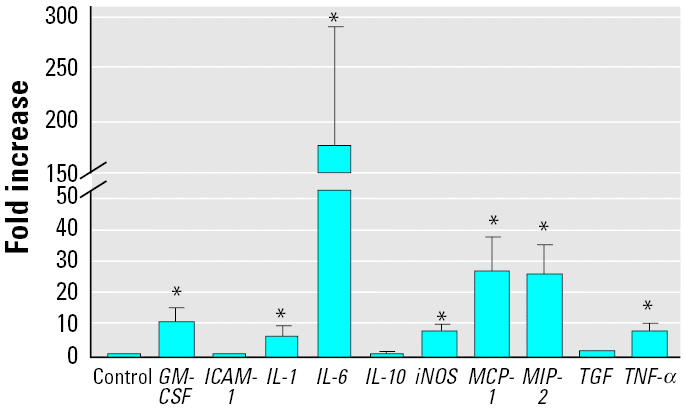
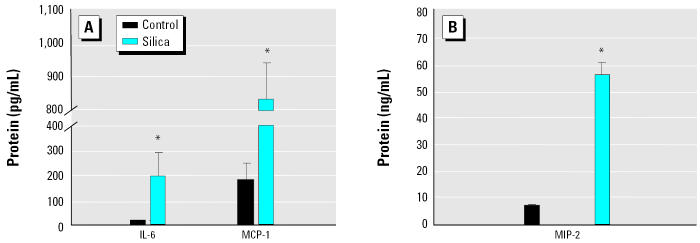
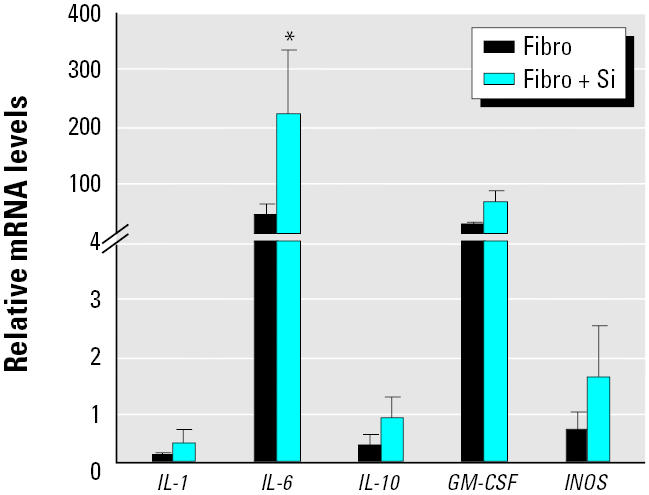
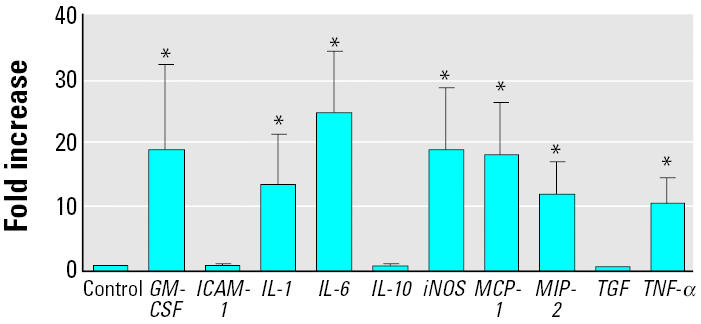
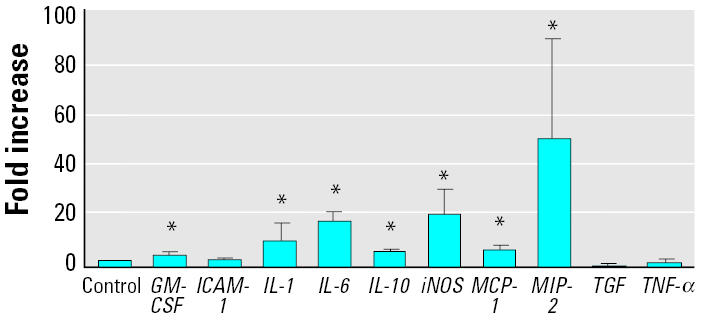
Description:The expression of 10 genes implicated in regulation of the inflammatory processes in the lung was studied after exposure of alveolar macrophages (AMs) to silica in vitro or in vivo. Exposure of AMs to silica in vitro up-regulated the messenger RNA (mRNA) levels of three genes [interleukin-6 (IL-6), monocyte chemoattractant protein-1 (MCP-1), and macrophage inflammatory protein-2 (MIP-2)] without a concomitant increase in the protein levels. AMs isolated after intratracheal instillation of silica up-regulated mRNA levels of four additional genes [granulocyte/macrophage-colony stimulating factor (GM-CSF), IL-1beta, IL-10, and inducible nitric oxide synthase]. IL-6, MCP-1, and MIP-2 protein levels were elevated in bronchoalveolar lavage fluid. Fibroblasts under basal culture conditions express much higher levels of IL-6 and GM-CSF compared with AMs. Coculture of AMs and alveolar type II cells, or coculture of AMs and lung fibroblasts, in contact cultures or Transwell chambers, revealed no synergistic effect. Therefore, such interaction does not explain the effects seen in vivo. Identification of the intercellular communication in vivo is still unresolved. However, fibroblasts appear to be an important source of inflammatory mediators in the lung.
-
Subjects:
-
Source:Environ Health Perspect. ; 112(17):1679-1685.
-
Document Type:
-
Volume:112
-
Issue:17
-
Collection(s):
-
Main Document Checksum:urn:sha-512:9eedeae2ac4d095aaee2a31c9b67ab008c719260eb4c72bef0b1ad4f72383440f566c98e9d22cb00326e28ba8ee75c2de34eb4906cdcd3f9dade0da3430a61bf
-
Download URL:
-
File Type:
 [PDF
- 173.79 KB
]
[PDF
- 173.79 KB
]
Supporting Files


ON THIS PAGE







CDC STACKS serves as an archival repository of CDC-published products including
scientific findings,
journal articles, guidelines, recommendations, or other public health information authored or
co-authored by CDC or funded partners.
As a repository, CDC STACKS retains documents in their original published format to ensure public access to scientific information.
As a repository, CDC STACKS retains documents in their original published format to ensure public access to scientific information.
You May Also Like
COLLECTION
CDC Public Access