


Factors associated with tick bites and pathogen prevalence in ticks parasitizing humans in Georgia, USA
Supporting Files
Public Domain

-
Mar 02 2016
-
File Language:
English
Details
-
Alternative Title:Parasit Vectors
-
Personal Author:
-
Description:Background
The incidence and emergence of tick-borne diseases has increased dramatically in the United States during the past 30 years, yet few large-scale epidemiological studies have been performed on individuals bitten by ticks. Epidemiological information, including disease development, may provide valuable information regarding effectiveness of tick bite prevention education, pathogen transmission, human-disease dynamics, and potential implications for under reporting of tick-borne diseases.
Methods
Ticks found attached to Georgia residents were submitted for identification and polymerase chain reaction (PCR) testing for Francisella tularensis, Ehrlichia, Anaplasma, Borrelia, and Rickettsia spp. Tick bite victims were interviewed three weeks after the tick bite to identify various epidemiologic factors associated with infestation and if signs suggestive of a tick-borne disease had developed. Fisher’s exact test of independence was used to evaluate associations between various factors evaluated in the study. A multivariable logistic regression model was used for the prediction of non-specific illness post-tick bite.
Results
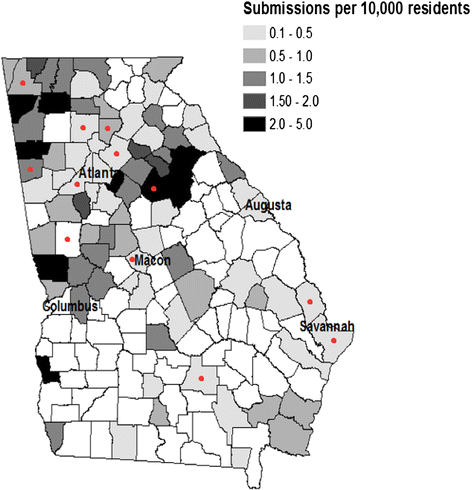
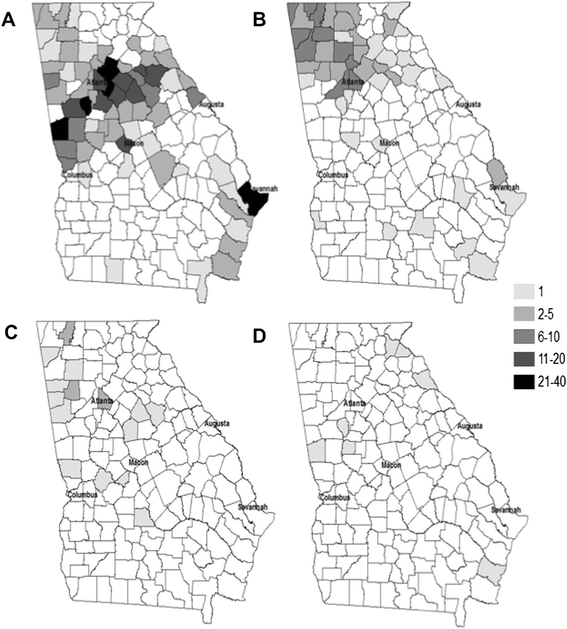
From April 2005-December 2006, 444 participants submitted 597 ticks (426 Amblyomma americanum, 142 Dermacentor variabilis, 19 A. maculatum, 7 Ixodes scapularis, 3 Amblyomma sp.) which originated from 95 counties. Only 25 (34 %) of 74 interviewed individuals purposely took tick bite prevention measures. Ticks that were PCR positive for bacterial organisms were attached to 136 participants. Of the 77 participants who developed non-specific illness, 50 did not have PCR positive ticks, whereas 27 did have PCR positive tick (s). Of those 27 individuals, 12 fit the criteria for a possible tick-borne illness (i.e., tick attached >6 h [if known], ≥4 day incubation period, and the individual exhibited clinical symptoms typical of a tick-borne illness without exhibiting cough, sore throat, or sinus congestion). Ticks from these individuals were positive for R. amblyommii (n = 8), E. ewingii (n = 1), R. montana (n = 1), R. rhiphicephali (n = 1), and Rickettsia sp. TR-39 (n = 1).
Conclusions
Although illnesses reported in this study cannot definitively be connected with tick bites, it does provide insight into development, diagnosis, and treatment of possible tick-borne diseases post-tick bite. The study also provided data on pathogen prevalence, and epidemiologic factors associated with tick bites, as well as tick presence by county in Georgia.
-
Subjects:
-
Source:Parasit Vectors. 9.
-
Pubmed ID:26935205
-
Pubmed Central ID:PMC4776404
-
Document Type:
-
Place as Subject:
-
Volume:9
-
Collection(s):
-
Main Document Checksum:urn:sha256:98f6f214c90b996a2952fda034b85ff23977eb9846ff6ef8965599e73d73a404
-
Download URL:
-
File Type:
 [PDF
- 1.16 MB
]
[PDF
- 1.16 MB
]
Supporting Files


File Language:
English
ON THIS PAGE



CDC STACKS serves as an archival repository of CDC-published products including
scientific findings,
journal articles, guidelines, recommendations, or other public health information authored or
co-authored by CDC or funded partners.
As a repository, CDC STACKS retains documents in their original published format to ensure public access to scientific information.
As a repository, CDC STACKS retains documents in their original published format to ensure public access to scientific information.
You May Also Like
COLLECTION
CDC Public Access