



Comparative evaluation of vacuum-based surface sampling methods for collection of Bacillus spores
Supporting Files

-
Oct 29 2013
-
Available in CDC Stacks on 2016-03-07T00:00:00Z
Details
-
Alternative Title:J Microbiol Methods
-
Personal Author:
-
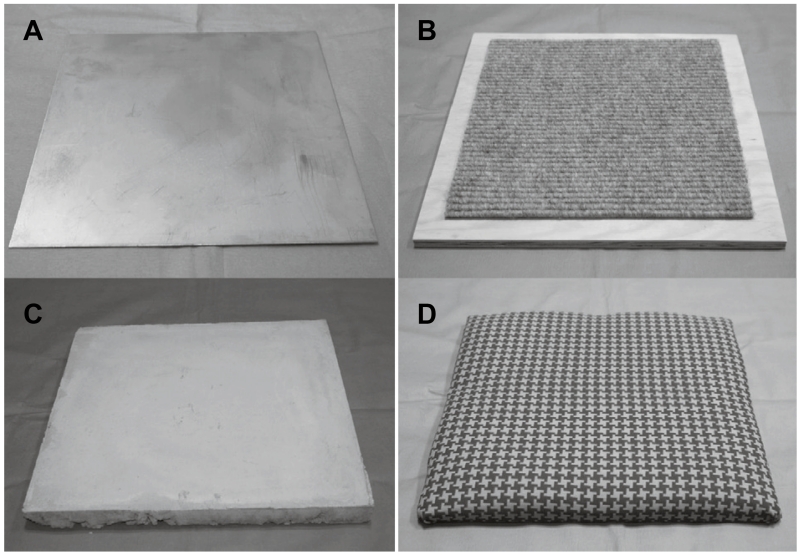
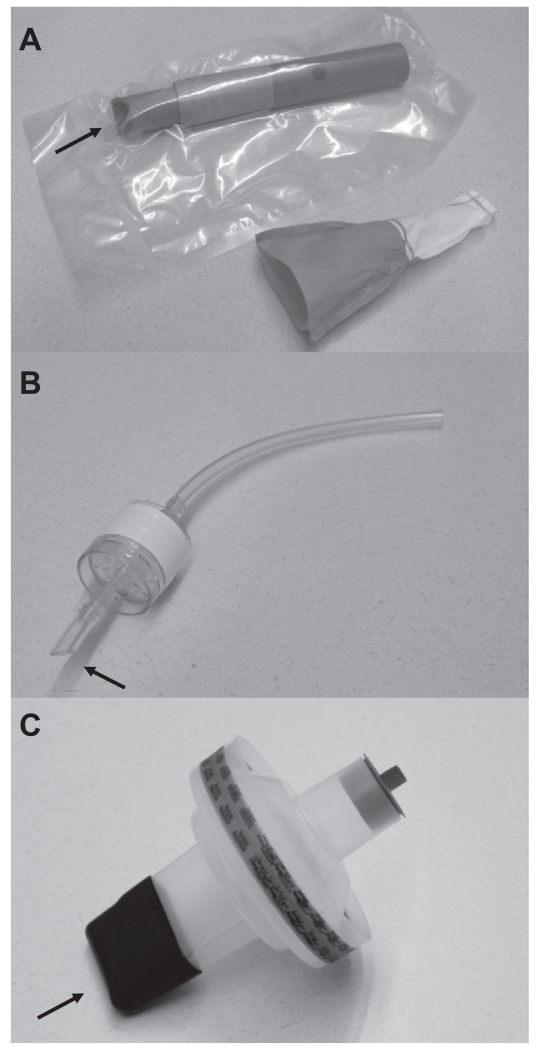
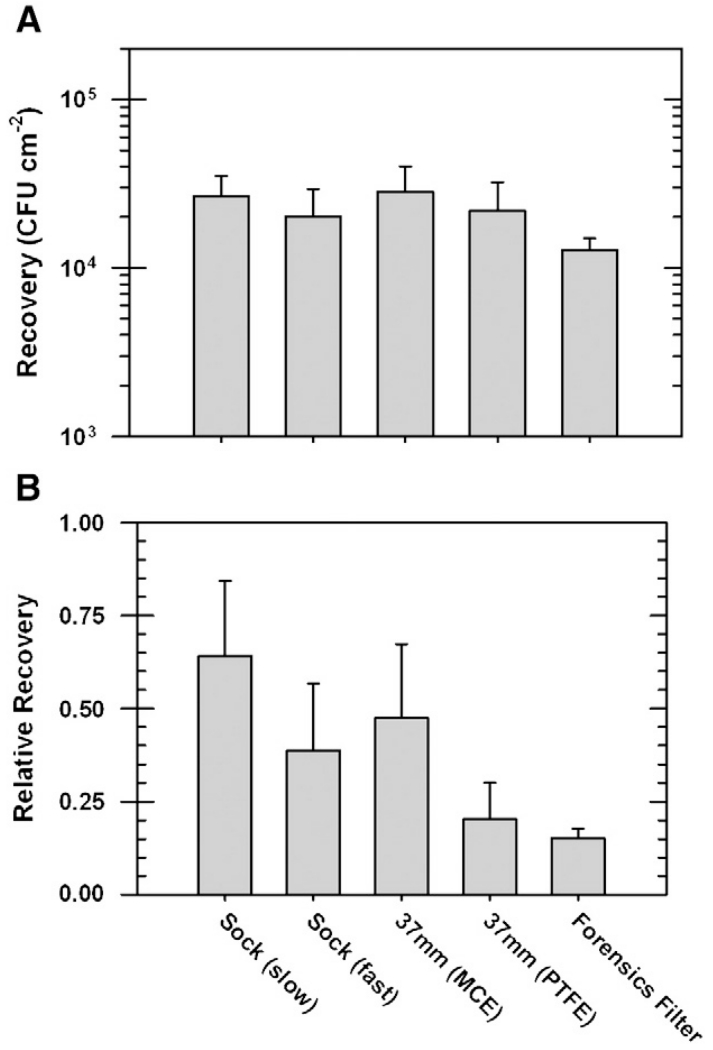
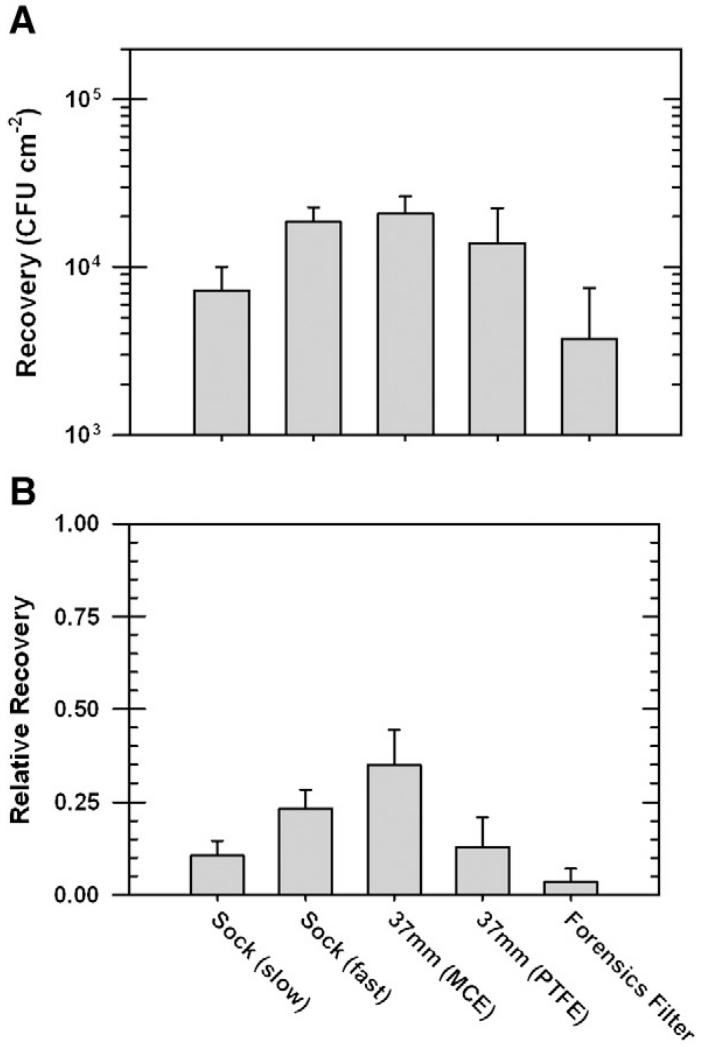
Description:In this study, four commonly-used sampling devices (vacuum socks, 37 mm 0.8 μm mixed cellulose ester (MCE) filter cassettes, 37 mm 0.3 μm polytetrafluoroethylene (PTFE) filter cassettes, and 3M™ forensic filters) were comparatively evaluated for their ability to recover surface-associated spores. Aerosolized spores (~10(5)CFUcm(-2)) of a Bacillus anthracis surrogate were allowed to settle onto three material types (concrete, carpet, and upholstery). Ten replicate samples were collected using each vacuum method, from each material type. Stainless steel surfaces, inoculated simultaneously with test materials, were sampled with pre-moistened wipes. Wipe recoveries were utilized to normalize vacuum-based recoveries across trials. Recovery (CFUcm(-2)) and relative recovery (vacuum recovery/wipe recovery) were determined for each method and material type. Recoveries and relative recoveries ranged from 3.8 × 10(3) to 7.4 × 10(4)CFUcm(-2) and 0.035 to 1.242, respectively. ANOVA results indicated that the 37 mm MCE method exhibited higher relative recoveries than the other methods when used for sampling concrete or upholstery. While the vacuum sock resulted in the highest relative recoveries on carpet, no statistically significant difference was detected. The results of this study may be used to guide selection of sampling approaches following biological contamination incidents.
-
Subjects:
-
Source:J Microbiol Methods. 95(3):389-396.
-
Pubmed ID:24184017
-
Pubmed Central ID:PMC4780263
-
Document Type:
-
Funding:
-
Volume:95
-
Issue:3
-
Download URL:
-
File Type:
 [PDF - 1.16 MB]
 -
Collection(s):
-
Main Document Checksum:urn:sha256:9de13fa623c97a18716c013c23c1bba97a0a8e0e7d699f61d1076a9b39797f5b
Supporting Files


 Was this page helpful?
 Found an issue?



CDC STACKS serves as an archival repository of CDC-published products including
scientific findings, journal articles, guidelines, recommendations, or other public health information authored or
co-authored by CDC or funded partners.
As a repository, CDC STACKS retains documents in their original published format to ensure public access to scientific information.
As a repository, CDC STACKS retains documents in their original published format to ensure public access to scientific information.
You May Also Like
COLLECTION
CDC Public Access