


Airborne Nanoparticle Concentrations in the Manufacturing of Polytetrafluoroethylene (PTFE) Apparel
Supporting Files

-
Mar 2011
-
File Language:
English
Details
-
Alternative Title:J Occup Environ Hyg
-
Personal Author:
-
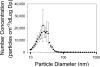
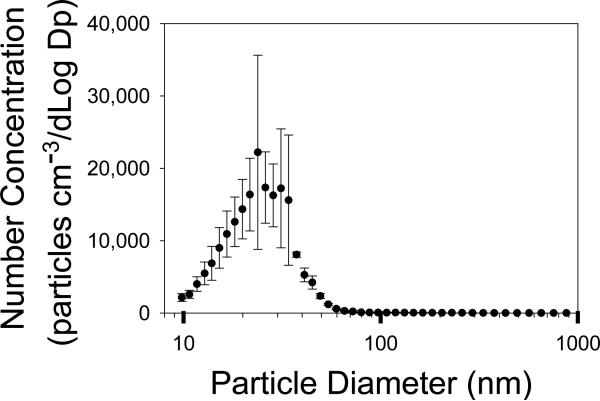
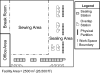
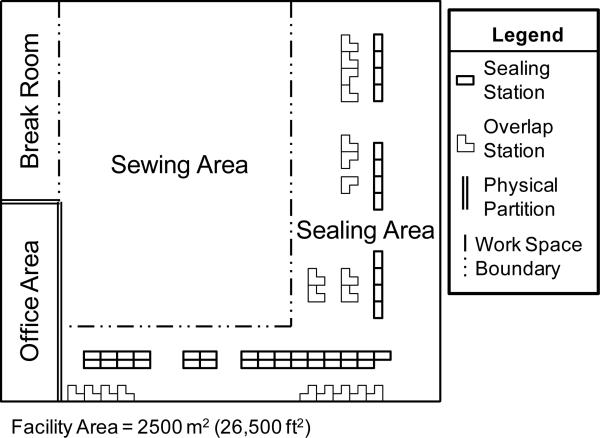
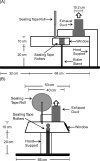
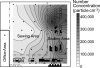
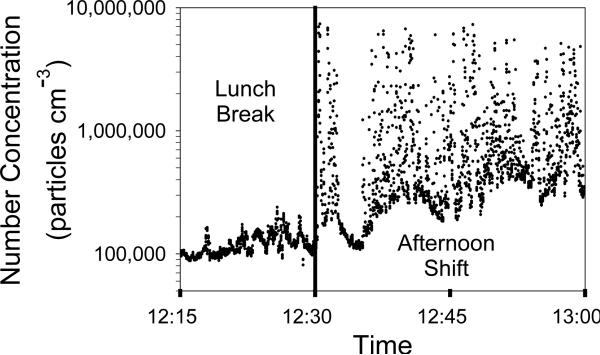
Description:One form of waterproof, breathable apparel is manufactured from polytetrafluoroethylene (PTFE) membrane laminated fabric using a specific process to seal seams that have been sewn with traditional techniques. The sealing process involves applying waterproof tape to the seam by feeding the seam through two rollers while applying hot air (600 °C). This study addressed the potential for exposure to particulate matter from this sealing process by characterizing airborne particles in a facility that produces more than 1000 lightweight PTFE rain jackets per day. Aerosol concentrations throughout the facility were mapped, breathing zone concentrations were measured, and hoods used to ventilate the seam sealing operation were evaluated. The geometric mean (GM) particle number concentrations were substantially greater in the sewing and sealing areas (67,000 and 188,000 particles cm⁻³)) compared with that measured in the office area (12,100 particles cm⁻³). Respirable mass concentrations were negligible throughout the facility (GM = 0.002 mg m⁻³) in the sewing and sealing areas). The particles exiting the final discharge of the facility's ventilation system were dominated by nanoparticles (number median diameter = 25 nm; geometric standard deviation of 1.39). The breathing zone particle number concentrations of the workers who sealed the sewn seams were highly variable and significantly greater when sealing seams than when conducting other tasks (p < 0.0001). The sealing workers' breathing zone concentrations ranged from 147,000 particles cm⁻³ to 798,000 particles cm⁻³, and their seam responsibility significantly influenced their breathing zone concentrations (p = 0.03). The finding that particle number concentrations were approximately equal outside the hood and inside the local exhaust duct indicated poor effectiveness of the canopy hoods used to ventilate sealing operations.
-
Subjects:
-
Source:J Occup Environ Hyg. 8(3):139-146.
-
Pubmed ID:21347955
-
Pubmed Central ID:PMC4773197
-
Document Type:
-
Funding:
-
Volume:8
-
Issue:3
-
Collection(s):
-
Main Document Checksum:urn:sha256:84994d101daf20c32467df5359df64099595b8104ff88469136446e601a6bd85
-
Download URL:
-
File Type:
 [PDF
- 986.85 KB
]
[PDF
- 986.85 KB
]
Supporting Files


File Language:
English
ON THIS PAGE



CDC STACKS serves as an archival repository of CDC-published products including
scientific findings,
journal articles, guidelines, recommendations, or other public health information authored or
co-authored by CDC or funded partners.
As a repository, CDC STACKS retains documents in their original published format to ensure public access to scientific information.
As a repository, CDC STACKS retains documents in their original published format to ensure public access to scientific information.
You May Also Like
COLLECTION
CDC Public Access