


HIV Testing, HIV Positivity, and Linkage and Referral Services in Correctional Facilities in the United States, 2009–2013
Supporting Files

-
Nov 2015
-
File Language:
English
Details
-
Alternative Title:Sex Transm Dis
-
Personal Author:
-
Description:Background
Because of health disparities, incarcerated persons are at higher risk for multiple health issues, including HIV. Correctional facilities have an opportunity to provide HIV services to an underserved population. This article describes Centers for Disease Control and Prevention (CDC)–funded HIV testing and service delivery in correctional facilities.
Methods
Data on HIV testing and service delivery were submitted to CDC by 61 health department jurisdictions in 2013. HIV testing, HIV positivity, receipt of test results, linkage, and referral services were described, and differences across demographic characteristics for linkage and referral services were assessed. Finally, trends were examined for HIV testing, HIV positivity, and linkage from 2009 to 2013.
Results
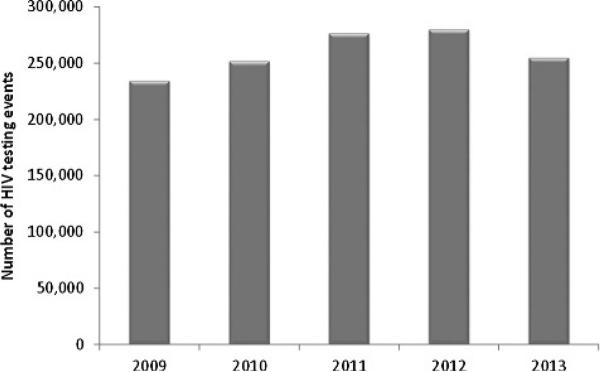
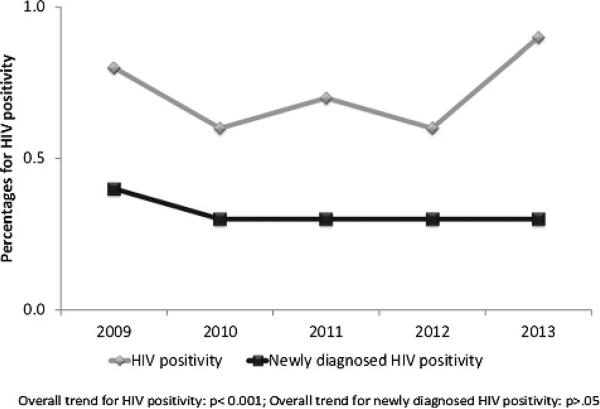
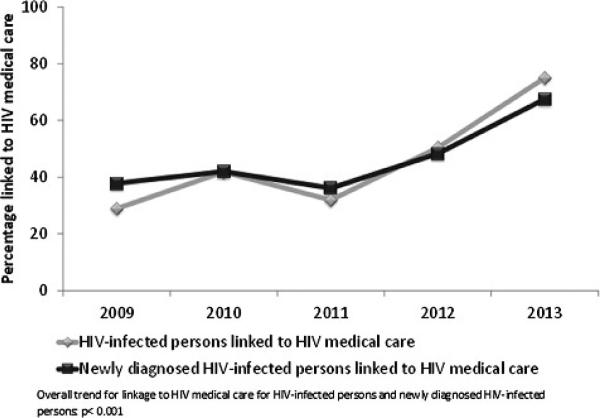
Of CDC-funded tests in 2013 among persons 18 years and older, 254,719 (7.9%) were conducted in correctional facilities. HIV positivity was 0.9%, and HIV positivity for newly diagnosed persons was 0.3%. Blacks accounted for the highest percentage of HIV-infected persons (1.3%) and newly diagnosed persons (0.5%). Only 37.9% of newly diagnosed persons were linked within 90 days; 67.5% were linked within any time frame; 49.7% were referred to partner services; and 45.2% were referred to HIV prevention services. There was a significant percent increase in HIV testing, overall HIV positivity, and linkage from 2009 to 2013. However, trends were stable for newly diagnosed persons.
Conclusions
Identification of newly diagnosed persons in correctional facilities has remained stable from 2009 to 2013. Correctional facilities seem to be reaching blacks, likely due to higher incarceration rates. The current findings indicate that improvements are needed in HIV testing strategies, service delivery during incarceration, and linkage to care postrelease.
-
Subjects:
-
Source:Sex Transm Dis. 42(11):643-649.
-
Pubmed ID:26462190
-
Pubmed Central ID:PMC4773196
-
Document Type:
-
Funding:
-
Place as Subject:
-
Volume:42
-
Issue:11
-
Collection(s):
-
Main Document Checksum:urn:sha256:cba2eac61bdf54aae3e5f03629a3713d5761f0621976bedb5fa49202266a2226
-
Download URL:
-
File Type:
 [PDF
- 663.27 KB
]
[PDF
- 663.27 KB
]
Supporting Files


File Language:
English
ON THIS PAGE


CDC STACKS serves as an archival repository of CDC-published products including
scientific findings,
journal articles, guidelines, recommendations, or other public health information authored or
co-authored by CDC or funded partners.
As a repository, CDC STACKS retains documents in their original published format to ensure public access to scientific information.
As a repository, CDC STACKS retains documents in their original published format to ensure public access to scientific information.
You May Also Like
COLLECTION
CDC Public Access