


Predicting malaria vector distribution under climate change scenarios in China: Challenges for malaria elimination
Supporting Files
Public Domain

-
Feb 12 2016
-
File Language:
English
Details
-
Alternative Title:Sci Rep
-
Personal Author:
-
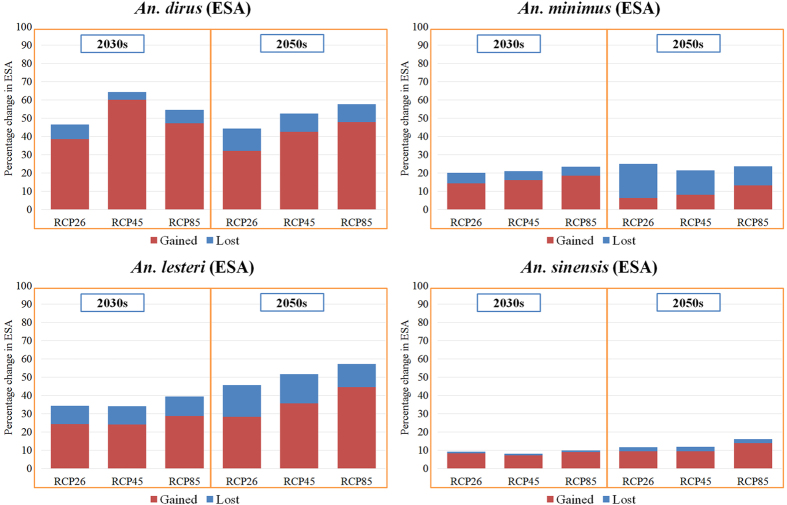
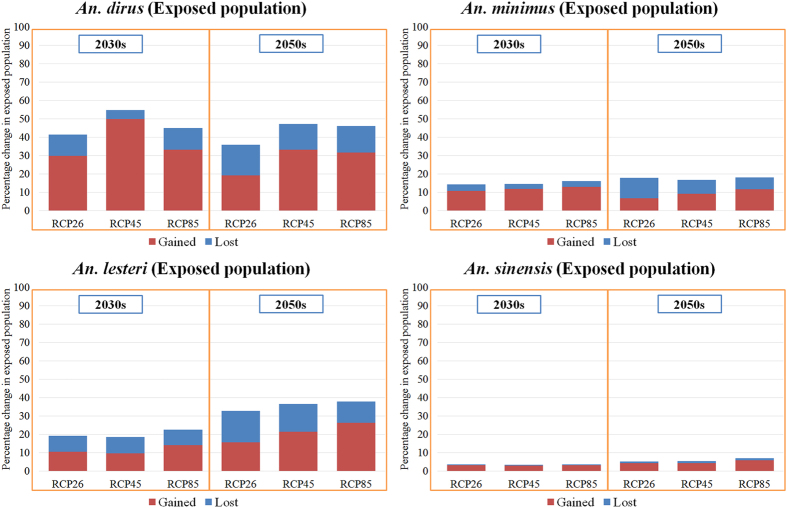
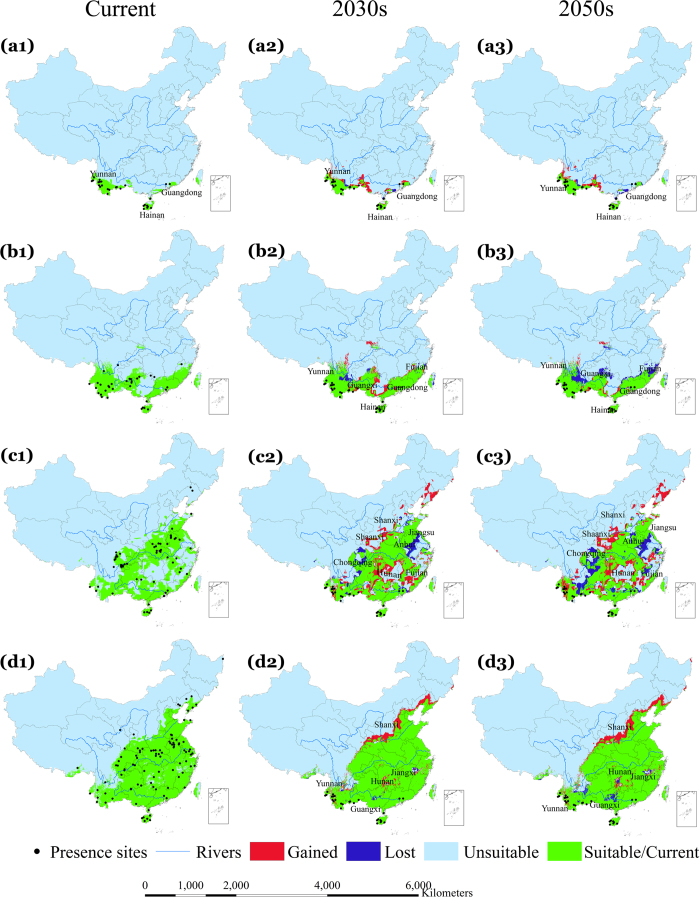
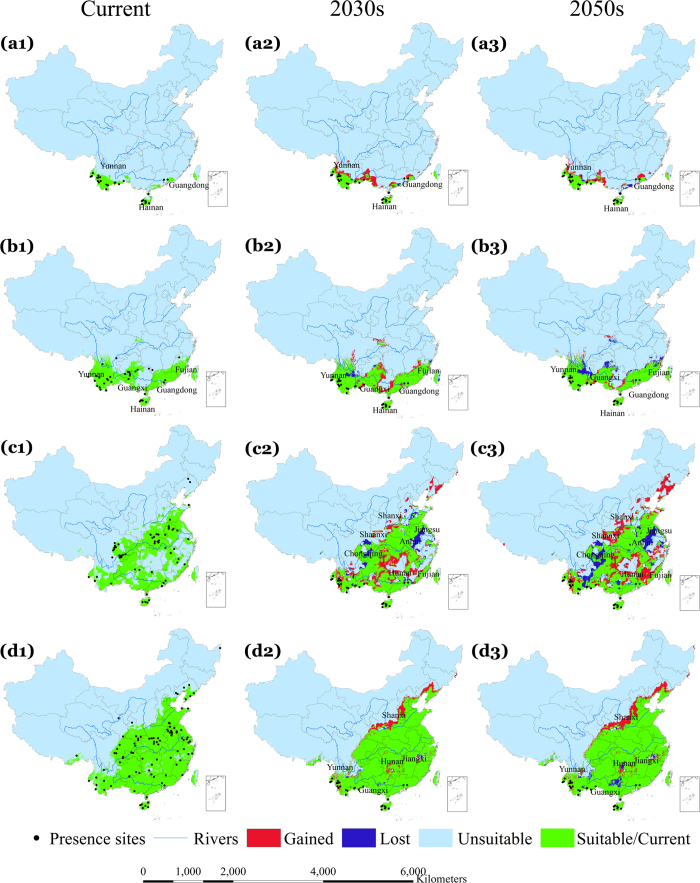
Description:Projecting the distribution of malaria vectors under climate change is essential for planning integrated vector control activities for sustaining elimination and preventing reintroduction of malaria. In China, however, little knowledge exists on the possible effects of climate change on malaria vectors. Here we assess the potential impact of climate change on four dominant malaria vectors (An. dirus, An. minimus, An. lesteri and An. sinensis) using species distribution models for two future decades: the 2030 s and the 2050 s. Simulation-based estimates suggest that the environmentally suitable area (ESA) for An. dirus and An. minimus would increase by an average of 49% and 16%, respectively, under all three scenarios for the 2030 s, but decrease by 11% and 16%, respectively in the 2050 s. By contrast, an increase of 36% and 11%, respectively, in ESA of An. lesteri and An. sinensis, was estimated under medium stabilizing (RCP4.5) and very heavy (RCP8.5) emission scenarios. in the 2050 s. In total, we predict a substantial net increase in the population exposed to the four dominant malaria vectors in the decades of the 2030 s and 2050 s, considering land use changes and urbanization simultaneously. Strategies to achieve and sustain malaria elimination in China will need to account for these potential changes in vector distributions and receptivity.
-
Subjects:
-
Source:Sci Rep. 2016; 6.
-
Pubmed ID:26868185
-
Pubmed Central ID:PMC4751525
-
Document Type:
-
Place as Subject:
-
Volume:6
-
Collection(s):
-
Main Document Checksum:urn:sha256:daf5779c25e613d2956682c44501044adcffc068fb03fdb728a7849874f88a0e
-
Download URL:
-
File Type:
 [PDF
- 2.62 MB
]
[PDF
- 2.62 MB
]
Supporting Files


File Language:
English
ON THIS PAGE





CDC STACKS serves as an archival repository of CDC-published products including
scientific findings,
journal articles, guidelines, recommendations, or other public health information authored or
co-authored by CDC or funded partners.
As a repository, CDC STACKS retains documents in their original published format to ensure public access to scientific information.
As a repository, CDC STACKS retains documents in their original published format to ensure public access to scientific information.
You May Also Like
COLLECTION
CDC Public Access