


Spatial variation of insecticide resistance in the dengue vector Aedes aegypti presents unique vector control challenges
Supporting Files
Public Domain

-
Feb 04 2016
-
Details
-
Alternative Title:Parasit Vectors
-
Personal Author:
-
Description:Background
Dengue is a major public health problem in Mexico, where the use of chemical insecticides to control the principal dengue vector, Aedes aegypti, is widespread. Resistance to insecticides has been reported in multiple sites, and the frequency of kdr mutations associated with pyrethroid resistance has increased rapidly in recent years. In the present study, we characterized patterns of insecticide resistance in Ae. aegypti populations in five small towns surrounding the city of Merida, Mexico.
Methods
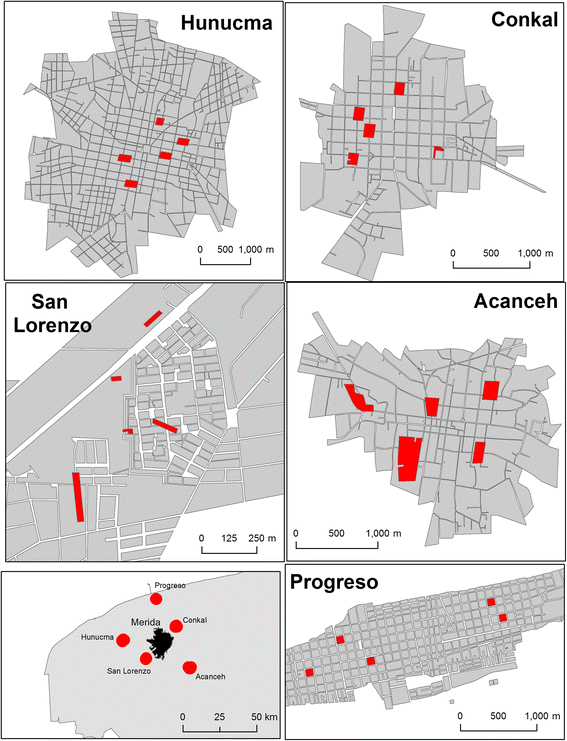
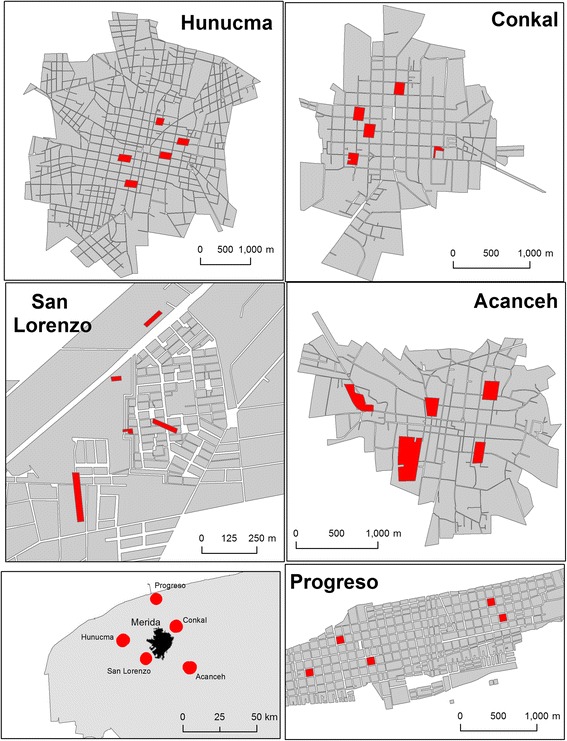
A cross-sectional, entomological survey was performed between June and August 2013 in 250 houses in each of the five towns. Indoor resting adult mosquitoes were collected in all houses and four ovitraps were placed in each study block. CDC bottle bioassays were conducted using F0-F2 individuals reared from the ovitraps and kdr allele (Ile1016 and Cys1534) frequencies were determined.
Results
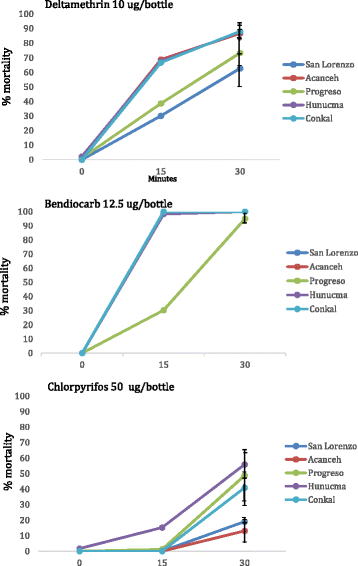
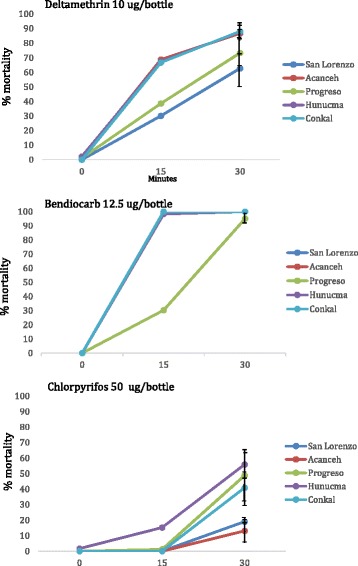
High, but varying, levels of resistance to chorpyrifos-ethyl was detected in all study towns, complete susceptibility to bendiocarb in all except one town, and variations in resistance to deltamethrin between towns, ranging from 63–88 % mortality. Significant associations were detected between deltamethrin resistance and the presence of both kdr alleles. Phenotypic resistance was highly predictive of the presence of both alleles, however, not all mosquitoes containing a mutant allele were phenotypically resistant. An analysis of genotypic differentiation (exact G test) between the five towns based on the adult female Ae. aegypti collected from inside houses showed highly significant differences (p < 0.0001) between genotypes for both loci. When this was further analyzed to look for fine scale differences at the block level within towns, genotypic differentiation was significant for both loci in San Lorenzo (Ile1016, p = 0.018 and Cys1534, p = 0.007) and for Ile1016 in Acanceh (p = 0.013) and Conkal (p = 0.031).
Conclusions
The results from this study suggest that 3 years after switching chemical groups, deltamethrin resistance and a high frequency of kdr alleles persisted in Ae. aegypti populations. The spatial variation that was detected in both resistance phenotypes and genotypes has practical implications, both for vector control operations as well as insecticide resistance management strategies.
-
Subjects:
-
Source:Parasit Vectors. 9.
-
Pubmed ID:26846468
-
Pubmed Central ID:PMC4743324
-
Document Type:
-
Volume:9
-
Collection(s):
-
Main Document Checksum:urn:sha256:bcfdcc54e3d817e6365dafabcfb2b6887462bb7321f9bb9a6f486e1f50f3af6d
-
Download URL:
-
File Type:
 [PDF
- 1.37 MB
]
[PDF
- 1.37 MB
]
Supporting Files


ON THIS PAGE

CDC STACKS serves as an archival repository of CDC-published products including
scientific findings,
journal articles, guidelines, recommendations, or other public health information authored or
co-authored by CDC or funded partners.
As a repository, CDC STACKS retains documents in their original published format to ensure public access to scientific information.
As a repository, CDC STACKS retains documents in their original published format to ensure public access to scientific information.
You May Also Like
COLLECTION
CDC Public Access