



A longitudinal study of the durability of long-lasting insecticidal nets in Zambia
Supporting Files
Public Domain

-
Feb 19 2016
-
Available in CDC Stacks on 2016-02-19T00:00:00Z
File Language:
English
Details
-
Alternative Title:Malar J
-
Personal Author:Tan, Kathrine R. ; Coleman, Jane ; Smith, Barbara ; Hamainza, Busiku ; Katebe-Sakala, Cecilia ; Kean, Casey ; Kowal, Ashley ; Vanden Eng, Jodi ; Parris, Tiffany K. ; Mapp, Carla T. ; Smith, Stephen C. ; Wirtz, Robert ; Kamuliwo, Mulakwa ; Craig, Allen S.
-
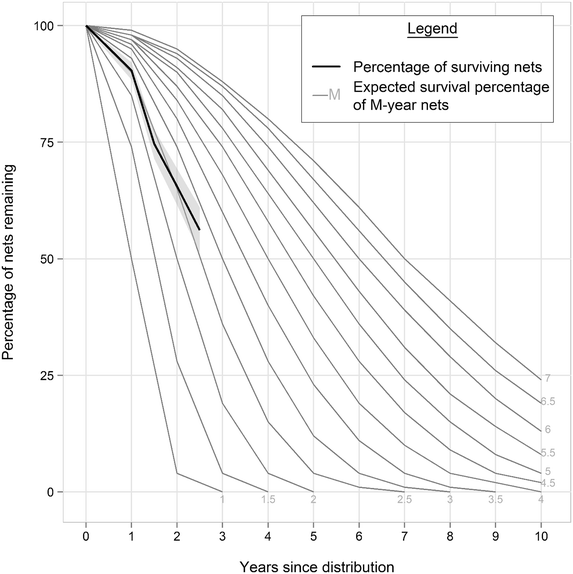
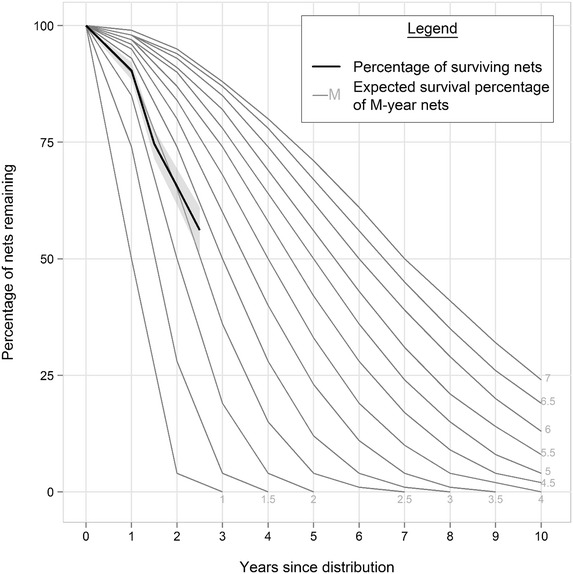
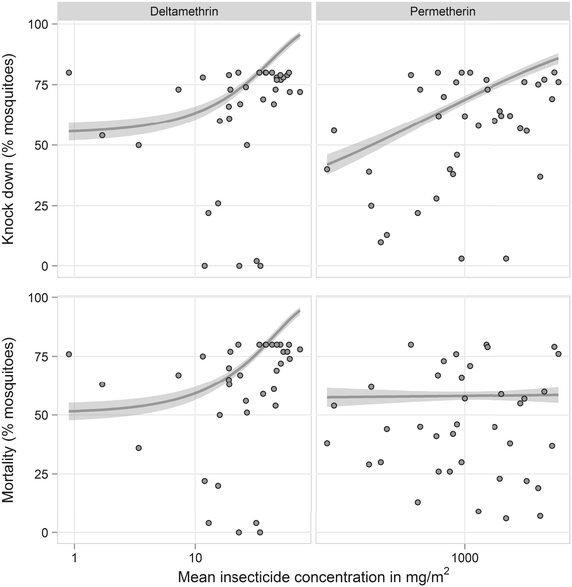
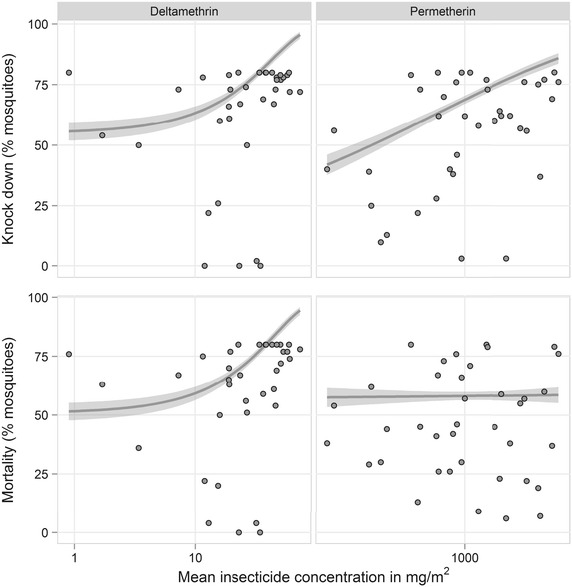
Description:Background ; A key goal of malaria control is to achieve universal access to, and use of, long-lasting insecticidal nets (LLINs) among people at risk for malaria. Quantifying the number of LLINs needed to achieve and maintain universal coverage requires knowing when nets need replacement. Longitudinal studies have observed physical deterioration in LLINs well before the assumed net lifespan of 3 years. The objective of this study was to describe attrition, physical integrity and insecticide persistence of LLINs over time to assist with better quantification of nets needing replacement. ; Methods ; 999 LLINs distributed in 2011 in two highly endemic provinces in Zambia were randomly selected, and were enrolled at 12 months old. LLINs were followed every 6 months up to 30 months of age. Holes were counted and measured (finger, fist, and head method) and a proportional hole index (pHI) was calculated. Households were surveyed about net care and repair and if applicable, reasons for attrition. Functional survival was defined as nets with a pHI <643 and present for follow-up. At 12 and 24 months of age, 74 LLINs were randomly selected for examination of insecticidal activity and content using bioassay and chemical analysis methods previously described by the World Health Organization (WHO). ; Results ; A total of 999 LLINs were enrolled; 505 deltamethrin-treated polyester nets and 494 permethrin-treated polyethylene nets. With 74 used to examine insecticide activity, 925 were available for full follow-up. At 30 months, 325 (33 %) LLINs remained. Net attrition was primarily due to disposal (29 %). Presence of repairs and use over a reed mat were significantly associated with larger pHIs. By 30 months, only 56 % of remaining nets met criteria for functional survival. A shorter functional survival was associated with having been washed. At 24 months, nets had reduced insecticidal activity (57 % met WHO minimal criteria) and content (5 % met WHO target insecticide content). ; Conclusions ; The median functional survival time for LLINs observed the study was 2.5–3 years and insecticide activity and content were markedly decreased by 2 years. A better measure of net survival incorporating insecticidal field effectiveness, net physical integrity, and attrition is needed.
-
Subjects:
-
Source:Malar J. 15.
-
Pubmed ID:26891696
-
Pubmed Central ID:PMC4759777
-
Document Type:
-
Place as Subject:
-
Volume:15
-
Download URL:
-
File Type:
 [PDF - 1.25 MB]
 -
Collection(s):
-
Main Document Checksum:urn:sha256:fb0fd73fc717345b1d43d2e7efd88955ef22edea381e28c4897c88481680f2e1
Supporting Files


File Language:
English
 Was this page helpful?
 Found an issue?

CDC STACKS serves as an archival repository of CDC-published products including
scientific findings, journal articles, guidelines, recommendations, or other public health information authored or
co-authored by CDC or funded partners.
As a repository, CDC STACKS retains documents in their original published format to ensure public access to scientific information.
As a repository, CDC STACKS retains documents in their original published format to ensure public access to scientific information.
You May Also Like
COLLECTION
CDC Public Access