


Factors Associated with Ever Being HIV-Tested in Zimbabwe: An Extended Analysis of the Zimbabwe Demographic and Health Survey (2010–2011)
Supporting Files
Public Domain

-
Jan 25 2016
File Language:
English
Details
-
Alternative Title:PLoS One
-
Personal Author:
-
Description:Introduction
Zimbabwe has a high human immunodeficiency virus (HIV) burden. It is therefore important to scale up HIV-testing and counseling (HTC) as a gateway to HIV prevention, treatment and care.
Objective
To determine factors associated with being HIV-tested among adult men and women in Zimbabwe.
Methods
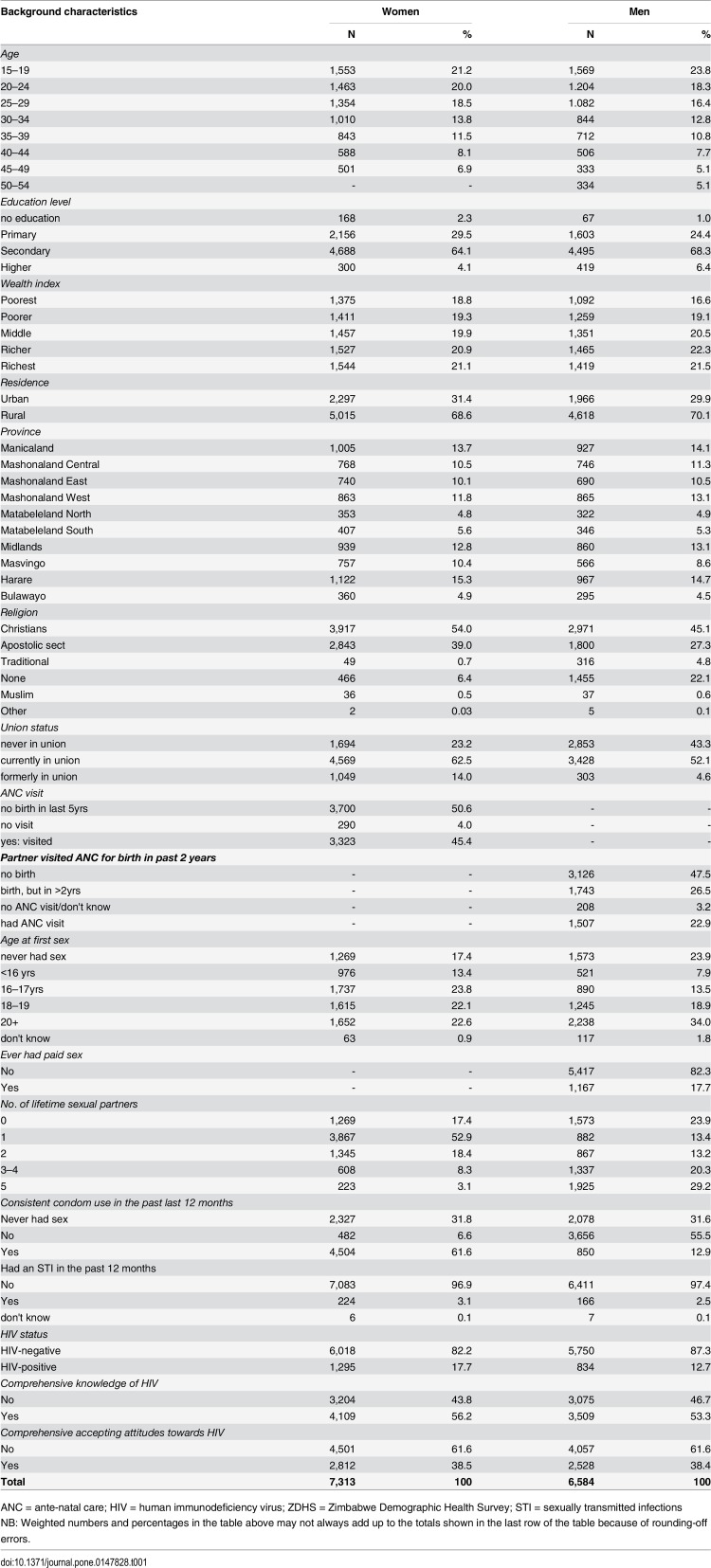
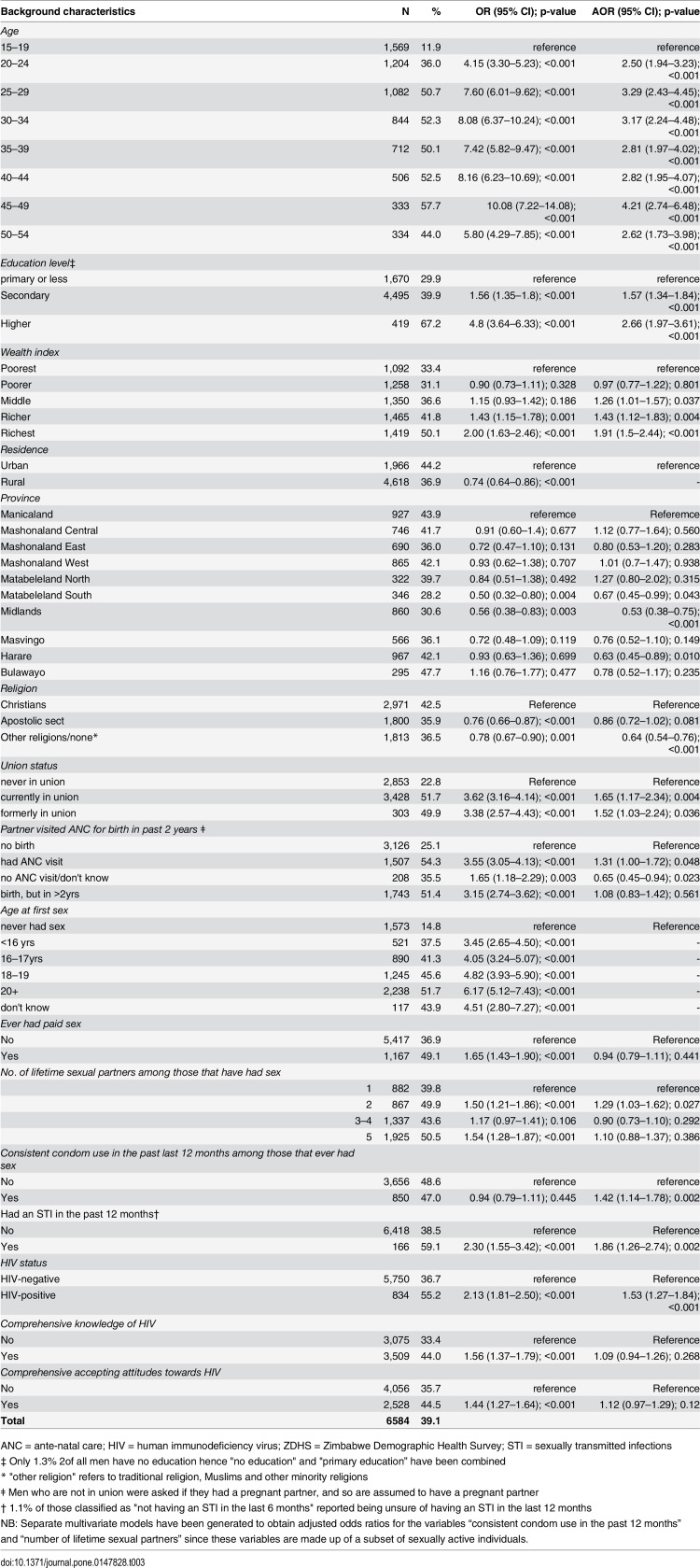
Secondary analysis was done using data from 7,313 women and 6,584 men who completed interviewer-administered questionnaires and provided blood specimens for HIV testing during the Zimbabwe Demographic and Health Survey (ZDHS) 2010–11. Factors associated with ever being HIV-tested were determined using multivariate logistic regression.
Results
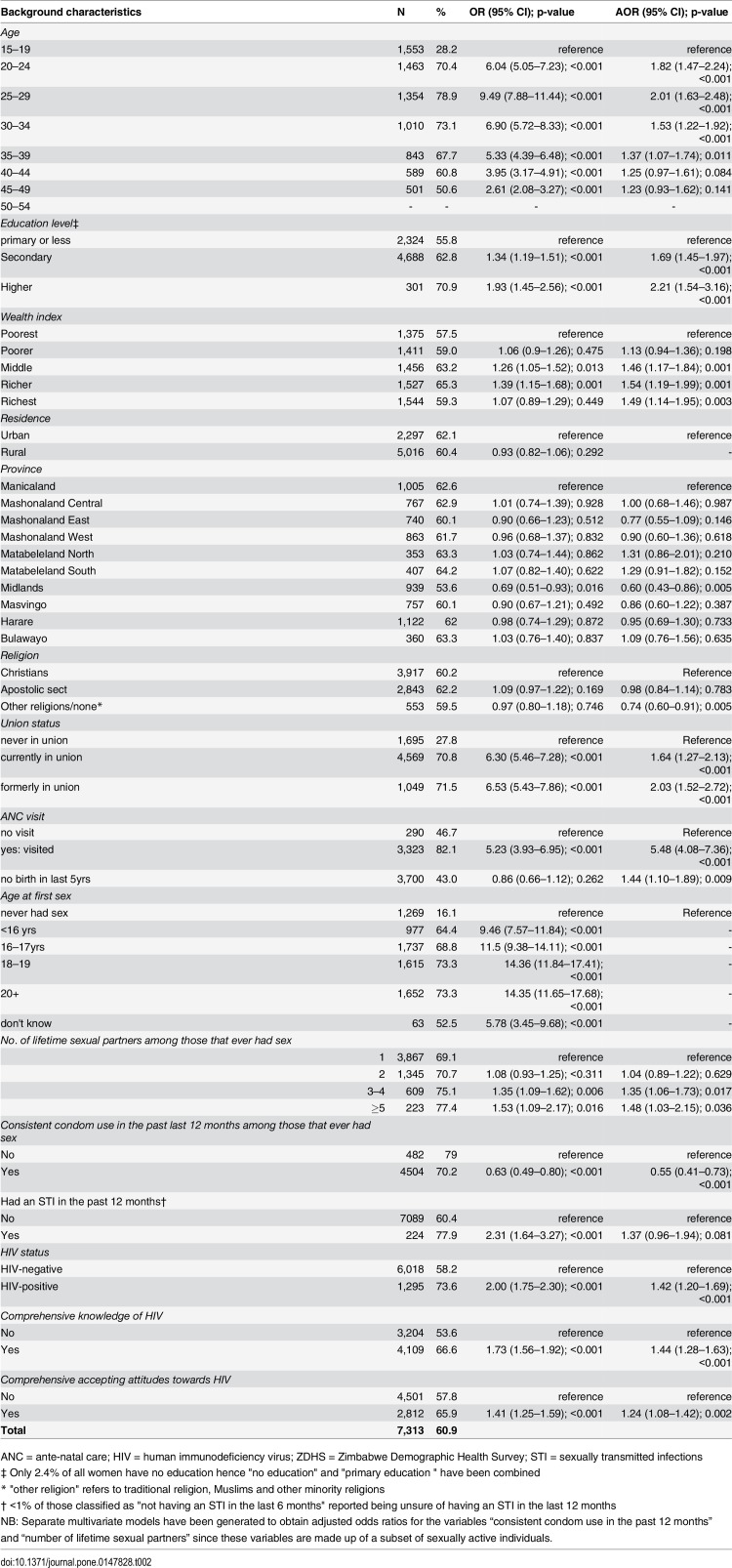
HIV-testing was higher among women compared to men (61% versus 39%). HIV-infected respondents were more likely to be tested compared to those who were HIV-negative for both men [adjusted odds ratio (AOR) = 1.53; 95% confidence interval (CI) (1.27–1.84)] and women [AOR = 1.42; 95% CI (1.20–1.69)]. However, only 55% and 74% of these HIV-infected men and women respectively had ever been tested. Among women, visiting antenatal care (ANC) [AOR = 5.48, 95% CI (4.08–7.36)] was the most significant predictor of being tested whilst a novel finding for men was higher odds of testing among those reporting a sexually transmitted infection (STI) in the past 12 months [AOR = 1.86, 95%CI (1.26–2.74)]. Among men, the odds of ever being tested increased with age ≥20 years, particularly those 45–49 years [AOR = 4.21; 95% CI (2.74–6.48)] whilst for women testing was highest among those aged 25–29 years [AOR = 2.01; 95% CI (1.63–2.48)]. Other significant factors for both sexes were increasing education level, higher wealth status and currently/formerly being in union.
Conclusions
There remains a high proportion of undiagnosed HIV-infected persons and hence there is a need for innovative strategies aimed at increasing HIV-testing, particularly for men and in lower-income and lower-educated populations. Promotion of STI services can be an important gateway for testing more men whilst ANC still remains an important option for HIV-testing among pregnant women.
-
Subjects:
-
Source:PLoS One. 11(1).
-
Pubmed ID:26808547
-
Pubmed Central ID:PMC4726692
-
Document Type:
-
Name as Subject:
-
Place as Subject:
-
Volume:11
-
Issue:1
-
Collection(s):
-
Main Document Checksum:urn:sha-512:9c6df10dcbc3312fdfeef8dac475f54e364194ff0340ab37fc8b530ed64725b2f1d2917ff9c46a53b5a35981b8bc90e6322fbbcf8ceb27fbb536d0e05a8c3956
-
Download URL:
-
File Type:
 [PDF
- 267.36 KB
]
[PDF
- 267.36 KB
]
Supporting Files


File Language:
English
ON THIS PAGE


CDC STACKS serves as an archival repository of CDC-published products including
scientific findings,
journal articles, guidelines, recommendations, or other public health information authored or
co-authored by CDC or funded partners.
As a repository, CDC STACKS retains documents in their original published format to ensure public access to scientific information.
As a repository, CDC STACKS retains documents in their original published format to ensure public access to scientific information.
You May Also Like
COLLECTION
CDC Public Access