



Use of Recirculating Ventilation with Dust Filtration to Improve Wintertime Air Quality in a Swine Farrowing Room
Supporting Files

-
2015 ; 2015
-
Available in CDC Stacks on 2016-02-17T00:00:00Z
File Language:
English
Details
-
Alternative Title:J Occup Environ Hyg
-
Personal Author:
-
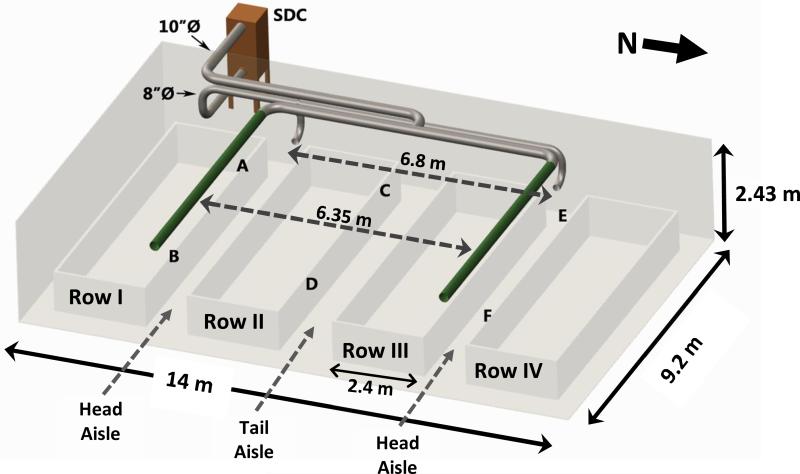
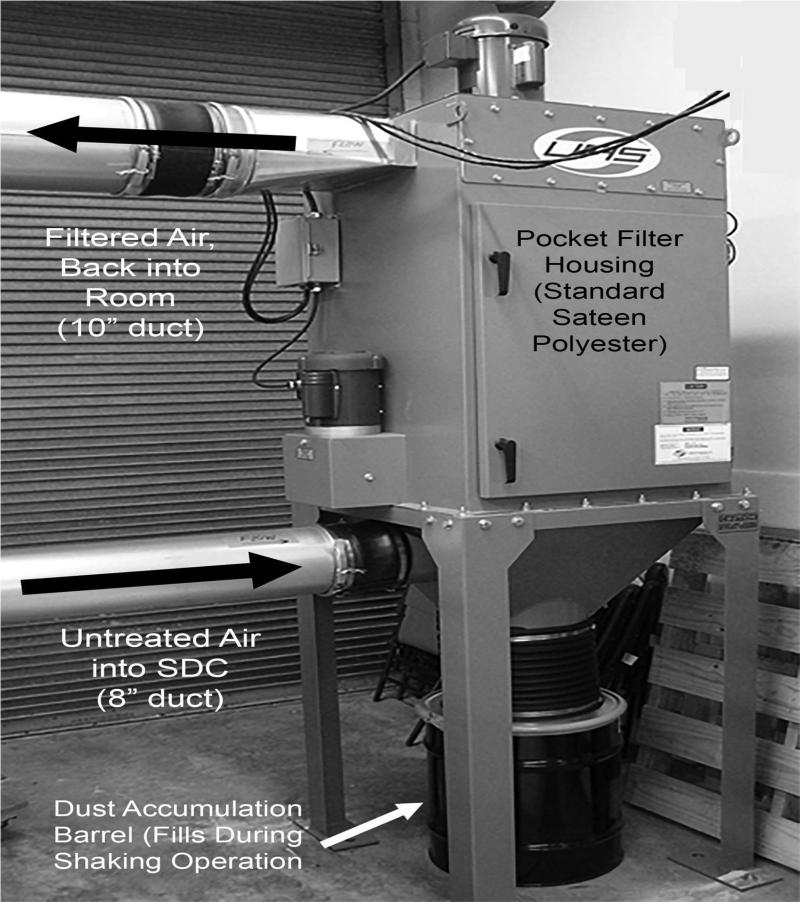
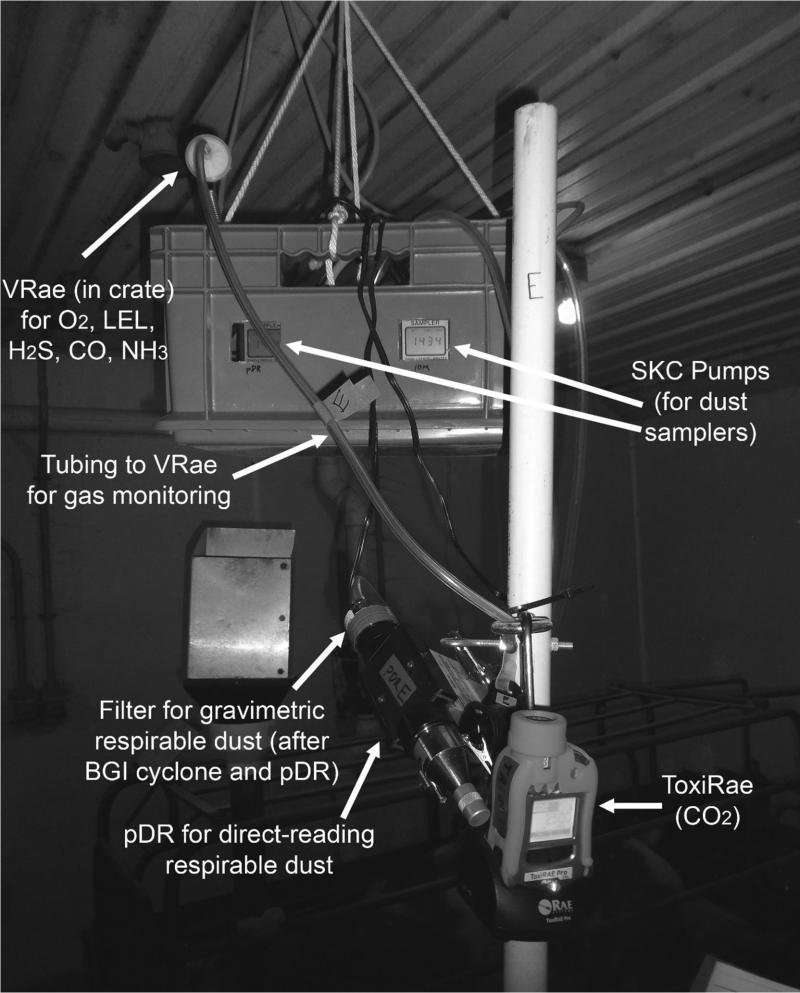
Description:The performance of a recirculating ventilation system with dust filtration was evaluated to determine its effectiveness to improve the air quality in a swine farrowing room of a concentrated animal feeding operation (CAFO). Air was exhausted from the room (0.47 m(3) sec(-1); 1000 cfm), treated with a filtration unit (Shaker-Dust Collector), and returned to the farrowing room to reduce dust concentrations while retaining heat necessary for livestock health. The air quality in the room was assessed over a winter, during which time limited fresh air is traditionally brought into the building. Over the study period, dust concentrations ranged from 0.005-0.31 mg m(-3) (respirable) and 0.17-2.09 mg m(-3) (inhalable). In-room dust concentrations were reduced (41% for respirable and 33% for inhalable) with the system in operation, while gas concentrations (ammonia NH3, hydrogen sulfide H2S, carbon monoxide CO, carbon dioxide CO2) were unchanged. The position of the exhaust and return air systems provided reasonably uniform contaminant distributions, although the respirable dust concentrations nearest one of the exhaust ducts was statistically higher than other locations in the room, with differences averaging only 0.05 mg m(-3). Throughout the study, CO2 concentrations consistently exceeded 1540 ppm (industry recommendations) and on eight of the 18 study days it exceeded 2500 ppm (50% of the ACGIH TLV), with significantly higher concentrations near a door to a temperature-controlled hallway that was typically often left open. Alternative heaters are recommended to reduce CO2 concentrations in the room. Contaminant concentrations were modeled using production and environmental factors, with NH3 related to the number of sow in the room and outdoor temperatures and CO2 related to the number of piglets and outdoor temperatures. The recirculating ventilation system provided dust reduction without increasing concentrations of hazardous gases.
-
Keywords:
-
Source:J Occup Environ Hyg. 12(9):635-646
-
Pubmed ID:25950713
-
Pubmed Central ID:PMC4756717
-
Document Type:
-
Funding:
-
Volume:12
-
Issue:9
-
Download URL:
-
File Type:
 [PDF - 3.24 MB]
 -
Collection(s):
-
Main Document Checksum:urn:sha256:5cff2250cbfe58565f09ca8652089c3c74eb2a7deffbc5503a1575b3a3326aea
Supporting Files


File Language:
English
 Was this page helpful?
 Found an issue?




CDC STACKS serves as an archival repository of CDC-published products including
scientific findings, journal articles, guidelines, recommendations, or other public health information authored or
co-authored by CDC or funded partners.
As a repository, CDC STACKS retains documents in their original published format to ensure public access to scientific information.
As a repository, CDC STACKS retains documents in their original published format to ensure public access to scientific information.
You May Also Like
COLLECTION
CDC Public Access