



Variability in coefficient of restitution in human facial skin
Supporting Files

-
8 2014 ; 8-2014
-
Available in CDC Stacks on 2016-02-15T00:00:00Z
File Language:
English
Details
-
Alternative Title:Skin Res Technol
-
Personal Author:
-
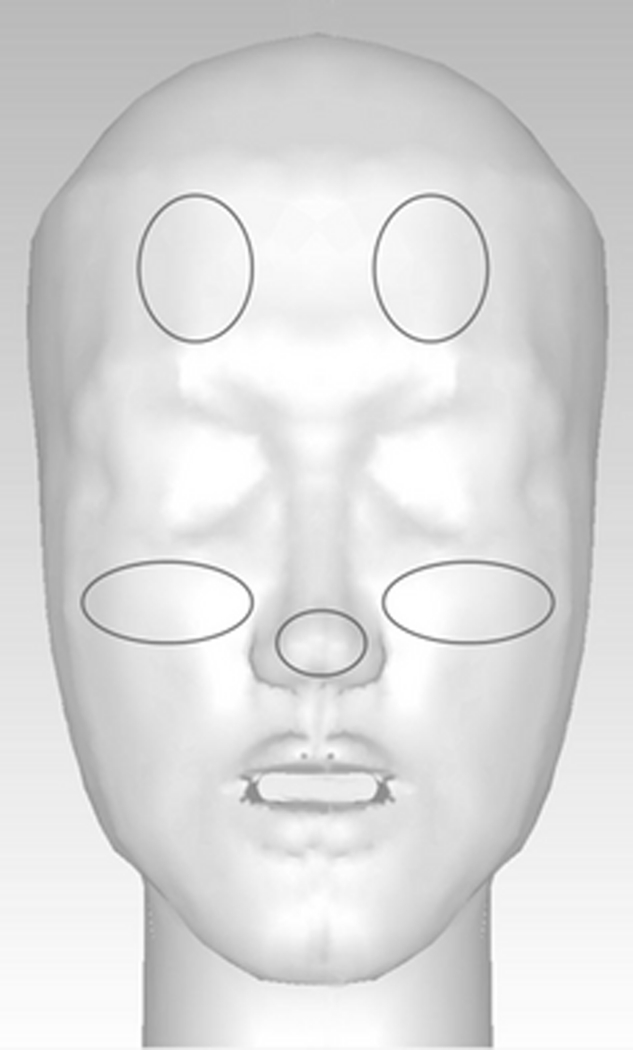
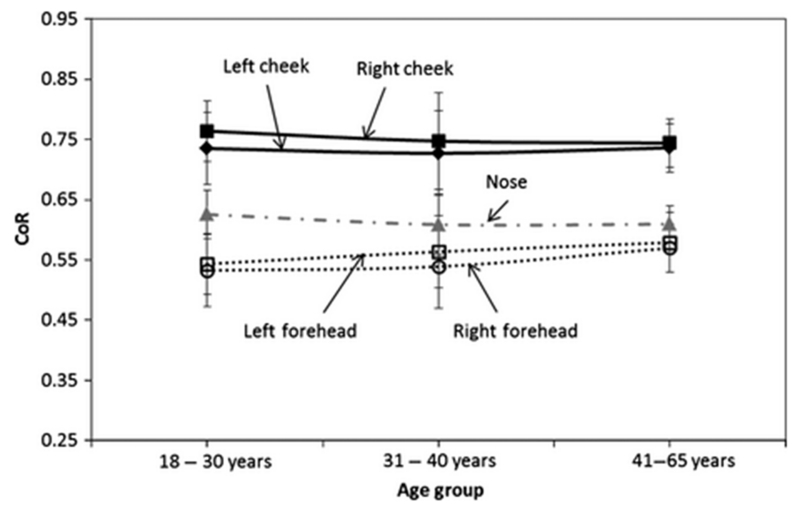
Description:Background ; If particles rebound on human facial skin, they can be re-entrained into the airflow and subsequently inhaled, increasing aspiration efficiency estimates. A realistic estimate of facial skin coefficient of restitution (CoR) is necessary to accurately model particle bounce. This study investigated the effects of sampling location, temperature, humidity levels, age, gender, and BMI on facial skin CoR. ; Methods ; A torsional ballistometer was used to measure facial CoR for 30 participants divided into three age groups (18–30, 31–40, and 41–65 years), at three temperatures and three humidity levels. The study was repeated twice: once in the late winter and once in the early summer to capture the seasonal variability. ; Results ; The CoR significantly varied across five facial locations, with values ranging from 0.55 to 0.75. Gender, sampling season and the interaction between sampling location and age were found to be significant, but changes in values were relatively small (0.05 at most) and are not considered practically significant. ; Conclusion ; CoR was non-uniform across the face. The use of uniform CoR value as modeling input parameters or for mannequin facial surfaces in experimental wind tunnel studies may not be accurate due to the high variability in CoR between facial sampling locations.
-
Subjects:
-
Keywords:
-
Source:Skin Res Technol. 20(3):355-362
-
Pubmed ID:24628680
-
Pubmed Central ID:PMC4753564
-
Document Type:
-
Funding:
-
Volume:20
-
Issue:3
-
Download URL:
-
File Type:
 [PDF - 451.15 KB]
 -
Collection(s):
-
Main Document Checksum:urn:sha256:5812abc2aab41d2330b15c942d23fe945eff4df67e4f6435718ba35dfd19fe90
Supporting Files


File Language:
English
 Was this page helpful?
 Found an issue?


CDC STACKS serves as an archival repository of CDC-published products including
scientific findings, journal articles, guidelines, recommendations, or other public health information authored or
co-authored by CDC or funded partners.
As a repository, CDC STACKS retains documents in their original published format to ensure public access to scientific information.
As a repository, CDC STACKS retains documents in their original published format to ensure public access to scientific information.
You May Also Like
COLLECTION
CDC Public Access